商品簡介
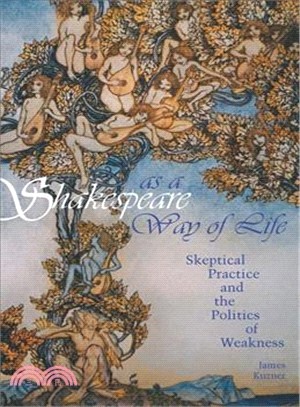
This book shows how reading Shakespeare helps us to live with epistemological weakness and even to practice this weakness, to make it a way of life. In readings ofHamlet, Lucrece, Othello, The Winter's Tale, The Tempest, and Timon of Athens, I show how his works offer a means for coming to terms with basic uncertainties: about how we can be free, about whether the world is abundant, about whether we have met the demands of love and social life.
Though there exist many accounts of Shakespeare's skepticism, none approach it as does this book. Some accounts portray that skepticism as enabling--whether by fostering Keats' heroic, ultimately positive "Negativity Capability" or by serving as a subjective foundation for the tolerant, liberal state--while others portray it as a corrosive disease, in need of cure. While not denying these possibilities, my project presents an alternative, attending to varieties of skepticism that keep negative capability negative but that make skepticism livable--that ask for a lasting disorientation, for practicing the impractical, for a drastic reshaping of the frames by which readers view and negotiate the world.
The value that this book finds in reading Shakespeare thus cannot be counted among the values that cognitive scientists and literary critics often attribute to Shakespeare: that his work clarifies our sense of ourselves, of others, and of the world; heartens us about human capacity for insight and invention; and sharpens our ability to appreciate and adjudicate complex problems of ethics and politics. This book shows how Shakespeare's plays yield cognitive discomforts, and how it is just these discomforts that make the plays worthwhile.
作者簡介
James Kuzner is Assistant Professor of English at Brown University. He is also the author ofOpen Subjects: English Renaissance Republicans, Modern Selfhoods, and the Virtue of Vulnerability.