商品簡介
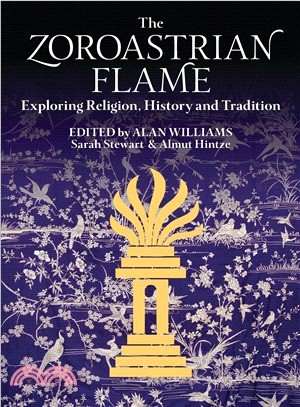
Zoroastrianism has always commanded interest way beyond the circles of its actual adherents. Its unbroken history and distinctive beliefs span three millennia, making it one of the world's most venerable faiths—and also a tradition whose ideas have found favour elsewhere. The Three Magi of the New Testament most probably were Zoroastrian priests from the Iranian world; while the enigmatic figure of Zarathushtra (or Zoroaster) himself has exerted continual fascination in the West, influencing the thought of creative artists as diverse as Voltaire, Nietzsche, Yeats and Mozart (whose opera The Magic Flute re-imagines Zoroaster as Sarastro). For many centuries, from the birth of the religion late in the second millennium BC to its later adoption in the third century AD as the state religion of the Sasanian empire, Zoroastrianism—enjoying imperial patronage—profoundly shaped the culture not just of Persia but the whole antique world. For much of its history since the Islamic conquest it has endured as a minority religion, representing a direct link back to the powerful Achaemenids and the ruling Persian dynasties that followed them. The remarkable Zoroastrian story began another chapter in India when, after partial exodus from Iran, the émigré community since the early ninth century has enjoyed religious freedom and in the modern period great economic success. Like many religious communities, Zoroastrians now have a diaspora spread all over the globe. This authoritative volume brings together a team of internationally celebrated scholars (including Albert de Jong, Jamsheed Choksy, Frantz Grenet and Philip Kreyenbroek) to explore Zoroastrianism in all its rich complexity. Examining key themes such as history and modernity, tradition and scripture, minority status and religious identity, it places modern the modern Zoroastrians of Iran, and the Parsis of India, in their proper historical and cultural contexts. Crossing disciplinary boundaries between religion, history, art and architecture, and between elite and folk cultures, the book extends and complements the coverage of its companion illustrated volume, The Everlasting Flame. It will be enthusiastically welcomed by scholars and students of history, religion, material culture and the history of ideas, as well as by Zoroastrians and Parsis themselves.
作者簡介
Alan Williams is Professor of Iranian Studies and Comparative Religion at the University of Manchester and a British Academy Wolfson Professor from 2013-2016. His publications include The Zoroastrian Myth of Migration from Iran and Settlement in the Indian Diaspora (2009) and The Vision of Rumi: Revealing the Masnavi, Persia’s Great Masterpiece (I.B.Tauris, 2016). Sarah Stewart is Lecturer in Zoroastrianism at SOAS, University of London. She is co-general editor of the series ‘The Idea of Iran’, within which she has co-edited six volumes (all published by I.B.Tauris), and editor of The Zoroastrian Flame: Zoroastrianism in History and Imagination (I.B.Tauris, 2014).