商品簡介
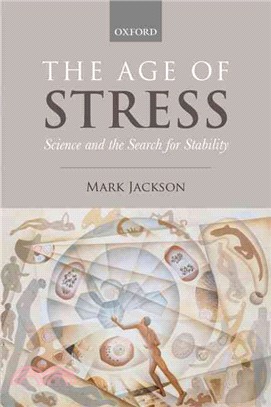
We are living in a stressful world, yet despite our familiarity with the notion, stress remains an elusive concept. In The Age of Stress, Mark Jackson explores the history of scientific studies of stress in the modern world. In particular, he reveals how the science that legitimates and fuels current anxieties about stress has been shaped by a wide range of socio-political and cultural, as well as biological, factors: stress, he argues, is both a condition and a metaphor.
In order to understand the ubiquity and impact of stress in our own times, or to explain how stress has commandeered such a central place in the modern imagination, Jackson suggests that we need to comprehend not only the evolution of the medical science and technology that has gradually uncovered the biological pathways between stress and disease in recent decades, but also the shifting social, economic, and cultural contexts that have invested that scientific knowledge with meaning and authority. In particular, he argues, we need to acknowledge the manner in which enduring concerns about the effects of stress on mental and physical health are the product of broader historical preoccupations with the preservation of personal and political, as well as physiological, stability.
作者簡介
Mark Jackson was Director of the Centre for Medical History at the University of Exeter between 2000 and 2010. He served as Chair of the Wellcome Trust History of Medicine Funding Committee between 2003 and 2008 and is currently Chair of the Wellcome Trust Research Resources in Medical History Funding Committee. He has taught modules in the history of medicine and the history and philosophy of science for over twenty years. His books include Newborn Child Murder (1996), The Borderland of Imbecility (2000), Infanticide: Historical Perspectives on Child Murder and Concealment 1550-2000 (ed., 2002), Allergy: The History of a Modern Malady (2006), Health and the Modern Home (ed., 2007), Asthma: The Biography (2009), and The Oxford Handbook of the History of Medicine (ed., 2011).