商品簡介
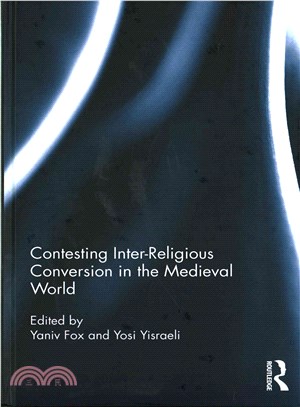
Inter-religious conversion was a central phenomenon in the medieval world, emerging from the political, cultural, and spiritual identities of all three Abrahamic religions. In its most basic sense, inter-religious conversion necessarily entailed the articulation of religious or communal identities and boundaries. Any act of inter-religious conversion, or any reflection upon such conversion, obligated its participants to articulate the kinds of transformations that were - or were supposed to be - taking place. This basic mechanism receives acute new meanings in the context of the Abrahamic religions. Not only did medieval Judaism, Christianity, and Islam stand in close contact, but their adherents constantly peered across religious divides, weaving real or fictional images of their neighbors into essential components in their own self-representations. With this in mind, inter-religious conversion becomes not only a channel for the transmission of ideas, political loyalty, and legal subordination across these cultures, but also a fundamental conceptual tool with which individuals and institutions from all three religions defined themselves. It is therefore almost impossible to think today of a completely autonomous Jewish, Christian, or Muslim history. The volume approaches conversion from three distinct angles: how religious, judicial, and political establishments exercised their power in different, often conflicting, directions in order to organize and control the process of conversion; how conversion was employed as a tool for social or economic mobilization; how conversion, as a discursive phenomenon, was constructed in different textual traditions, and how they were injected with religious, cultural, and political meanings. By combining these perspectives, this volume sets out to map the unique dialogical and disputative processes that circumscribed and ultimately defined inter-religious conversion.
作者簡介
Yaniv Fox, Open University of Israel, and Yosi Yisraeli, Bar Ilan University, Israel