商品簡介
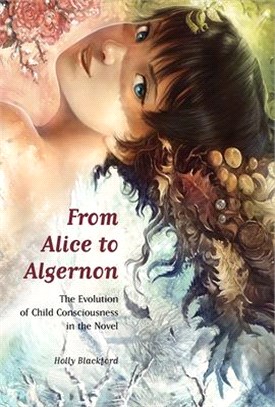
During the latter part of the Victorian era, and in the context of Darwin's evolutionary work about the roots of human nature, children became objects of study. The theory was that children and “primitive” minds were analogous to the past nature of Western civilization. Adolescence became a transitional period in the path to civilization. Psychologist James Sully in 1896 contended that the child embodied a “germ of consciousness,” the study of which would put the psychologist “in an infinitely better position" to find his way through the intricacies of the adult consciousness. The impact of evolutionary thinking on theories of the developing human mind was enormous. That impact provides the context for her subject: how the modern novel contributed to the world's understanding of the wonders and limits of child consciousness. She analyzes the contribution of the novel to Child Study and of Child Study to the novel. This project is rooted in the late nineteenth century but equally concerned with the implications of these ideas in twentieth-century novels that use child consciousness to theorize queerness, criminology, and disability. Annotation ©2018 Ringgold, Inc., Portland, OR (protoview.com)