商品簡介
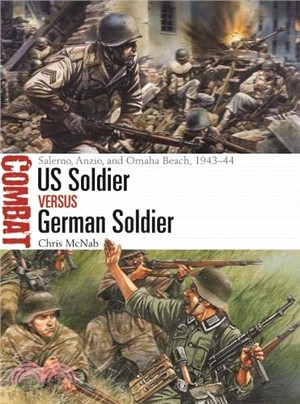
During World War II, the US Army and its allies faced a formidable challenge: the need to assault Hitler's “Fortress Europe” from the sea. For their part, the Germans had to work out how best to contain and defeat the amphibious invaders while defending a lengthy coastline with limited resources.
During 1941–45, the US Army had to add amphibious assault to its list of combat capabilities. At all levels – logistics, beach assault, beachhead consolidation, and more – US Army officers and troops of many arms of service had to develop the techniques and technologies to assault the coasts of Axis-occupied Europe. Ultimately, though, it was the US infantry who had to win and hold a contested beachhead in the face of bitter enemy resistance. With the German infantry defenders immediately around the landing areas usually able to call upon support from nearby artillery, mechanized troops, and armored forces, if the US troops could not establish a beachhead quickly, they risked being thrown back into the sea by the inevitable counterattacks. For their part, the Germans had to devise a practical defensive doctrine that made the most of the limited resources and troops available and the terrain, while according with Hitler's wider strategic vision for “Fortress Europe.”
In this study, an outline of the development of the two sides' development of doctrine is followed by a detailed analysis of the troops involved in three key battles – the Allied amphibious landings at Salerno and Anzio in Italy, and Omaha Beach in Normandy – focusing upon the US Army's various types of beach-assault specialists and their German opponents, whose combat experience and effectiveness varied considerably. Each of the three featured battles is then examined in detail, exploring how the Germans made defensive preparations, how the US troops planned to overcome them, and the immediate combat actions undertaken by the US amphibious specialists and their German opponents both during and immediately following the main assault landings. The picture that frequently emerges shows how the outcome of amphibious assaults could be finely balanced, with an entire campaign hanging upon the results of hundreds of small-unit actions across the beachhead and immediately beyond.