商品簡介
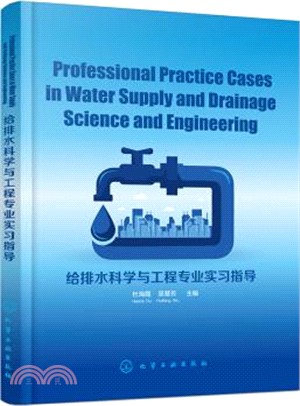
The textbook is designed for the main problems involved in the practice of students in Water Supply and Prainage Science and Engineering, so that students can better practice with questions. The content contains utilization and protection of water resources, water intake, distribution and delivery facilities, traditional water treatment process, combined and separate sewer, wastewater pretreatment, primary wastewater treatment system and secondary wastewater treatment system, sludge treatment and disposal, and sewage advanced treatment system.
The textbook focuses on the principle of the overall knowledge of water supply and drainage, the key points, problems and precautions in the actual investigation and practice of students. We emphasizes the importance of the design of teaching materials for the practical training of water supply and drainage. And the textbook combines the latest improvement on our understanding of basic phenomena as well as research and application of new technologies.
作者簡介
杜海霞,南京工業大學城市建設學院,副教授,杜海霞,博士,副教授(南京工業大學)。2005年蘭州交通大學環境與市政工程學院本科畢業,獲得環境工程學士學位;2009年3月日本國立岐阜大學工學研究生院畢業並獲得土木環境工程碩士學位;2009年4月-2012年3月日本國立岐阜大學工學研究生院攻讀博士學位,2012年3月獲得土木環境工程博士學位,2012年4月進入南京工業大學城市建設學院工作,主要從事利用微生物燃料電池新技術處理廚房固體廢棄物、剩餘活性污泥及含高濃度含氨廢水;剩餘活性污泥的好氧與厭氧消化;臭氧氧化-微生物燃料電池技術處理廚房固體廢棄物;臭氧氧化-好氧/厭氧消化技術處理剩餘活性污泥;砂濾池內生物膜的形成與變化的分析;環境微生物的構造解析;混凝-臭氧氧化-膜處理技術的給水處理等研究。已在《Water research》、《Journal of Cleaner Production》、《Science of the Total Environment》、《Chemosphere》、 《Environmental Technology》、《Environment Protection Engineering》、《安全與環境學報》、《環境工程學報》等國內外學術期刊上發表論文13篇,其中SCI 7篇。應邀擔任 “Applied Energy”、“Environmental Science and Pollution Research”、“Applied Biochemistry and Biotechnology” 等國際SCI學術期刊審稿人。在本項目中,全面負責項目的開展與統籌安排。
目次
Chapter 1 Introduction
1.1 Water supply
1.2 Sewerage
Chapter 2 Water use and water quality
2.1 Relation of water quantity and population
2.2 Water use for different purposes
2.3 Water impurities
2.4 Waterborne diseases
2.5 Inorganic contaminants
2.6 Organic contaminants
2.7 Drinking water quality standards of China
2.8 Drinking water quality standards of Japan
2.9 US EPA(Environmental Protection Agency)water quality standards
Chapter 3 Water sources and water intake facilities
3.1 Rainwater
3.2 Surface water
3.3 Groundwater
3.4 Reservoir storage
3.5 Water intake facilities
Chapter 4 Conventional drinking water treatment processes
4.1 Conventional rapid sand filtration system
4.2 Coagulation and flocculation
4.3 Sedimentation
4.4 Rapid sand filtration
4.5 Disinfection
Chapter 5 Water distribution
5.1 Distribution reservoirs
5.2 Distribution pipe system
5.3 Pumping stations
Chapter 6 Miscellaneous water treatment techniques
6.1 Advanced oxidation(ozonation,UV radiation and hydroxyl oxidation)
6.2 Activated carbon adsorption
6.3 Ion exchange
6.4 Membrane filtration
6.5 Reverse osmosis
6.6 Biological filtration
Chapter 7 The sewers
7.1 Combined sewers
7.2 Separate sewers
Chapter 8 Characteristics of wastewater
8.1 Organic substances
8.2 Inorganic substances
8.3 Pathogenic microorganisms
Chapter 9 Preliminary wastewater treatment systems
9.1 Screening
9.2 Flow equalization tank
9.3 Grit clarifier
Chapter 10 Primary wastewater treatment systems
10.1 Plain sedimentation
10.2 Aerated sedimentation
Chapter 11 Secondary wastewater treatment systems
11.1 Conventional activated sludge process
11.2 Oxidation ditch process
11.3 Trickling filter process
11.4 Anaerobic waste treatment processes
Chapter 12 Sludge treatment and disposal
12.1 Characteristics of sludge
12.2 Sludge conditioning,thickening and dewatering
12.3 Digestion
12.4 Composting
12.5 Incineration
12.6 Microbial fuel cell
Chapter 13 Advanced wastewater treatment
13.1 Nitrogen removal
13.2 Phosphorus removal
References