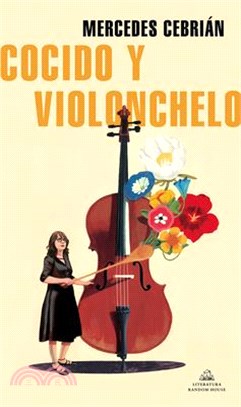
Un elogio en voz alta de dos de los principales placeres que nos ayudan a sobrellevar nuestro tiempo en la tierra: la mica y la comida.
Mercedes Cebri嫕 decide aprender a tocar el violonchelo a una edad a la que, al parecer, ya es tarde para ser principiante. Emprende as?una curiosa aventura acarreando en la espalda un instrumento poco popular en Espa鎙 que la lleva desde academias de mica y orquestas de aficionados hasta talleres de luthiers que huelen a cocido reci幯 hecho. La autora indaga en la naturaleza de la mica, a la par que observa con lupa y c嫠stico sentido del humor un peque隳 mundo donde desfilan talentos en ciernes o aficionados que luchan para sacarle buen sonido a sus instrumentos. Y por el camino nos invita a pasear por una Rusia mental idealizada, con sus instrumentistas y gimnastas virtuosas, por el extra隳 submundo de los ni隳s prodigio expuestos en las redes por sus madres, o por mesones castizos que sirven platos de toda la vida; desde la Espa鎙 postfranquista hasta la pand幦ica, en la que, para muchos, dedicar horas a desempolvar una vieja afici鏮 ha sido vital para mantener la cordura.
Cocido y violonchelo es ese recinto amplio y c鏔odo donde la desmesura y la obsesi鏮 por las actividades que nos proporcionan placer son atributos de los que enorgullecerse. Este es, en definitiva, un testimonio perspicaz, erudito y ameno de las ganas irrefrenables de sacarle el jugo a la vida.
ENGLISH DESCRIPTION This book praises aloud two of the core pleasures that help us cope with our time here on Earth: music and food. Mercedes Cebri嫕 decided to learn to play the cello at an age when, apparently, is too late to begin. She thus embarks on a curious adventure, carrying on her back an instrument not very popular in Spain that takes her from music academies to amateur orchestras, to luthier shops that smell of freshly-made stew. The author delves in the nature of music, while observing through a looking glass and a scathing sense of humor a small world where aspiring talents or enthusiasts parade, struggling to get a good sound out of their instruments. And along the way, she invites us to wander through a mentally idealized Russia, with its instrumentalists and gymnastic virtuosos, through the strange underworld of child prodigies, exposed on social media by their own mothers, or through traditional taverns that serve long-standing dishes. We go from a post-Franco Spain to the pandemic, a time when, for so many, dedicating hours to dust off an old hobby has been vital to keep their sanity.
Stew and Cello is that wide and comfortable enclosure where excess and obsession for any activity that gives us pleasure are attributes to be proud of. This is definitely a keen, knowledgeable, and enjoyable testimony of the uncontrollable need to get the most out of life. "In just a few paragraphs, I can sense writers with a good ear and a good appetite. A few more pages in, I sense a good discernment and a proficiency in that instrument called the Spanish language, since of late foolishness and grammatical, lexical, and syntactical incompetence are hidden behind short sentences, as hiccups. This book by Mercedes Cebri嫕 has all the qualities that seduce me in good writing: good ear, good appetite, intelligence, and a comfortable and natural mastery of the instrument. You read it as if listening to a scurrying sonata while savoring a perfect pasta."
- H嶰tor Abad Faciolince "The gaze that Mercedes Cebri嫕 casts upon the world in these stories reveal an unimaginable originality that derives from knowing what literature is and acting accordingly. [...] Quite a find."
- Juan 聲gel Jurist, ABC