

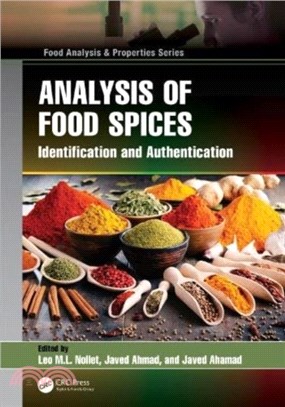
Spices are obtained from natural sources, especially from plants, and are used in cooking food in whole or grounded forms mainly for imparting flavor, aroma, and piquancy. Besides their role in improving food quality, spices also have health benefits that are anticancer, antidiabetic, antimicrobial, antioxidant, hypolipidemic, analgesic, immunostimulant, and more.
Spices are generally marketed in powder form, and their supply chain is very long and complicated, which is why they are particularly susceptible to adulteration at many points. The spice supply chain is considered to be moderately vulnerable and has an ineffective quality detection system in its final product, which is the main risk factor. There are many types of fraud nowadays related to spices such as adulteration, falsification, substitution, and inaccurate labeling.
Analysis of Food Spices: Identification and Authentication provides an overview of spices of different categories, such as terpenes and terpenoids, oleoresins, alkaloids, and polyphenolics and flavonoids, as well as qualitative and quantitative guidelines for ensuring their quality and safety using modern analytical tools and techniques. The first section of the book discusses the overview, sources, and health benefits of important categories of spices such as terpenes and terpenoids (cardamom, cinnamon, clove, coriander, cumin, fennel), oleoresins (capsicum, ginger, nutmeg), alkaloids (black pepper, fenugreek), and polyphenolics and flavonoids (basil, turmeric, olive, saffron). In the second section, qualitative diagnostic features of spices are covered. In the third section, the roles of quantitative analytical techniques, such as HPLC, LC-MS, HPTLC, GC, and GC-MS, capillary electrophoresis (CE), and other recent techniques in the analysis of food spices, are also discussed. Each chapter concludes with a general reference section, which is a bibliographic guide to more advanced texts.
Key Features
This book will provide important guidelines for controlling quality, safety, and efficacy issues related to food spices.
外文書商品之書封,為出版社提供之樣本。實際出貨商品,以出版社所提供之現有版本為主。部份書籍,因出版社供應狀況特殊,匯率將依實際狀況做調整。
無庫存之商品,在您完成訂單程序之後,將以空運的方式為你下單調貨。為了縮短等待的時間,建議您將外文書與其他商品分開下單,以獲得最快的取貨速度,平均調貨時間為1~2個月。
為了保護您的權益,「三民網路書店」提供會員七日商品鑑賞期(收到商品為起始日)。
若要辦理退貨,請在商品鑑賞期內寄回,且商品必須是全新狀態與完整包裝(商品、附件、發票、隨貨贈品等)否則恕不接受退貨。







