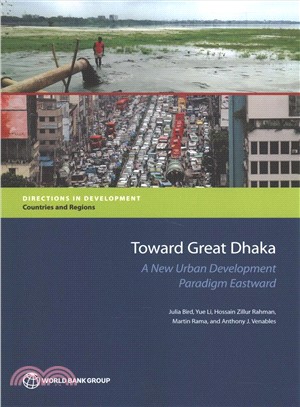
Urbanization is one of the most important drivers of economic and social development. The fact that almost 35 million Bangladeshis will become urban dwellers over the next two decades is excellent new
India's landmark Right of Children to Free and Compulsory Education Act (2009) guarantees education to all children aged 6-14 years. The Act mandates specific student-teacher ratios and emphasizes tea
Does economic size matter for economic development outcomes? If so are current policies adequately addressing the role of size in the development process? Using working age population as a proxy for c
By most accounts, rural Malawi has lacked dynamism in the past decade. Growth has been mostly volatile, in large part due to unstable macroeconomic fundamentals evidenced by high inflation, fiscal def
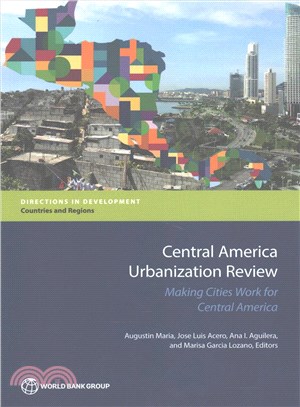
Central America is undergoing an important transition. Urban populations are increasing at accelerated speeds, bringing pressing challenges for development, as well as opportunities to boost sustained
This volume proposes a simple framework to understand the political economy of subsidy reform and applies it to four in-depth country studies covering more than 30 distinct episodes of reform. Five ke
Vietnam is at a crossroads. It can grow as an export platform for GVCs, specializing in low value-added assembly functions with industrialization occurring in enclaves with little connection to the br
Expansion and development of urban areas require acquisition of land, which, in turn, often requires physical relocation of people who own or occupy this land. Land acquisition and resettlement may a
An Investment Framework for Nutrition: Reaching the Global Targets for Stunting, Anemia, Breastfeeding, and Wasting estimates the costs, impacts, and financing scenarios to achieve the World Health As
In the past 15 years, employment, labor market participation, and wages have grown significantly in Brazil. Improved labor market outcomes have been the main drivers of reductions in poverty and inequ
Bangladesh's ambition is to build on its very solid growth and poverty reduction achievements, and accelerate growth to become a middle income country by 2021, and share prosperity more widely amongst
In Central and Eastern European countries, inequalities for Roma families living in marginalized communities start early and are striking. Some of these inequalities reflect hard-wired family circumst
Textbooks play a key role in enhancing the quality of learning, especially in the context of low-income Sub-Saharan African (SSA) countries characterized by large class-size, poorly motivated and inad
This edited volume presents the comprehensive review of the work on developing assessment frameworks for democratic parliaments. The book identifies areas of internationally agreed consensus among the
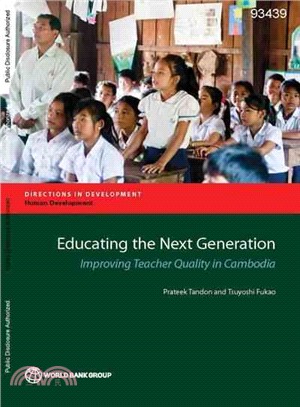
This book diagnoses Cambodian teaching quality and presents policy options for reform. Through classroom observation, assessments of mathematics and pedagogical content knowledge, and surveys of teach
This report provides a systematic review of the evidence on HIV vulnerability and response in all 53 countries of the WHO European Region, stretching from Iceland to the borders of China. It focuses o
Latin America’s population is aging, and many among the growing elderly population are not protected by traditional pension schemes. In response, policy makers have been reevaluating their income prot
Based on forecasts of global population growth, food security will remain an important economic development issue over the next several decades. In addition, real food prices have risen in recent year
Looking at the economic growth of seemingly similar countries one can find striking differences.Why has Australia gotten so much ahead of New Zealand, in spite of the latter being held up as a paragon
Early childhood is the most important stage of human development. In the Middle East and North Africa (MENA), there is little research and inadequate investment in this crucial stage of life. This boo
While economic growth in developing countries over the last ten years has lifted more people out of poverty than in any previous time, more than one billion people still live in countries affected by
Public resources - if invested well in public infrastructure and services - can catalyze private and community efforts and unleash an inclusive growth and development process. But public investment at
Bangladesh has the world’s fastest growing, off-grid solar home system (SHS) coverage. In the past decade, the number of SHS installations has risen phenomenally—from a five-year target of 50,000 in 2
We have long known that a person’s chance of success in life is deeply influenced by early access to education, health services, safe water, and nutritious food. This in turn improves the likelihood t
This report aims to assess the overall water resources management situation in Armenia to identify opportunities for strengthening water security in the country. The proper management of water resourc
The novelty of this work is the fact that it introduces a rigorous and objective economic perspective of current renewable energy support mechanisms and an empirical analysis of the strengths and weak
This book is about global public goods (GPGs), particularly those related to the environment, in the context of the global development process. We, the co-editors of this volume, are concerned with th
The state of the Indian power sector today is an acknowledged constraint to the country’s growth aspirations. This book examines the home-grown Indian experience with private sector participation in p
This World Bank review, Governance of Indian State Power Utilities: An Ongoing Journey, is a first attempt to systematically examine the quality of corporate and regulatory governance in the Indian po
The weak economic performance and insufficient and low-quality job creation in Tunisia is primarily the result of an economic environment permeated by distortions, barriers to competition, and excessi
The emergence of Low-Cost Carriers (LCCs) has been a key catalyst for the development of the aviation industry in the last decade. This book identifies various definitions that have been applied to de
The 2015 Millennium Development Goal to cut in half the share of the world’s population living in extreme poverty was met with time to spare. By 2013, the percentage of developing-country populations
Africa needs power - to grow its economies and enhance the welfare of its people. Power for all is still a long distance away – two thirds of the population remains without electricity and enterprises
Countries everywhere are divided within into two distinct spatial realms: one urban, one rural. Classic models of development predict faster growth in the urban sector, causing rapid migration from ru
The goals of universal health coverage (UHC) are to ensure that all people can access quality health services, to safeguard all people from public health risks, and to protect all people from impoveri
This study reviews the role and workings, with their strengths and weaknesses of last-resort income support (LRIS) programs in Eastern Europe and Central Asia. It draws on a combination of household
H.M. Queen Maxima of the Netherlands, United Nations Secretary-General’s Special Advocate for Inclusive Finance for Development stated that ‘the impact of helping migrants and their families will be l
Agricultural Land Redistribution and Land Administration in Sub-Saharan Africa: Case Studies of Recent Reforms focuses on “how” to undertake land reforms in Sub-Saharan Africa, but with relevant lesso
Finland is known for its consistent progress in the economy and competitiveness, as well as the egalitarian society underneath it. Yet, the challenges experienced by Finland in the beginning of the 20
This report is part of a broader effort by the World Bank Group to understand the motives and challenges of small entrepreneurs in fragile and conflict-affected situations (FCS). The report’s key find