William of Auvergne's work on morals (translated by Roland Teske in this second in a series) has been an absorption in the philosophical world since William served as bishop from 1228 to 1249. He used
Roger Bacon's Opus maius represents an attempt to create a whole new vision of what Christian education should be, one centered on service to the Church. One chapter of this work, "On Signs," is the m
By the early thirteenth century, European Jewish life was firmly rooted in the directives and doctrines of the Babylonian Talmud. In 1236, however, an apostate named Nicholas Donin appeared at the cou
This volume makes "The Moral Treatise on the Eye" available for the first time in English, and also contains an introduction to Peter of Limoges, his intellectual interests, the sources of the "Treati
The principal signs and instruments of grace available to Christians as a result of Christ's redeeming work are the sacraments of the Church - baptism, confirmation, the Eucharist, penance, extreme un
Book 3 of the Sentences deals with the mystery of the Word made flesh: Christ's incarnation, passion, and death, the consequent restoration of humankind, and the virtues to be practised in imitation o
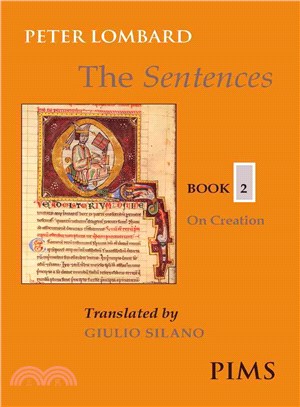
This volume makes available for the first time in English full translations of Book 2 of the Sentences. It consists of forty-four Distinctions and contains an introduction to Book 2, a list of the maj
This volume makes available for the first time in English full translations of Book 1 of Peter Lombard?s Sentences, the work that would win the greatest teacher of the twelfth century a place in Dante
The land legislation issued by the emperors of the Macedonian dynasty is the most important source for the internal history of tenth-century Byzantium. This volume offers the first full translation of
The Syriac chronicle of Zuqnin features accounts of the world from its creation to the eighth century A.D. Part III preserves much of the lost work of the late sixth-century Syriac historian, John of