This volume in the Revolutions Series presents Jesus Christ as a figure akin to revolutionaries like Robespierre, Marx, and Che Guevara. In this new presentation of the Gospels, Terry Eagleton makes a
These early philosophical writings underpinned the Chinese revolutions and their clarion calls to insurrection remain some of the most stirring of all time. Drawing on a dizzying array of references f
Soon after the Bolshevik victory in the Russian Revolution, Leon Trotsky led the Red Army against the counter-revolutionary White armies. Written in the white heat of the Civil War, "Terrorism and Com
Ho Chi Minh (1890-1969), the founder of the Vietminh and President of the Democratic Republic of Vietnam, was the archetypical Communist and anti-colonial revolutionary of the twentieth century. He pl
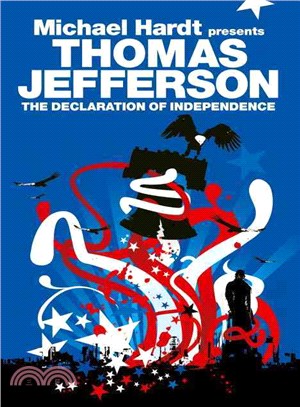
"In 1776 Thomas Jefferson, a future president, authored the most explosive document in the history of America: The Declaration of Independence, formally severing the link between America and the Briti
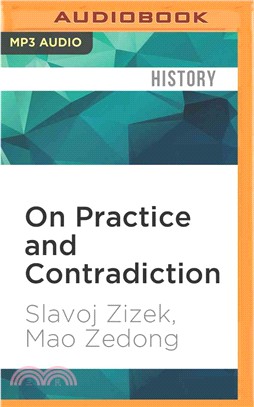
Mao's early philosophical writings underpinned the Chinese revolutionsand their clarion calls to insurrection remain some of the moststirring of all time. Maverick philosopher Slavoj Zizek's firecrac
Launched in 1942, the Manhattan Project was a well-funded, secret effort by the United States, the United Kingdom, and Canada to develop an atomic bomb before the Nazis. The results--the bombs named &
Declaring that "a wartless Watt would be no Watt at all," Marsden (cultural history, U. of Aberdeen, Scotland), shows how industrial icon James Watt owed his rise as much to espionage and political ma
In a nicely-bound compact volume, a researcher in the history of medicine at University College, London, relates stories of how the germ theory of disease was confirmed. Includes illustrations. First
Sometime during the 20th century, science moved from small laboratories of individual researchers and a few colleagues or students, to vast complexes with hundreds and sometimes thousands of workers.
A reassessment of the French Revolution argues that the angry masses were in fact a socially mixed and transient group and that revolution was not an inevitable expression of French political and econ
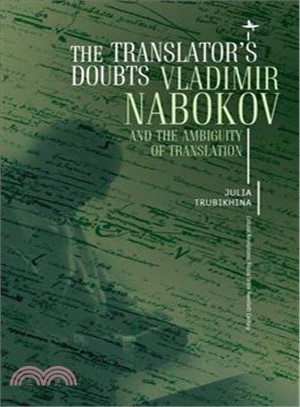
Using Vladimir Nabokov as its “case study,” this volume approaches translation as a crucial avenue into literary history and theory, philosophy and interpretation. The book attempts to bring together
Conflict and change are fundamental elements of social reality and of the Jewish historical experience. This collection presents the work of a distinguished group of scholars exploring the themes of s
“The Translator’s Doubts” singles out translation as a way of talking about literary history and theory, philosophy, and interpretation, with the work of Vladimir Nabokov as its “case study.” It is ha
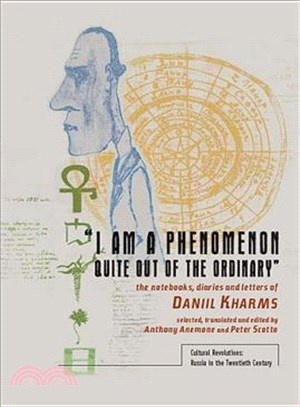
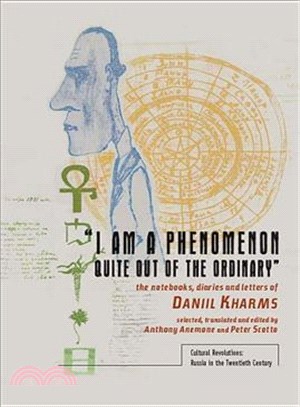
In addition to his numerous works in prose and poetry for both children and adults, Daniil Kharms (1905-42), one of the founders of Russia’s “lost literature of the absurd,” wrote notebooks and a diar
In addition to his numerous works in prose and poetry for both children and adults, Daniil Kharms, (1905-42), one of the founders of Russia's “lost literature of the absurd,” wrote notebooks and a dia
Across the twentieth century, the Russian literary hero remained central to Russian fiction and frequently "battled" one enemy or another, whether on the battlefield or on a civilian front. War was th
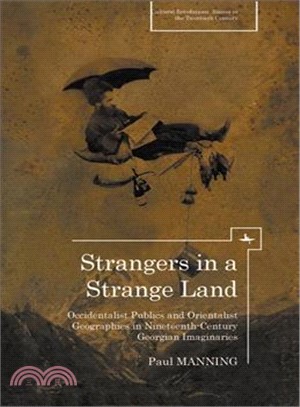
Manning examines the formation of nineteenth-century intelligentsia print publics in the former Soviet republic of Georgia both anthropologically and historically. At once somehow part of “Europe,” at
Parts (Russian, McGill University) brings together an international group of scholars for an analysis of the Russian short story in the twentieth century. She considers first if there is something par
The newspaper press was an essential aspect of the political culture of the French Revolution. Revolutionary News highlights the most significant features of this press in clear and vivid language. It
The enmeshment of the human body with various forms of technology is a phenomenon that characterizes lived and imagined experiences in Russian arts of the modernist and postmodernist eras. In contrast
The enmeshment of the human body with various forms of technology is a phenomenon that characterizes lived and imagined experiences in Russian arts of the modernist and postmodernist eras. In contrast