This book summarizes the landscape of cache replacement policies for CPU data caches.The emphasis is on algorithmic issues, so the authors start by defining a taxonomy that places previous policies in
A key determinant of overall system performance and power dissipation is the cache hierarchy since access to off-chip memory consumes many more cycles and energy than on-chip accesses. In addition, mu
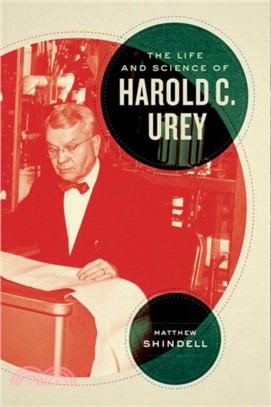
Harold C. Urey (1893-1981) was one of the most famous American scientists of the twentieth century. Awarded the Nobel Prize in 1934 for his discovery of deuterium and heavy water, Urey later participa
Today's science tells us that our bodies are filled with molecular machinery that orchestrates all sorts of life processes. When we think, microscopic "channels" open and close in o
In this remarkable and gorgeously illustrated book, Neil Jackson presents a vibrant profile of the Los Angeles architect Pierre Koenig, who Time magazine said lived long enough to become “cool t
Arthur Drexler (1921-1987) served as the curator and director of the Architecture and Design Department at the Museum of Modern Art (MOMA) from 1951 until 1986— the longest curatorship in the mu
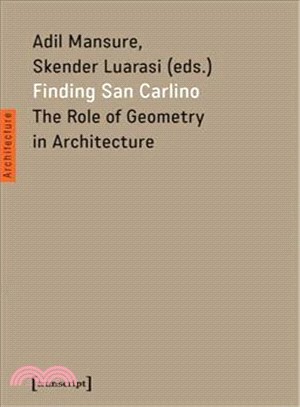
Francesco Borromini’s San Carlo alle Quattro Fontane (San Carlino) is a curious artifact that continues to inspire hypotheses and geometric analyses attempting to explain its form, meaning, and symbol
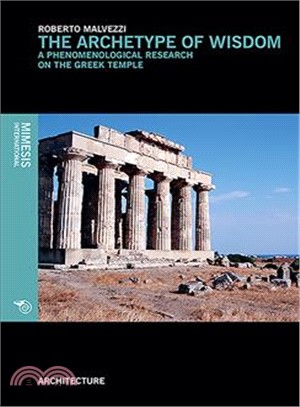
This volume analyzes the birth of the earliest Greek temples through an innovative phenomenological approach, in which lived experiences are assumed as key tools of investigation. Accordingly, much sp
In 1968 a team of scientists and engineers from RCA announced the creation of a new form of electronic display that relied upon an obscure set of materials known as liquid crystals. At a time when tel
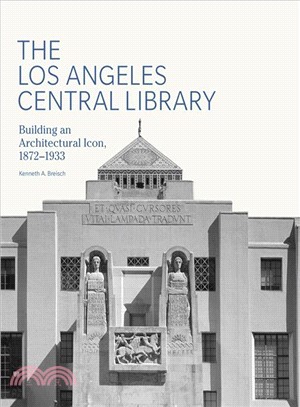
In the most comprehensive investigation of the Los Angeles Public Library’s early history and architectural genesis ever undertaken, Kenneth Breisch chronicles the institution’s first six decades, fro
In a positive departure from modernism, the work of the art critic and urbanist Ludwig Hilberseimer offers schemata towards the design for the city itself: its mereological composition. The resonance
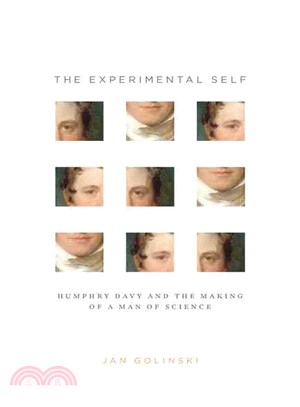
How did someone become a scientist before the profession itself existed? Jan Golinski finds an answer in the remarkable career of Humphry Davy (1778-1829), one of the foremost British men of science o
In Inventing Chemistry, historian John C. Powers turns his attention to Herman Boerhaave (1668–1738), a Dutch medical and chemical professor whose work reached a wide, educated audience and became the
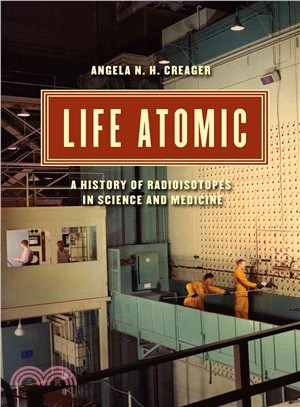
After World War II, the US Atomic Energy Commission (AEC) began mass-producing radioisotopes, sending out nearly 64,000 shipments of radioactive materials to scientists and physicians by 1955. Even as
This book examines the different roles of architects in rural post-disaster housing and their impact on the degree of success of the projects from villagers' perspective. It is based around the buildi
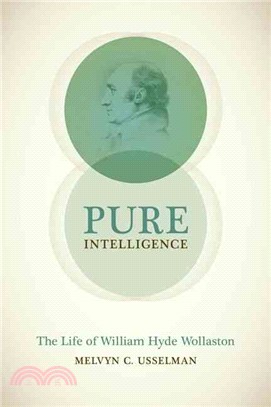
William Hyde Wollaston was born into a large, religious, and scientifically informed family in 1766 and died sixty-two years later as one of the Western world’s most highly regarded scientists. With e
The advent of recombinant DNA technology in the 1970s was a key moment in the history of both biotechnology and the commercialization of academic research. Doogab Yi’sThe Recombinant University draws
During the seventeenth and eighteenth centuries, Europeans raised a number of questions about the nature of reality and found their answers to be different from those that had satisfied their forebear
During much of the nineteenth century, physicians and pharmacists alike considered medical patenting and the use of trademarks by drug manufacturers unethical forms of monopoly; physicians who prescri
Architecture and urbanism seem to be ?weak? disciplines, constantly struggling for a better understanding of their nature and disciplinary borders. The huge amount of metaphors appearing in the discou
In The Secrets of Alchemy, Lawrence M. Principe, one of the world’s leading authorities on the subject, brings alchemy out of the shadows and restores it to its important place in human history and
After World War II, the US Atomic Energy Commission (AEC) began mass-producing radioisotopes, sending out nearly 64,000 shipments of radioactive materials to scientists and physicians by 1955. Even as
In the fall of 1980, Genentech, Inc., a little-known California genetic engineering company, became the overnight darling of Wall Street, raising over $38 million in its initial public stock offering.