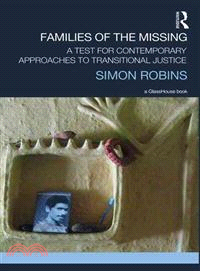
Addressing the needs of Families of the Missing interrogates the current practice of transitional justice from the viewpoint of the families of those disappeared and missing as a result of conflict an
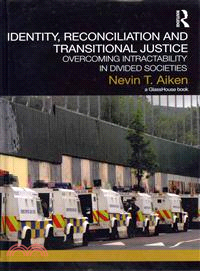
Building upon an interdisciplinary synthesis of recent literature from the fields of transitional justice and conflict transformation, this book introduces a groundbreaking theoretical framework that
States that are in transition following a violent conflict or an authoritarian past face daunting challenges in (re)establishing the rule of law. This volume examines the detailed attempts that were m
The Dynamics of Transitional Justice draws on the case of East Timor in order to reassess how transitional justice mechanisms actually play out at the local level. Transitional justice mechanisms – in
The recruitment and operations of child soldiers have been hitting the headlines in politics and the media for many years, however a much broader circle of children is affected by armed conflicts. The
?After periods of conflict and authoritarianism, educational institutions often need to be reformed or rebuilt. But in settings where education has been used to support repressive policies and human r
Transitional justice processes have a fundamental public dimension. Their impact depends in part on the social support they receive. For this reason, transitional justice bodies have increasingly impl
Transitional justice is often pursued in contexts where people have been forced from their homes by human rights violations and have suffered additional abuses while displaced. Little attention has be
The first volume of the International Center for Transitional Justice's new Advancing Transitional Justice Series. Published with the support of the International Development Research Centre. What h
The backdrop to Bridging Divides in Transitional Justice is Cambodia's history of radical Communist revolution (1975-1979) under the brutal Khmer Rouge regime, and the culture of impunity and silence
This book offers an analysis of the existing normative framework regulating the right to reparation for child victims of armed conflict. The study questions whether the current framework is sufficient
How do societies at the national and international level try to overcome historical injustices? What remedies did they develop to do justice to victims of large scale atrocities? And even more importa
In a political climate that holds limited promise for addressing the issue of child recruitment, Child Soldiers and Transitional Justice: Protecting the Rights of Children Involved in Armed Conflicts
Based on case studies spanning time and geography - from the Spanish to the Nigerian civil wars, to government repression in Argentina and genocidal policies in Guatemala and Rwanda and, finally, to f
This volume considers the important and timely question of criminal justice as a method of addressing state violence committed by non-democratic regimes. The book's main objectives concern a fresh, co
Over the past decades, the practice of and research on transitional justice have expanded to preserving memory in the form of memorials. Memorials often employ a common architectural language and a se