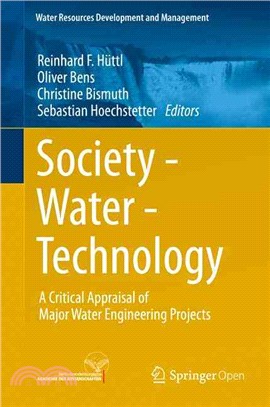
This book highlights the first comparative long-term analysis of the negative impacts of large dams on riverine communities and on free-flowing rivers in Africa, the Middle East and Asia. Followi
This book highlights the relationship between the water sector and various other sectors in order to establish an improved understanding of the importance of water resources as an essential cross-cutt
This book highlights what are likely to be the future megatrends in the water sector and why and how they should be incorporated to improve water governance in the coming decades. In this first ever b
This book highlights the application of Geographical Information System (GIS) and nature based algorithms to solve the problems of water and water based renewable energy resources. The irregularity in
This book presents a model for describing the hierarchical concept of China’s water rights structure, one which takes into account pioneering theories on natural resources and environmental institutio
This book summarizes the key findings of a five-year interdisciplinary research project funded by the German Federal Ministry of Research and Education (BMBF). It serves as a typical case study for a
This book highlights the role that both infrastructure and governance play in the context of resilience and climate change adaptation. The World Water Council and the National Association of Water and
This book presents the results of the Interdisciplinary Research Group "Society – Water – Technology" of the Berlin-Brandenburg Academy of Sciences and Humanities. It describes interdiscipli
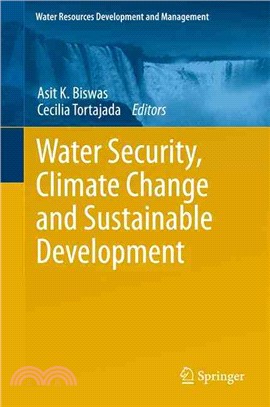
This book pursues a comprehensive approach so as to arrive at a better understanding of the implications of climate change on sustainable development, focusing on the perspective of water. Climate cha
One of the most controversial issues of the water sector in recent years has been the impacts of large dams. Proponents have claimed that such structures are essential to meet the increasing water dem
Transboundary rivers and lakes are often the remaining new sources of water that can be developed for human uses. These water sources were not used in the past because of the many complexities involve
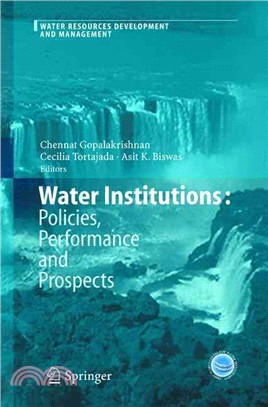
This is a global survey and assessment of the structure, evolution, and performance of water institutions – administration policies and regulatory practices – in regional, national, and international
By making available the almost unlimited energy stored in prehistoric plant matter, coal enabled the industrial age – and it still does. Coal today generates more electricity worldwide than any
Carbon is the political challenge of our time. While critical to supporting life on earth, too much carbon threatens to destroy life as we know it, with rising sea levels, crippling droughts, searing
Carbon is the political challenge of our time. While critical to supporting life on Earth, too much carbon threatens to destroy life as we know it, with rising sea levels, crippling droughts, and cata
Water is intricately linked with food security, energy security, and sustainable development. As the world is moving towards sustainable development goals, it is critical to recognize the role of wate
From DNA sequences stored on computer databases to archived forensic samples and biomedical records, bioinformation comes in many forms. Its unique provenance – the fact that it is 'mined' from
From DNA sequences stored on computer databases to archived forensic samples and biomedical records, bioinformation comes in many forms. Its unique provenance – the fact that it is 'mined' from
Uranium, the most atomically unstable natural element on earth, has a unique place in the global geopolitics of resources. It provides energy to millions of people and its isotopes are used to power s
Uranium, the most atomically unstable natural element on earth, has a unique place in the global geopolitics of resources. It provides energy to millions of people and its isotopes are used to power s
Oil pulses through our daily lives. It is the plastic we touch, the food we eat, and the way we move. Oil politics in the twentieth century was about the management of abundance, state power, and mark
Oil pulses through our daily lives. It is the plastic we touch, the food we eat, and the way we move. Oil politics in the twentieth century was about the management of abundance, state power, and mark
Chocolate has long been a favorite indulgence. But behind every chocolate bar we unwrap, there is a world of power struggles and political maneuvering over its most important ingredient: cocoa. I
Chocolate has long been a favorite indulgence. But behind every chocolate bar we unwrap, there is a world of power struggles and political maneuvering over its most important ingredient: cocoa. I
Grains - particularly maize, rice, and wheat - are the central component of most people’s diets, but we rarely stop to think about the wider role they play in national and international policy-making,