James Elkins tells six independent stories about images made in the last quarter-century. Some come from the world of art (painting and photography) and some from that of science (physics, astrophysic
James Elkins has shaped the discussion about how we—as artists, as art historians, or as outsiders—view art. He has not only revolutionized our thinking about the purpose of teaching art
This book offers an innovative examination of the interactions of science and technology, art, and literature in the nineteenth and twentieth centuries. Scholars in the history of art, literature, a
This is a broad-ranging and ambitious attempt to rethink aesthetic and literary studies in terms of an anthropology” of symbolic media generally. Central to the author’s argument is the proposition th
The reach of the British Empire allowed Victorian astronomers to travel around the globe to observe solar eclipses. Pang (researcher at Institute for the Future, a California think tank) argues that t
Especially in the eyes of modern historians of science, says Lynch (interdisciplinary studies, Wayne State U.), the activity of the Royal Society of London between its founding in 1662 and the revelat
Diana E. Forsythe was a leading anthropologist of science, technology, and work, and especially of the field of artificial intelligence. This volume collects her best-known essays, along with other ma
Bootstrapping analyzes the genesis of personal computing from both technological and social perspectives, through a close study of the pathbreaking work of one researcher, Douglas Engelbart. In his la
Behind the headlines of our time stands an unobtrusive army of science advisors. Panels of scientific, medical, and engineering experts evaluate the safety of the food we eat, the drugs we take, and
Two features of mathematics stand out: its menagerie of seemingly eternal objects (numbers, spaces, patterns, functions, categories, morphisms, graphs, and so on), and the hieroglyphics of special not
Toward the end of the nineteenth century, the hegemony of the printed word was shattered by the arrival of new media technologies that offered novel ways of communicating and storing data. Previously
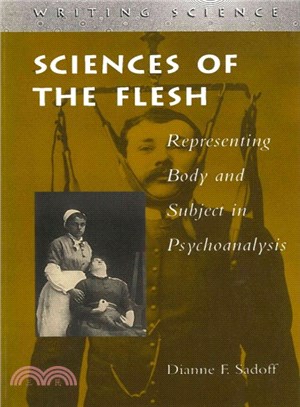
Psychoanalysis may be said to have been born in the twentieth century,” Freud said late in his career, but it did not drop from the skies ready-made.” And in his speculative theories of modernism, Bru
“Psychoanalysis may be said to have been born in the twentieth century,” Freud said late in his career, “but it did not drop from the skies ready-made.” And in his speculative theories of modernism, B
This collection of five essays by Germany’s most prominent and influential social thinker both links Luhmann’s social theory to the question “What is modern about modernity?”
Science historian Hentschel examines the architecturally historic observatory that German astronomy Erwin Finlay Freundlich commissioned his architect friend Erish Mendelsohn to design so Freundlich c
What do biologists study when they study "life" today? Drawing on tools from rhetoric and poststructuralist theory, the author argues that the ascent of molecular biology, with its e
Early practitioners of the social studies of science turned their attention away from questions of institutionalization, which had tended to emphasize macrolevel explanations, and attended instead to
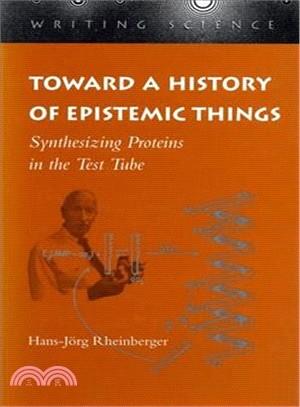
In this powerful work of conceptual and analytical originality, the author argues for the primacy of the material arrangements of the laboratory in the dynamics of modern molecular biology. In a post-
Describes the origins of epigenesis, the theory that organisms generate themselves under the guidance of a formative drive, looking at how it came to replace the reigning model of preformation. Discus
Containing a wealth of illustrations, a critical study of images of fetuses, pregnancy, and childbirth from the sixteenth century to the present traces the influence of such images on public and profe
Is science unified or disunified? Over the last century, the question has raised the interest (and hackles) of scientists, philosophers, historians, and sociologists of science, for at stake is how sc
Do men and women experience taste and smell differently? And what happens when you eat a meal completely in the dark? Diane Fresquez, a former Wall Street Journal reporter, spent a year on the trail o
Why are the fields of science and technology still considered to be predominantly male professions? The Madame Curie Complex moves beyond the most common explanations—limited access to professional tr