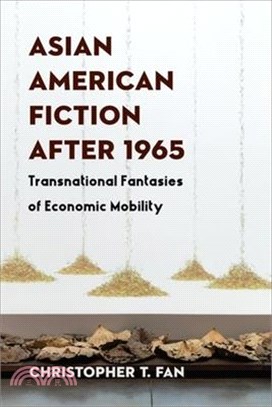
After the 1965 Immigration and Nationality Act loosened discriminatory restrictions, people from Northeast Asian countries such as South Korea, Taiwan, Japan, and eventually China immigrated to the United States in large numbers. Highly skilled Asian immigrants flocked to professional-managerial occupations, especially in science, technology, engineering, and math. Asian American literature is now overwhelmingly defined by this generation's children, who often struggled with parental and social expectations that they would pursue lucrative careers on their way to becoming writers. Christopher T. Fan offers a new way to understand Asian American fiction through the lens of the class and race formations that shaped its authors both in the United States and in Northeast Asia. In readings of writers including Ted Chiang, Chang-rae Lee, Ling Ma, Ruth Ozeki, Kathy Wang, and Charles Yu, he examines how Asian American fiction maps the immigrant narrative of intergenerational conflict onto the













![General Philip Reed and Caulk's Field Memorial. Report of the Remarks of Rev. Christopher T. Denroche and Captain Columbms [!] A. Leary; Also the Hist](https://cdnec.sanmin.com.tw/product_images/102/102075288.jpg)