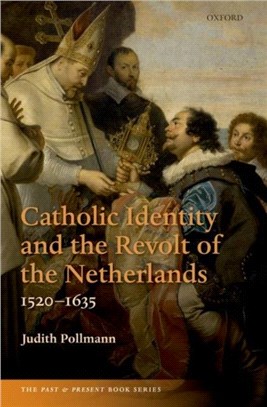
Judith Pollmann uses the diaries and memoirs of sixteenth-century Catholics to explore how they understood and experienced the religious civil war that ripped the sixteenth-century Netherlands apart.
For early modern Europeans, the past was a measure of most things, good and bad. For that reason it was also hotly contested, manipulated, and far too important to be left to historians alone.Memory i
Mining the unusually rich range of diaries, memoirs, and poems written by Catholics in the sixteenth-century Low Countries, Judith Pollmann explores how Catholic believers experienced religious and po
This volume offers a fascinating insight into the continuities and discontinuities in the formation of identities in the Low Countries and its neighbouring countries. It is an important contribution t
Alastaire Duke, whose work focused on the Netherlands, was one of a generation of historians whose work on public opinion in Early Modern Europe helped challenge Jurgen Habermas's theory that the publ
Alastair Duke has long been recognized as one of the leading scholars of the early modern Netherlands, known internationally for his important work on the impact of religious change on political event
This volume compares the position of Catholic minorities in England and the Dutch Republic. Looking beyond the tales of persecution that have dominated traditional historiography, the contributors foc
This volume examines the practice of memory in early modern Europe, showing that this was already a multimedia affair with many political uses, and affecting people at all levels of society; many pre-
This volume is the first to compare the position of Catholic minorities in England and the Dutch Republic. Looking beyond the tales of persecution that have dominated traditional historiography, the c