商品簡介
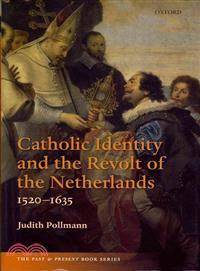
Mining the unusually rich range of diaries, memoirs, and poems written by Catholics in the sixteenth-century Low Countries, Judith Pollmann explores how Catholic believers experienced religious and political change in the generations between Erasmus and Rubens. The Revolt that ripped apart the sixteenth-century Netherlands came at the expense of a civil war, that eventually became a war of religion. Originally both Catholics and Protestants supported the rebellion, but it soon transpired that Catholics stood much to lose. Their churches were ravaged by iconoclasts, priests feared for their lives, and thousands of Catholics were forced to flee their hometowns; Calvinist city republics imposed radical religious changes, and in the rebel Dutch Republic Catholic worship was banned. Although the Habsburg Netherlands eventually witnessed the triumph of the militant Catholicism of the Baroque, Catholics throughout the Netherlands found that the Revolt had changed their lives forever.
By listening to the voices of individual Catholics, lay and clerical, Professor Pollmann offers a new perspective both on the Revolt of the Netherlands, and on the experience of religious change in this period. She asks why Catholics responded so passively to Calvinist aggression in the early decades of the conflict, only to start offering very active support for a Catholic revival after 1585, when the Habsburg Netherlands once again became a Catholic bulwark. By exploring what it took to turn traditional Christians into the agents of their own Counterreformation, she highlights the changing dynamic between priests and laypeople as a catalyst for religious change in early modern Europe.
作者簡介
Judith Pollmann was educated at the University of Amsterdam and the Warburg Institute in London. From 1995-2005 she taught early modern European history at Oxford University, before relocating to the University of Leiden in the Netherlands, where she is currently Professor of the History and Culture of the Dutch Republic. Pollmann has published widely on the cultural and religious history of the early modern Low Countries and on the Dutch Revolt. She is currently directing a research project entitled Memory, oblivion and identity in the early modern Low Countries, 1566-1700.