Deaf children are not hearing children who can't hear, and having a deaf child is not analogous to having a hearing child who can't hear. Beyond any specific effects of hearing loss, deaf children are
This book is the first comprehensive examination of the psychological development of deaf children. Because the majority of young deaf children (especially those with non-signing parents) are reared i
The second edition of this guide offers a readable, comprehensive summary of everything a parent or teacher would want to know about raising and educating a deaf child. It covers topics ranging from w
This book is the first comprehensive examination of the psychological development of deaf children. Because the majority of young deaf children (especially those with non-signing parents) are reared
This edited volume picks up where Psychological Perspectives on Deafness, Volume 1 ended. Composed of review chapters that reflect cutting-edge views from well-known international researchers within t
Teaching Deaf Learners: Psychological and Developmental Foundations explores how deaf students (children and adolescents) learn and the conditions that support their reaching their full cognitive pote
How can parents and teachers most effectively support the language development and academic success of deaf and hard-of-hearing children? Will using sign language interfere with learning spoken langu
"One of the greatest challenges in educating deaf and hard-of-hearing students today is the need for evidence-based practice to replace decades if not centuries of intuitive teaching. This volume will
This volume presents the latest research from internationally recognized researchers and practitioners on language, literacy and numeracy, cognition, and social and emotional development of deaf learn
Education in general, and education for deaf learners in particular, has gone through significant changes over the past three decades. And change certainly will be the buzzword in the foreseeable futu
Language development, and the challenges it can present for individuals who are deaf or hard-of-hearing, have long been a focus of research, theory, and practice in D/deaf studies and deaf education.
Deaf Cognition examines the cognitive underpinnings of deaf individuals' learning. Marschark and Hauser have brought together scientists from different disciplines, which rarely interact, to share the
Throughout history there have been efforts to help deaf children develop spoken language through which they could have full access to the hearing world. These efforts, although pursued seriously and w
Over the past decade there has been a significant increase in interest from educators and the general public about deafness, special education, and the development of children with special needs. The
Co-enrollment programming in deaf education refers to classrooms in which a critical mass of deaf and hard-of-hearing (DHH) students is included in a classroom containing mainly hearing students and w
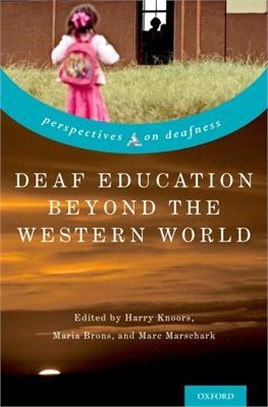
If teachers want to educate deaf learners effectively, they have to apply evidence-informed methods and didactics with the needs of individual deaf students in mind. Education in general -- and educat
In Bilingualism and Bilingual Deaf Education, volume editors Marc Marschark, Gladys Tang, and Harry Knoors bring together diverse issues and evidence in two related domains: bilingualism among deaf le
Deaf children are not hearing children who can't hear. Beyond any specific effects of hearing loss, as a group they are far more diverse than hearing peers. Lack of full access to language, incidental
The field of deaf studies, language, and education has grown dramatically over the past forty years. From work on the linguistics of sign language and parent-child interactions to analyses of school p
Oxford Handbooks offer authoritative and up-to-date reviews of original research in a particular subject area. Specially commissioned chapters from leading figures in the discipline give critical exa
The use of sign language has a long history. Indeed, humans' first languages may have been expressed through sign. Sign languages have been found around the world, even in communities without access t
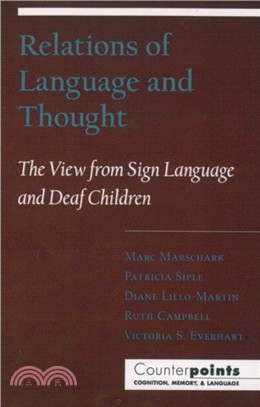
The relationship of language to cognition, especially in development, is an issue that has occupied philosophers, psychologists, and linguists for centuries. In recent years, the scientific study of
More the 1.46 million people in the United States have hearing losses in sufficient severity to be considered deaf; another 21 million people have other hearing impairments. For many deaf and hard-of