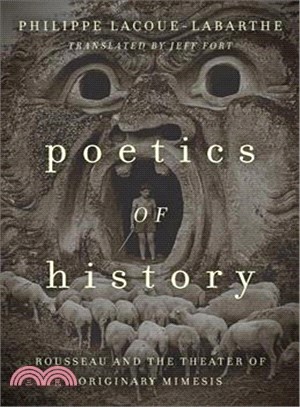
Rousseau’s opposition to the theater is well known: But is it possible that Rousseau’s texts reveal a different conception of theatrical imitation? This short but potent text from a powerful European
Rousseau’s opposition to the theater is well known: But is it possible that Rousseau’s texts reveal a different conception of theatrical imitation? This short but potent text from a powerful European
The first complete English translation of Lacoue-Labarthe’s most innovative and original work, exploring the very origins of experience, language, desire, and mortality.
The first complete English translation of Lacoue-Labarthe’s most innovative and original work, exploring the very origins of experience, language, desire, and mortality.
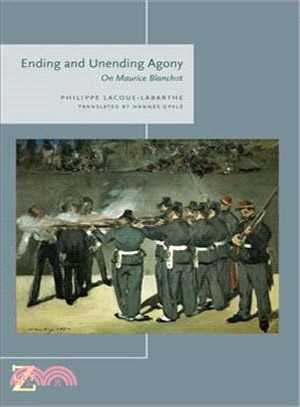
Published posthumously, Ending and Unending Agony is Philippe Lacoue-Labarthe's only book entirely devoted to the French writer and essayist Maurice Blanchot (1907-2003). The place of Blanchot in Laco
Published posthumously, Ending and Unending Agony is Philippe Lacoue-Labarthe's only book entirely devoted to the French writer and essayist Maurice Blanchot (1907-2003). The place of Blanchot in Laco
Heidegger and politics. This complex and often unsavory mixture has generated a great deal of discussion, which has usually focused on one thing: Heidegger's involvement in the Nazi Party. But what if
Lacoue-Labarthe's Poetry as Experience addresses the question of a lyric language that would not be the expression of subjectivity. In his analysis of the historical position of Paul Celan's poetry, L
Philosopher, literary critic, translator (of Nietzsche and Benjamin), Philippe Lacoue-Labarthe is one of the leading intellectual figures in France. This volume of six essays deals with the relation b
This is a pioneering attempt to rearticulate the relationship between music and the problem of mimesis, of presentation and re-presentation. Four "scenes" compose this book, all four of them responses
This is a pioneering attempt to rearticulate the relationship between music and the problem of mimesis, of presentation and re-presentation. Four "scenes" compose this book, all four of them responses
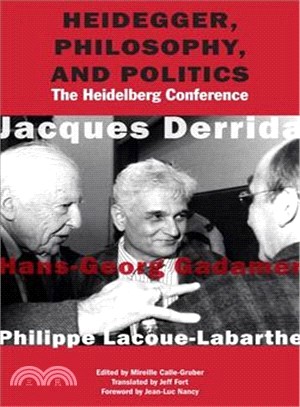
In February of 1988, philosophers Hans-Georg Gadamer, Jacques Derrida, and Philippe Lacoue-Labarthe came together in Heidelberg before a large audience to discuss the philosophical and political impli
In February of 1988, philosophers Hans-Georg Gadamer, Jacques Derrida, and Philippe Lacoue-Labarthe came together in Heidelberg before a large audience to discuss the philosophical and political impli