A New York Times columnist analyzes the craft of writing a great sentence and describes the pleasure he gets from reading one that takes his breath away while guiding readers on a literary tour of gre
Provocative essays from one of America's most important cultural criticsThink Again gathers one hundred of the best of Stanley Fish's provocative New York Times essays, pieces that have generated pass
The discipline of literary criticism is strictly defined, and the most pressing issues of our time—racism, violence against women and homosexuals, cultural imperialism, and the like—are located outsid
A lively and accessible guide to understanding rhetoric by the world class English and Law professor and bestselling author ofHow to Write a Sentence.Filled with the wit and observational prowess that
What should be the role of our institutions of higher education? To promote good moral character? To bring an end to racism, sexism, economic oppression, and other social ills? To foster diversity and
Some appreciate fine art; others appreciate fine wines. Stanley Fish appreciates fine sentences. The New York Times columnist and world-class professor has long been an aficionado of language: ?I am a
In the stark television drama The Fugitive, Dr. Richard Kimble, an innocent man convicted of murder, is on the run from the police and in pursuit of the real killer. The award-winning show, which air
A lively and accessible guide to understanding rhetoric by the world class English and Law professor and bestselling author of How to Write a Sentence.Filled with the wit and observational prowess tha
Advocates of academic freedom often view it as a variation of the right to free speech and an essential feature of democracy. Stanley Fish argues here for a narrower conception of academic freedom, o
“Fish mines cultural touchstones from Milton to ‘Married with Children’ to explain how various types of arguments are structured and how that understanding can lead to victory” — New York Times Book R
In 1967 the world of Milton studies was divided into two armed camps: one proclaiming (in the tradition of Blake and Shelley) that Milton was of the devil's party with or without knowing it, the othe
Stanley Fish is an equal opportunity antagonist. A theorist who has taken on theorists, an academician who has riled the academy, a legal scholar and political pundit who has ruffled feathers left and
From 1995 to 2013, Stanley Fish's provocative New York Times columns consistently generated passionate discussion and debate. InThink Again, he has assembled almost one hundred of his best columns int
Surprised by Sin, first published in 1967, established Fish as one of the world's preeminent Milton scholars. The lifelong engagement begun in that work culminates in this book, the magnum opus of a f
What should be the role of our institutions of higher education? To promote good moral character? To bring an end to racism, sexism, economic oppression, and other social ills? To foster diversity and
Stanley Fish is one of America's most stimulating literary theorists. In this book, he undertakes a profound reexamination of some of criticism's most basic assumptions. He penetrates to the core of
In an era when much of what passes for debate is merely moral posturing--traditional family values versus the cultural elite, free speech versus censorship--or reflexive name-calling--the terms "liber
In literary theory, the philosophy of law, and the sociology of knowledge, no issue has been more central to current debate than the status of our interpretations. Do they rest on a ground of rationa
Now in paperback, Fredric Jameson’s most wide-ranging work seeks to crystalize a definition of “postmodernism” Jameson’s inquiry looks at the postmodern across
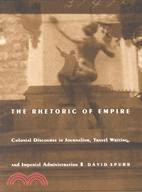
The white man's burden, darkest Africa, the seduction of the primitive: such phrases were widespread in the language Western empires used to talk about their colonial enterprises. How this language it
Appearing between two historical touchstones—the alleged end of communism and the 100th anniversary of Nietzsche’s death—this book offers a provocative hypothesis about the philosop
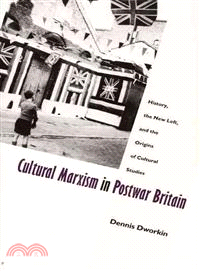
In this intellectual history of British cultural Marxism, Dennis Dworkin explores one of the most influential bodies of contemporary thought. Tracing its development from beginnings in postwar Britain
Joining the current debates in American literary history, Jos? David Sald!var offers a challenging new perspective on what constitutes not only the canon in American literature, but also the notion o
Since Germany became a colonial power relatively late, postcolonial theorists and histories of colonialism have thus far paid little attention to it. Uncovering Germany's colonial legacy and imaginat
In the space of barely more than five years, with the publication of four pathbreaking books, Slavoj Zizek has earned the reputation of being one of the most arresting, insightful, and scandalous thi
In this persuasive reversal of previous scholarship, Linda Schulte-Sasse takes an unorthodox look at Nazi cinema, examining Nazi films as movies that contain propaganda rather than as propaganda vehic
In Belated Travelers, Ali Behdad offers a compelling cultural critique of nineteenth-century travel writing and its dynamic function in European colonialism. Arriving too late to the Orient, at a time
From the Copernican revolution of Immanuel Kant to the cognitive mapping of Fredric Jameson to the postcolonial politics of Gayatri Chakravorty Spivak, representation has been posed as both indispens
The term “subalternity” refers to a condition of subordination brought about by colonization or other forms of economic, social, racial, linguistic, and/or cultural dominance. Subaltern s
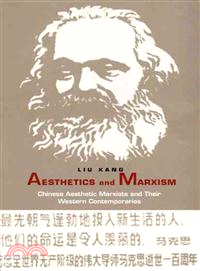
Although Chinese Marxism—primarily represented by Maoism—is generally seen by Western intellectuals as monolithic, Liu Kang argues that its practices and projects are as diverse as those in Western Ma
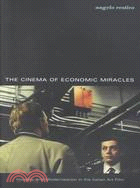
The Italian art cinema of the 1960s is known worldwide for its brilliance and vitality. Yet rarely has this cinema been considered in relation to the profound economic and cultural changes that transf
Although the body has been the focus of much contemporary cultural theory, the models that are typically applied neglect the most salient characteristics of embodied existence—movement, affect,
The Expediency of Culture is a pioneering theorization of the changing role of culture in an increasingly globalized world. George Yudice explores critically how groups ranging from indigenous activis
The Expediency of Culture is a pioneering theorization of the changing role of culture in an increasingly globalized world. George Yudice explores critically how groups ranging from indigenous activis
In The Story of All Things Marshall Grossman analyzes the influence of major cultural developments, as well as significant events in the lives of Renaissance poets, to show how specific narratives cha
Arguing that the contemporary commitment to the importance of cultural identity has renovated rather than replaced an earlier commitment to racial identity, Walter Benn Michaels asserts that the idea
The expression laissez les bons temps rouler—"let the good times roll"—conveys the sense of exuberance and good times associated with southern Louisiana’s vibrant cultural milieu. Yet, for Cajuns, des
The Untimely Present examines the fiction produced in the aftermath of the recent Latin American dictatorships, particularly those in Argentina, Brazil, and Chile. Idelber Avelar argues that through t