Over vast expanses of time, fire and humanity have interacted to expand the domain of each, transforming the earth and what it means to be human. In this concise yet wide-ranging book, Stephen J. Pyne
Repeatedly, if paradoxically, the Northeast has led national developments in fire. Its intellectuals argued for model preserves in the Adirondacks and at Yellowstone, oversaw the first mapping of the
America is not simply a federation of states but a confederation of regions. Some have always held national attention, some just for a time. Slopovers examines three regions that once dominated the na
Fire is special. Even among the ancient elements, fire is different because it alone is a reaction. It synthesizes its surroundings; it takes its character from its context. It varies by place, by cul
There are two basic rules for writing nonfiction, says historian and award-winning author Stephen J. Pyne. Rule 1: You can’t make stuff up. Rule 2: You can’t leave out known stuff tha
Its fires help give to the Interior West a peculiar character, fundamental both to its natural and human histories. While a general aridity unites the region, defined here as the states of Nevada, Uta
Early descriptions of the Great Plains often focus on a vast, grassy expanse that was either burnt or burning. The scene continued to burn until the land was plowed under or grazed away and broken by
It’s a place of big skies and big fires, big burns like those of 1910 and 1988 that riveted national attention. Conflagrations like those of 1934 and 2007 that reformed national policy. Blowups like t
With its scattered mountains and high rims, its dry air and summer lightning, its rising tier of biomes from desert grasses to alpine conifers, and its aggressive exurban sprawl, something in the Sout
The coastal sage and shrublands of California burn. The mountain-encrusting chaparral burns. The conifer forests of the Sierra Nevada, Cascades, and Trinity Alps burn. The rain-shadowed deserts
In Florida, fire season is plural, and it is most often a verb. Something can always burn. Fires burn longleaf, slash, and sand pine. They burn wiregrass, sawgrass, and palmetto. The lush growth, the
From a fire policy of prevention at all costs to today’s restored burning, Between Two Fires is America’s history channeled through the story of wildland fire management. Stephen J. Pyne tells of a fi
Pyne traces the impact of fire in Australia, from its influence on vegetation to its use by Aborigines and European settlers.?Mr. Pyne, showing what a historian deeply schooled in environmental scienc
Stephen Pyne has been described as having a consciousness "composed of equal parts historian, ecologist, philosopher, critic, poet, and sociologist." At this time in history when many people
For over 400 million years, fire has been an integral force on our planet. It can be as innocent as a bonfire or as destructive and lethal as a wildfire. Human history is rife with fires that have lev
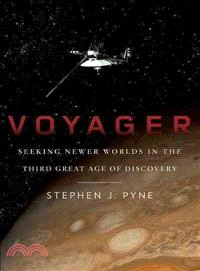
"Blooms with such glorious rushes of exalted prose that I was dog- earing almost every page." --The New York Times Book Review As debate over the future of NASA heats up, award-winning author Stephen
It has become commonplace these days to speak of “unpacking” texts. Voice and Vision is a book about packing that prose in the first place. While history is scholarship, it is also art—that is, litera
An assessment of the current state of the Voyager space program traces its origins in the 1957 Sputnik launch and evaluates the program's relevance and its imminent departure from the solar system.
"Painting, architecture, politics, even gardening and golf—all have their critics and commentators," observes Stephen Pyne. "Fire does not." Aside from news reports on fire disasters, most writing ab
"Vestal Fire is Stephen Pyne's masterpiece. In it, he offers nothing less than a retelling of all of European history from a vantage point no other historian has ever adopted so consistently before: t
Dismissed by the first Spanish explorers as a wasteland, the Grand Canyon lay virtually unnoticed for three centuries until nineteenth- century America rediscovered it and seized it as a national embl
Traces the impact of fire in Australia, showing that it has been a powerful environmental determinant, shaping both social and natural histories. Discusses fire rituals and legends of old Australia, A
Explores the physical and organic phenomena of the Antarctic continent as well as its history. With chapters on the geography and formation of the continent, its exploration, its depiction in the arts
World Fire is the story of how fire and humans have coevolved, like the bonded strands of a DNA molecule. The prevalence of humans is largely attributable to their control over fire, and the distribut
Reprint (of 1989 ed.) with a new preface. Pyne (American Studies, Arizona State U., MacArthur awardee) recounts his 15 years as an active firefighter on the North Rim. A lyric, articulate, swift book.
An enthralling scientific and cultural exploration of the Ice Age—from the author of How the Canyon Became Grand From a remarkable father-daughter team comes a dramatic synthesis of science and enviro
An enlightening investigation of the Pleistocene’s dual character as a geologic time—and as a cultural ideaThe Pleistocene is the epoch of geologic time closest to our own. It’s a time of ice ages, gl
From prehistory to the present-day conservation movement, Pyne explores the efforts of successive American cultures to master wildfire and to use it to shape the landscape.
From John Muir to David Brower, from the creation of Yellowstone National Park to the Endangered Species Act, environmentalism in America has always had close to its core a preservationist ideal. Gene