This work, which has had a pronounced impact on European literary scholarship since its publication in 1961, represents a new and imaginative approach to the history and poetics of the novel. Emil Sta
Although there have been innumerable studies of T. S. Eliot, this is the first to examine closely the changes in his dramatic practice and to relate them to his artistic and intellectual development.
Spitzer discusses the method he evolved for bringing together the two disciplines, linguistics and literary history, and examines the work of Cervantes, Racine, Diderot, and Claudel in the light of th
The heritage of medieval hagiography, the diverse and voluminous literature devoted to saints, was much more important in nineteenth-century Russia than is often recognized. Although scholars have tre
James Joyce, the great and bold literary innovator of our time, was also a rebel in life, a self-exile from family, nation, and religion. Criticism of Joyce, when it has not been purely technical, has
The individual insights employed in this reading of the Purgatorio are those of a twentieth-century mind, as are the author's references: T. S. Eliot, Henry James, I.A. Richards, Jacques Maritain, and
Immediately after World War I, four major European and American poets and thinkers--W. B. Yeats, Robinson Jeffers, R. M. Rilke, and C. G. Jung--moved into towers as their principal habitations. Taking
Immediately after World War I, four major European and American poets and thinkers--W. B. Yeats, Robinson Jeffers, R. M. Rilke, and C. G. Jung--moved into towers as their principal habitations. Taking
The heritage of medieval hagiography, the diverse and voluminous literature devoted to saints, was much more important in nineteenth-century Russia than is often recognized. Although scholars have tre
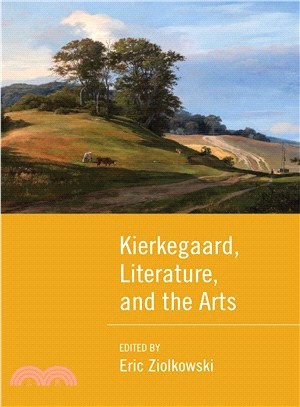
Kierkegaard, Literature, and the Arts is a collection of fourteen essays that illuminate the broad and often underappreciated variety of the nineteenth-century Danish thinker Søren Kierkegaard&
Kierkegaard, Literature, and the Arts is a collection of fourteen essays that illuminate the broad and often underappreciated variety of the nineteenth-century Danish thinker Søren Kierkegaard&