The production and appreciation of art involves thought processes that have excluded from traditional measures of human intelligence. This book, written by a leading cognitive scientist, makes a com
In a provocative discussion of the sources of human creativity, Gardner explores all aspects of the subject, from the young child’s ability to learn a new song through Mozart’s conceiving a complete s
Merging cognitive science with educational agenda, Gardner makes an eloquent case for restructuring our schools by showing just how ill-suited our minds and natural patterns of learning are to the pre
Merging cognitive science with educational agenda, Gardner shows how ill-suited our minds and natural patterns of learning are to current educational materials, practices, and institutions, and makes
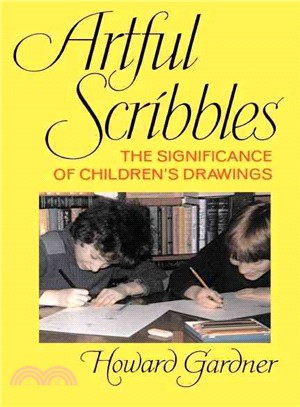
A revised edition of Gardner’s classic on the development of creativity. Illustrated throughout with children’s art, this book is a systematic examination of the relation between youthful
Leading American psychologist and educator Howard Gardner has assembled his most important writings about education. Spanning over thirty years, this collection reveals the thinking, the concepts and
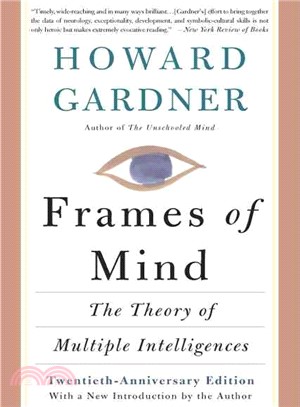
Fifteen years ago, psychologist and educator Howard Gardner introduced the idea of multiple intelligences, challenging the presumption that intelligence consists of verbal or analytic abilities only?t
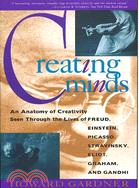
Since it was first published in 1993, Creating Minds has served as a peerless guide to the creative self. Now available as a paperback reissue with a new introduction by the author, the book uses port
Focused specifically on seven influential individuals--Freud, Einstein, Picasso, Stravinsky, Eliot, Graham, and Gandhi--born between 1856 and 1894 under the influence of Western European culture, this
In The Disciplined Mind, Howard Gardner argues that K-12 education should strive for a deep understanding of three classical principles: truth, beauty, and goodness. Such an understanding requires mas
Aruges that all human beings are born with a multiplicity of intelligences which can, and should, be developed by society to achieve great individual accomplishment and to fulfill greater social goals
The first full-scale history of the field of cognitive science traces the related areas of philosophy, psychology, and linguistics and debates the adequacy of computer models to discern the nature of
Harvard psychologist Howard Gardner has been acclaimed as the most influential educational theorist since John Dewey. His ideas about intelligence and creativity - explicated in such bestselling book
An authority on the human mind reflects on his intellectual development, his groundbreaking work, and different types of intelligences--including his own.Howard Gardner's Frames of Mind was that rare
Psychologists have long understood that the art works of children relate to their intellectual and emotional development but this is the first book to describe the developmental process of drawing. Ga
First published in 1983 and now available with a new introduction by the author, Gardner's trailblazing book revolutionized the worlds of education and psychology by positing that rather than a singl