Sarah Worth, alias S., leaves her New England home and family to join a Hindu religious commune in Arizona where she falls in love with the spiritual leader, Arhat
"The fiftieth anniversary edition of John Updike's collection of semi-autobiographical stories about a small Pennsylania town, first published in paperback in 1964 and now in hardcover for the first t
To complement his work as a fiction writer, John Updike accepted any number of odd jobs—book reviews and introductions, speeches and tributes, a “few paragraphs” on baseball or beauty or Borges—and sa
The Coup describes violent events in the imaginary African nation of Kush, a large, landlocked, drought-ridden, sub-Saharan country led by Colonel Hakim Felix Ellellou. (“A leader,” writes Colonel Ell
The hero of John Updike’s first novel, published when the author was twenty-six, is ninety-four-year-old John Hook, a dying man who yet refuses to be dominated. His world is a poorhouse—a county home
A born-again computer whiz kid bent on proving the existence of God on his computer meets a middle-aged divinity professor, Roger Lambert, who'd just as soon leave faith a mystery. Soon the computer h
In Greenwood, Connecticut, during the period of the Kennedy administration, Jerry and Sally, both married, have an affair charged with doubts, subtle intensities, and a deep sense of caring
The Coup describes violent events in the imaginary African nation of Kush, a large, landlocked, drought-ridden, sub-Saharan country led by Colonel Hakim Felix Ellellou. (“A leader,” writes Colonel Ell
THE POORHOUSE FAIR was John Updike's first full length novel, published four years after he graduated from Harvard. It concerns the events surrounding a fair put on by members of a poorhouse and is an
To the list of John Updike’s well-intentioned protagonists—Rabbit Angstrom, Richard Maple, Henry Bech—add James Buchanan, the harried fifteenth president of the United States (1857–1861). In what the
In John Updike’s second collection of assorted prose he comes into his own as a book reviewer; most of the pieces picked up here were first published in The New Yorker in the 1960s and early ’70s. If
In this posthumous collection of John Updike’s art writings, a companion volume to the acclaimed Just Looking (1989) and Still Looking (2005), readers are again treated to “remarkably elegant essays”
John Updike’s first collection of nonfiction pieces, published in 1965 when the author was thirty-three, is a diverting and illuminating gambol through midcentury America and the writer’s youth. It op
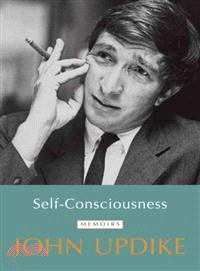
John Updike’s memoirs consist of six Emersonian essays that together trace the inner shape of the life, up to the age of fifty-five, of a relatively fortunate American male. The author has attempted,
To Carter Billings, the hero of John Updike's title story, all of England has the glow of an afterlife: "A miraculous lacquer lay upon everything, beading each roadside twig, each reed of thatch in th
S. is the story of Sarah P. Worth, a thoroughly modern spiritual seeker who has become enamored of a Hindu mystic called the Arhat. A native New Englander, she goes west to join his ashram in Arizona,
Stories that trace the decline and fall of a marriage, a history made up of the happiness of growing children and shared life, and the sadness of growing estrangement and the misunderstandings of love