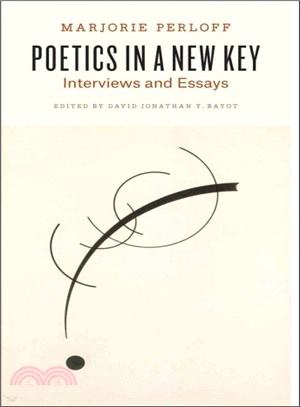
Marjorie Perloff writes in her preface to Poetics in a New Key that when she learned David Jonathan Y. Bayot wanted to publish a collection of her interviews and essays, she was ?at once honored and m
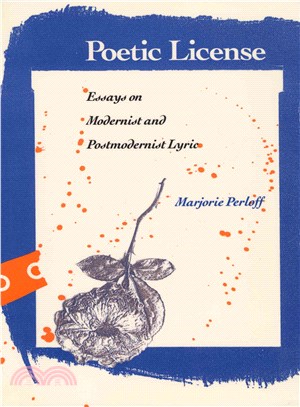
In Poetic License, Marjorie Perloff insists that despite the recent interest in "opening up the canon," our understanding of poetry and poetics is all too often rutted in conventional notions of the l
Marjorie Perloff, among our foremost critics of twentieth-century poetry, argues that Ludwig Wittgenstein provided writers with a radical new aesthetic, a key to recognizing the inescapable strangene
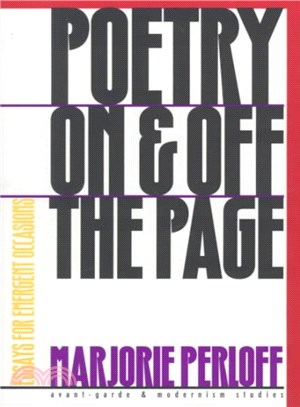
The fourteen essays that make up this collection have as their common theme a reconsideration of the role historical and cultural change has played in the evolution of twentieth-century poetry and poe
Marjorie Perloff's stunning book was one of the first to offer a serious and far-reaching examination of the momentous flourishing of Futurist aesthetics in the European art and literature of the ear
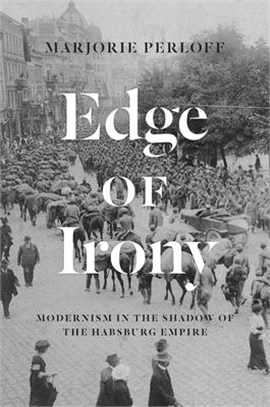
Among the brilliant writers and thinkers who emerged from the multicultural and multilingual world of the Austro-Hungarian Empire were Joseph Roth, Robert Musil, and Ludwig Wittgenstein. For them, the
Among the brilliant writers and thinkers who emerged from the multicultural and polyglot world of the Austro-Hungarian Empire were Sigmund Freud, Ludwig Wittgenstein, Franz Kafka, and Paul Celan. For
The fourteen essays that make up this collection have as their common theme a reconsideration of the role historical and cultural change has played in the evolution of twentieth-century poetry and poe
Marjorie Perloff here explores this intriguing development in contemporary poetry: the embrace of "unoriginal" writing. Paradoxically, she argues, such citational and often constraint-based poetry is
How the negotiation between poetic and media discourses takes place is the subject of Marjorie Perloff's groundbreaking study. Radical Artifice considers what happens when the "natural speech" model
Drawing extensively upon the poet's unpublished manuscripts--poems, journals, essays, and letters--as well as all his published works, Marjorie Perloff presents Frank O'Hara as one of the central poe
Must poetic form be, as Yeats demanded, "full, sphere-like, single," or can it accommodate the impurities Yeats and his Modernist generation found so problematic? Sixty years later, these are still op