Melting glaciers, loss of seasonal snow, and precipitation changes pose significant risks to the stability of water resources in the South Asia region. Glaciers help to moderate river flows in the reg
More children are going to school, staying in school for longer, and learning than ever before in East Asia and Pacific (EAP). During the past 50 years, a group of countries in EAP have successfully t
Data is an important ingredient in any successful education system. Building and sustaining a data system are challenging tasks. Many countries around the world have spent significant resources but st
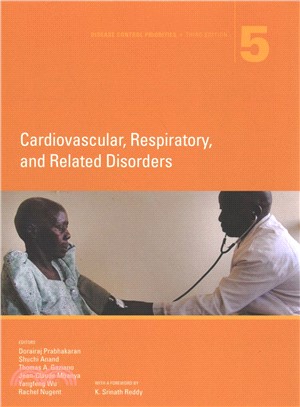
DCP3 will consist of nine separate volumes: eight will focus on a specific disease cluster or population, and the ninth will be an overview with main findings and conclusions about achieving health pr
DCP3 will consist of nine separate volumes: eight will focus on a specific disease cluster or population, and the ninth will be an overview with main findings and conclusions about achieving health pr
Global Economic Prospects is a World Bank Group Flagship Report. On a semi-annual basis (January and June), it examines global economic developments and prospects, with a special focus on developing c
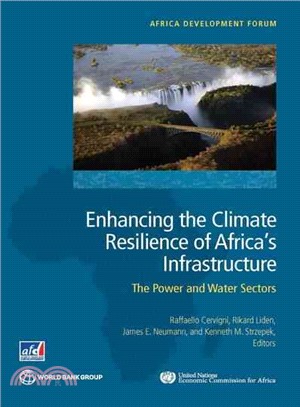
Enhancing the Climate Resilience of Africa’s Infrastructure: The Power and Water SectorsEdited by: Raffaello Cervigni, Rikard Liden, Jim Neumann, Kenneth StrzepekAbstract To sustain Africa’s growth, a
The extractive industries (EI) sector occupies an outsize space in the economies of many developing countries. Policy makers, economists and public finance professionals working in such countries are
DCP3 will consist of nine separate volumes: eight will focus on a specific disease cluster or population, and the ninth will be an overview with main findings and conclusions about achieving health pr
This Toolkit provides an overall framework with practical tools and information to help policymakers design and implement corporate governance reforms for state-owned enterprises. It covers the key el
The World Bank Group is currently engaged in reflection and debate on how to improve the delivery of development support. Part of this debate concerns strengthening the knowledge agenda. The findings
The unanticipated spike in international food prices in 2007-08 hit many developing countries hard. International prices for food and other agricultural products increased by more than 100 percent bet
In economic growth the largest differences between developed and developing economies are in innovation performances. Innovation is critical for growth, but it is increasingly important for addressing
The unanticipated spike in international food prices in 2007-08 hit many developing countries hard. International prices for food and other agricultural products increased by more than 100 percent bet
The popular grievances that have fueled the Arab Spring since 2010 demonstrate that past development paradigms have failed to achieve the inclusive and sustainable growth expected by Arab populations.
The 2012 edition of this annual report begins with an analysis of foreign direct investment flows into developing countries and the findings of a corporate survey of foreign investors regarding their
This volume of The World Bank Legal Review, edited by Cisse (deputy general counsel, knowledge and research, World Bank), Muller (director, The Hague Institute for the Internationalization of Law, the
Jobs provide higher earnings and better benefits as countries grow, but they are also a driver of development. Poverty falls as people work their way out of hardship and as jobs empowering women lead
'The Invisible Poor' seeks to raise the profile of the rural poor in Argentina, promote dialogue on rural poverty issues, provide the best currently available information about rural poverty, and offe
The first Global Observatory on Local Democracy and Decentralization (GOLD) Report is one of the main products of United Cities and Local Governments (UCLG). It constitutes a global reference on dece
Rural electrification can have many benefits-not only bringing lighting, but improving the quality of health care, spreading information and supporting productive enterprises. The extent of these bene
Over the next 25 years developing countries will move to center stage in the global economy. 'Global Economic Prospects 2007' analyzes the opportunities—and stresses—this will create. While rich and p
'The World Bank Legal Review, Volume 2' is a publication for policy makers and their advisers, attorneys, and other professionals engaged in the field of international development. It offers a combina
The theme of The World Development Report 2007 is youth - young people between the ages of 12 to 24. As this population group seeks identity and independence, they make decisions that affect not only
The theme of The World Development Report 2007 is youth - young people between the ages of 12 to 24. As this population group seeks identity and independence, they make decisions that affect not only
The 'Consulting Services Manual 2006' explains World Bank Policy Guidelines for the Employment and Use of Consultants by Bank Borrowers, and describes the correct use of the World Bank Standard Reques
This volume, presented by the World Bank, intends to help governments in developing countries improve their drinking water and sanitation services to households and businesses through private firms. I
The HIV/AIDS epidemic has the potential to impede and even reverse development if not addressed early enough. Poverty and income inequality have been shown to facilitate the diffusion of HIV epidemics
The majority of the world's poor depend directly or indirectly on agriculture. Despite the strong linkages between broad-based agricultural growth and poverty reduction, international support to agric
In recent years, the focus in many developing regions is increasingly moving away from communicable disease, where as Africa continues to face a high burden of communicable disease, malnutrition, and
The proliferation of regional trade agreements is fundamentally altering the world trade landscape. The number of agreements in force surpasses 200 and has risen eight-fold in two decades. Today, as m
The aim of 'Reshaping the Future' is to draw international attention to the key role that education can play in both preventing conflict and in reconstructing post-conflict societies. The author also
According to the authors of 'Zambia', poverty is on the rise in the country, its economy is not growing fast enough, the quality of economic governance is on the decline, and its public resources are
This report attempts to explain the paradoxes and potential of Jamaica's economic history, and concludes that one possible explanation for Jamaica's low growth in GDP is that its GDP has been understa
Decades of investment and improved policies have greatly increased women's education and health and have reduced their fertility rate. However, the expected payoffs in higher employment and economic g
Rapid and sustained growth, in excess of 5% per annum, is key for sustained poverty reduction in Yemen. However, the achievement of such a target is challenging and necessitates aggressive changes in
'China: Air, Land, and Water' is a further chapter in the successful and creative dialogue between the World Bank and the People's Republic of China. It focuses on how to promote both China's economic
This book analyzes the cultural heritage sector in the Middle East and North Africa region and the World Bank's policy and operational experiences in this sector over the past six years—1996 to 2001.
'Engendering Development' focuses on gender issues and their broad economic and social implications in developing and transitional countries. The report examines the conceptual and empirical links bet
At the beginning of the new century, it is clear that while individual social programs can improve people's welfare and reduce poverty, a more holistic approach is needed in order to lift more people