Economic growth rates in Sub-Saharan Africa have more than doubled in the past decade. This growth mainly stems from the rising prices of commodities and other natural resources. In order to sustain t
The world's demand for food is expected to double within the next 50 years, while the natural resources that sustain agriculture will become increasingly scarce, degraded, and vulnerable to the effect
This pocket-sized reference on key development data for over 200 countries provides profiles of each country with 54 development indicators about people, environment, economy, technology and infrastru
Using data extracted from data.worldbank.org, this pocket reference provides 213 country tables, with figures in the areas of people, environment, economy, states and markets, and global links. These
Using data extracted from data.worldbank.org, this pocket reference provides 211 country tables, with figures in key environmental areas such as forests and biodiversity. These are preceded by fourtee
Since the private health sector is an important, and often dominant, provider of health services in Sub-Saharan Africa, it is the job of governments as the stewards of the health system to engage with
Guangdong, a province of over 93 million residents, is located on the southern coast of China, boarding with Hong Kong, China. As China’s powerhouse for economic growth and a pioneer of reform and ope
This pocket (4.5x8.5") reference offers 210 one-page country entries with statistics on the impact of information and communication technology from 2000 and 2008, across a range of indicators includin
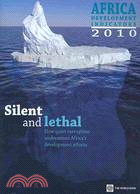
This book/CD-ROM report contains data tables of about 450 macroeconomic, sectoral, and social indicators in 53 African countries, with additional data on the CD-ROM. Data are given on areas such as na
'Africa Development Indicators 2010 (ADI) Multiple-user CD-ROM' edition offers a comprehensive database with year-by-year time series of most indicators going back to 1970. The database contains over
Foreign direct investment and private capital flows are highly concentrated geographically, with almost half of them reaching five top destinations. These flows tend to evade many high-risk countries.
China and India's spectacular economic rise over the last two decades has accelerated their trade and investment flows with the Middle East and North Africa (MENA), particularly with the oil-producing
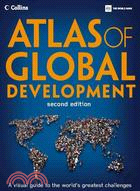
Published in association with Harper Collins, the completely revised and updated second edition of the Atlas of Global Development vividly illustrates the key development challenges facing our world t
Why have only 13 developing world economies achieved sustained, high growth since World War II?Why is engagement with the global economy necessary to achieve high growth?Why do many countries, blesse
Access to financial services varies sharply around the world. In many developing countries less than half the population has an account with a financial institution, and in most of Africa less than on
By 2020, about 63 percent of the population of West Africa will live in cities. WIth most African countries decentralizing, there is critical need to help local governments become financially sound,
By 2020, about 63 percent of the population of West Africa will live in cities. WIth most African countries decentralizing, there is critical need to help local governments become financially sound,
Questions of equity and inequality have moved to the center of debates on development and poverty reduction. This reflects growing awareness that even countries with high rates of growth can experien