HIV testing and counseling constitute a major bottleneck in scaling up HIV prevention, treatment and care services in the WHO Eastern Mediterranean Region. This publication provides policy-makers with
This profile on the implementation of the WHO Framework Convention on Tobacco Control in the South-East Asia Region provides an overview of the status of the implementation of the convention in the el
This report gives recommendations and provides independent international standards and guidelines in the area of quality assurance for implementation by WHO Member States, international organizations,
This third edition of Guidelines for Medicine Donations has been developed by the World Health Organization in cooperation with major international agencies active in humanitarian relief and developme
Sexually transmitted infections (STIs) continue to be of major public health concern in the South-East Asia Region of WHO (SEAR). Failure to adequately treat STI at an early stage may lead to serious
Given that privacy of the doctor-patient relationship is at the heart of good health care, and that the electronic health record (EHR) is at the heart of good eHealth practice, the question arises: Is
Adopting electronic recording and reporting is not simply about choosing a piece of software: it is also about changing how people work. This is not a simple undertaking. This document introduces the
The overall aim of the tool is to enhance coherence between international obligations and commitments on human rights and gender equality, the national legal, policy and insitutional frameworks, and t
Bisphenol A (BPA) is an industrial chemical that is widely used in the production of polycarbonate (PC) plastics (used in food contact materials, such as baby bottles and food containers) and epoxy re
This publication presents an updated human health risk assessment for the insecticide DDT, focusing on DDT use in indoor residual spraying for disease vector control. The publication contains an updat
This document is a call to action and a road map to halt the HIV and hepatitis epidemics among people in the Asia Pacific region who use drugs. It is a collective product prepared on behalf of the Uni
Significant progress has been made in TB control in the Western Pacific Region in the past decade with a decline in the number of prevalent TB patients and the diagnosis treatment of over 10 million p
Mongolia was one of the first countries in the Western Pacific Region to implement IMCI and to successfully take it to scale. In particular, the Mongolian approach resulted in a common understanding b
This is the report of the Commission for Information and Accountability for Women's and Children's Health to the United Nations. The Commission's ten recommendations focus on improving information for
The Humanitarian Emergency Settings Perceived Needs Scale (HESPER) provides a quick, scientifically robust way of assessing the perceived serious needs of people affected by large-scale humanitarian e
What is now the Organization's International Health Regulations were first adopted in 1951 to monitor and control the international spread of six infectious diseases: cholera, plague, yellow fever, sm
Perhaps you are called upon as a staff member or volunteer to help in a major disaster, or you find yourself at the scene of an accident where people are hurt. Perhaps you are a teacher or health work
Unsafe health care remains a problem of immense magnitude worldwide. The development of solutions and initiatives aimed at driving change towards greater patient safety has become a pressing need, and
The Asia-Pacific Strategy for Emerging Diseases (APSED) was launched in 2005 as a five-year strategy to set a common framework for countries and areas of the Asia Pacific region to strategically stren
Traditionally, little attention has been paid to sex and gender differences in infectious diseases. The general belief has been that since infectious diseases affect both males and females, it is best
Diabetes triples the risk of developing tuberculosis (TB). Consequently rates of TB are higher in people with diabetes than in the general population, and diabetes is a common comorbidity in people wi
The committee, with members from the Food and Agriculture Organization (FAO) of the United Nations and the World Health Organization (WHO) summarize data on selected flavoring agents and food contamin
The committee, with members from the Food and Agriculture Organization (FAO) of the United Nations and the World Health Organization (WHO) summarize data on selected food contaminants that it reviewed
One of the challenges of the 21st century is managing the accelerating pace of urbanization. Projections suggest that by the year 2030, six out of ten people all over the world will live in cities. By
In 2010, the Stop TB Partnership, the World Health Organization Stop TB Department and the Global Fund to Fight AIDS, Tuberculosis and Malaria jointly organized an expert meeting and workshop on opera
Hospitals are one of the essential institutions that must continue to function when an emergency event occurs. In spite of its importance, health facilities are themselves vulnerable to disasters and
This document provides technical support to Member States in the South-East Asia and Western Pacific Regions on the steps required to develop and effectively implement a national laboratory policy and
Vibrio parahaemolyticus are common causes of diarrhoeal disease worldwide. These marine micro-organisms, native in estuarine waters globally, concentrate in the gut of filter-feeding molluscan shellfi
Household water treatment (HWT) is increasingly being promoted as a rapidly implementable and cost-effective interim approach to improve water quality. It is a key preventive component of the WHO/UNIC
The Atlas of Headache Disorders presents the findings of the first global enquiry into headache disorders and health-care resource allocation to headache, providing the most comprehensive compilation
This report reviews the current state of noncommunicable diseases (NCDs) around the world, focusing on cardiovascular diseases, cancer, diabetes, chronic respiratory disease, and obesity. Special atte
The monographs in this volume summarize the safety data on eight pesticides that could leave residues in food commodities. These pesticides are bifenthrin, cadusafos, chlorothalonil, chlorpyrifos-meth
This report examines the plight of disabled people around the world, describes measures to improve accessibility and equality of opportunity, and makes recommendations for action at national and inter
The eHealth series is primarily meant for government ministries of health, information technology, and telecommunications, as well as others working in eHealth — academics, researchers, eHealth profes
The product of a suite of contributors, this 4th edition includes a number of updates and revisions, additional risk assessments for new chemical and microbial substances, and an expanded focus on goo
In many settings influenza is recognized as a major cause of disease and death. In other parts of the world however, its epidemiology and the degree of its impact on human health remain relatively unc
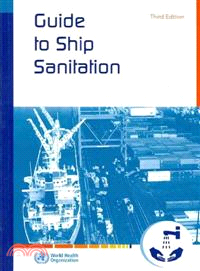
Since the plagues of the Middle Ages, ships have been shown to play a significant role in the global transmission of infectious diseases. In this update of the 1987 and 1967 editions, the World Health
The purpose of the WHO Human Health Risk Assessment Toolkit: Chemical Hazards is to provide its users with guidance to identify, acquire and use the information needed to assess chemical hazards, expo
From the World Health Organization, this publication describes a framework for health systems assessment that addresses six components: service delivery, the workforce, health information systems, acc
This book presents WHO guidelines for the protection of public health from a number of chemicals commonly present in indoor air. The substances considered—benzene, carbon monoxide, formaldehyde, napht