Tunstall shares insights she acquired first as a page then as a supervisor of over 20 pages in a suburban public library, for the benefit of other pages who take the same route, but also for librarian
Ninety-two brief chapters share advice on starting the writing process and understanding the publishing industry, and describe opportunities for writing both fiction and non-fiction books, newsletters
Holley (retired coordinator of school libraries in Fairfax County, Virginia) compiles a decade's worth of information for titles featured in the Young Adult Library Services Association's two annual l
Multicultural Programs for Tweens and Teens is a one-stop resource that encourages children and young adults to explore different culturesFollowing the practical programs laid out here, young adult l
The second edition of this manual for developing a library collection has been revised to explain how new technologies in electronic media are both logical and important in order to remain a competiti
Wolfe introduces librarians to basic communications concepts and presents step-by-step instructions for developing and implementing a library public relations plan. Sample topics include defining your
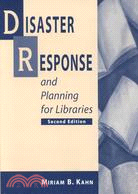
Offering quick and efficient protocols, this guide explains how to prepare for and respond to all types of disasters in libraries, including fire, power outages, and mold. This second edition offers u
Purcell (special collections, Virginia Tech) examines the changing field of academic archives, what academic archivists do, and the future of their work, for archivists of all levels and experience, o
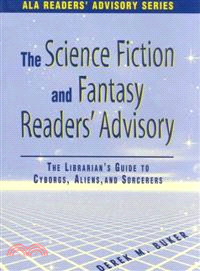
Science fiction and fantasy and their various subgenres are summarized, and recommended books in each subgenre are described, in this guide for librarians unfamiliar with science fiction and fantasy.
This reference presents a diverse assortment of facts about libraries as well as discussions--some serious and others humorous--addressing current issues. The volume is organized thematically into gen
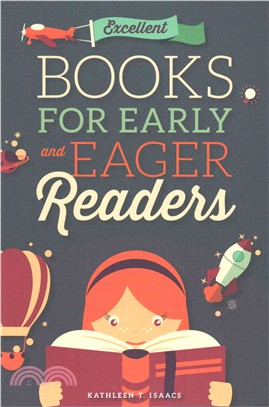
Isaacs suggests books for children who have begun reading at an early age, who have often taught themselves to read, read better with less effort than their peers, will continue to read voraciously in
This volume brings together 14 chapters on various aspects related to the consolidation of academic libraries. Librarians at universities in the US and Canada present nine case studies of their librar
Mannix cites reference books in genealogy and Burchsted and Whitlatch cite reference books in biography in 1,677 annotated entries. Both arrange their citations by the categories international, North
Hernon, Dugan, and Matthews explain how library managers can use the ACRLMetrics and PLAmetrics online data services that provide access to the library statistics of the Association of College and Res
Library consortia are collaborative associations of libraries. This book explains their reasons for being, activities and services, governance, management and some current issues. For example, a curre
This resource contains annotations of economics and business reference?books, organizations and associations, internet resources, periodicals,?and other?resources, based on the Economics and Business
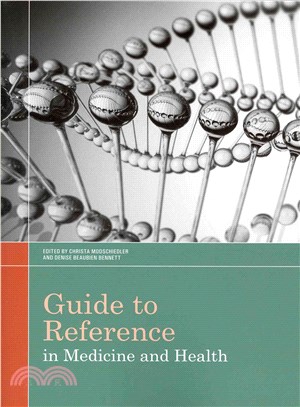
Drawn from the database Guide to Reference, this bibliography presents an annotated list of print and electronic biomedical and health-related reference sources, including internet resources and digit
Harrington presents this guide to engaging youth in environmental science, geared primarily toward indirect educators such as librarians and parents. The first chapter emphasizes the role of less form
Focusing on the use of web metrics by library and information professionals to measure and demonstrate value, this guide describes which metrics are available (with an emphasis on those that are free)
Johnson, who has been a cataloger, librarian, collection development officer, and consultant on collection development and management and change in libraries, addresses the development and management
In the first update since 1983 of this glossary from the American Library Association (ALA), over 600 definitions are updated along with the addition of almost 1,400 new terms. Most of these relate to
Hider shows how information resources are organized through their descriptions, providing an overview of both the process and the product as they function in the contemporary information environment.
Barclay and Scott (U. of California, Merced Libraries) provide a guide for librarians, administrators, board members, and students to library renovation, maintenance, and construction. They overview t
Compiled in North America for use primarily in North American libraries serving higher education institutions, this reference guide will also be of value to public and school librarians, independent r
Contributions from library directors, program administrators, tutors, librarians, and adult learners offer insight on adult literacy programs in libraries. Early chapters provide an empirical framewor
This handbook explains the application of the most commonly used guidelines of RDA (Resource Description and Access) for descriptions of entities and resources and the creation of access points by lib
Public librarians in Schaumburg, Illinois describe programs that libraries can conduct for people ranging in age from their late teens into their 40s. They include suggestions on how to reach out to t
Librarians describe innovations in libraries focusing more on people--either staff or patrons--than on technology. They cover innovation in terms of culture, staff, outreach, technology, spaces, and p
Multimedia and web librarian Tidal explores usability within the context of mobile web and applications for libraries. Libraries must be in the forefront of mobile web use, he says, so that reliable a
The 2014 RDA Print Revision contains: A full accumulation of RDA—the revision contains a full set of all current RDA instructions. It replaces the previous version of RDA Print rather than being an up