This volume provides a study of the evolutionary process of ancient civilizations, stressing the comparison between theoretical principles and relevant historical and archaeological evidence. For this
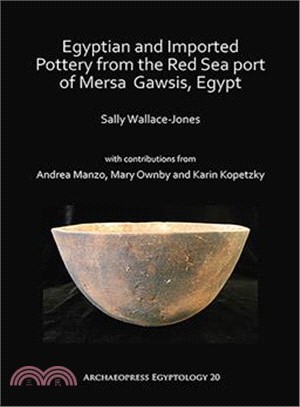
The unique site of Mersa Gawasis was a base for seaborne trade along the Red Sea coast during the Middle Kingdom. The Egyptians’ purpose was to trade with Punt for incense and other exotic materials.
MOLA (formerly Northamptonshire Archaeology), has undertaken intermittent archaeological work within Bozeat Quarry over a twenty-year period from 1995-2016 covering an area of 59ha. The earliest archa
The Bouros-Kastri peninsula at the south-eastern tip of the Greek island of Euboia has previously been overlooked in the archaeological literature. This survey by the Southern Euboea Exploration Proje
During the last few years, an increasing worldwide awareness of the importance of water management in the ancient civilizations launched a new discussion on water archaeology in ancient Greece. The pr
The German gem-engraver, medallist, and amateur scholar Lorenz Natter (1705- 1763), was so impressed by the size and quality of the collections of ancient and later engraved gems which he found in Bri
In 2008 intensive archaeological surveys began at Caution Bay, located 20km to the northwest of Port Moresby, Papua New Guinea. This was followed by the excavation of 122 stratified sites in 2009-2010
It is commonly recognized that the Cedars of Lebanon were prized in the ancient world, but how can the complex archaeological role of the Cedrus genus be articulated in terms that go beyond its intera
Alexander Hardcastle played a significant role in preserving Italy's Greek and Etruscan heritage through his work in excavation and restoration in Sicily and Etruria. This study looks at his preservat
The papers collected in this book correspond to the lectures held during session B34 of UISPP conference in Burgos (June 2014) where the presentation of multidisciplinary works were encouraged. The ma
The Church of the Holy Sepulchre, Jerusalem, was built by the Byzantine emperor Constantine I to commemorate the Passion of Jesus Christ. Encased within its walls are the archaeological remains of a s
Regarded as the secondary source advocated by some scholars for this battle around Brúnanburh in AD 937, Egil’s Saga Skalla-Grímssonar (collated c. AD 1242-3) becomes problematical
The emergence of the cult of Osiris is, in most cases, dated to the end of the 5th dynasty, the period in which the name of Osiris appears in writing, and it is commonly held that before this period n
This volume brings together papers dealing with therapeutic aspects connected to thermo-mineral sites both in Italy and in the Roman Provinces, as well as cultic issues surrounding health and healing.
Bronze ornaments of the Nordic Bronze Age (neck collars, belt plates, pins and tutuli) were elaborate objects that served as status symbols to communicate social hierarchy. The magnificent metalwork s
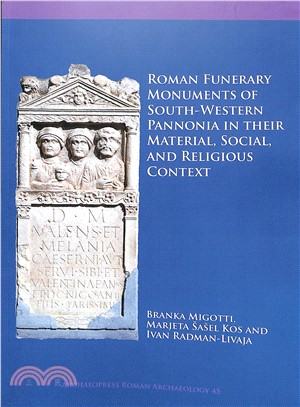
This book has come about as a result of the project 'Roman Funerary Monuments of South-Western Pannonia in their Material, Social, and Religious Context', unfolding between 2015 and 2018 in the Croati
While one might say that prehistory of the Adriatic was always in transition, the rhythm of change was not always the same. On several occasions, a series of changes over a relatively short time perio
The 19th annual meeting of the Symposium on Mediterranean Archaeology (SOMA) was held in Kemer/Antalya (Turkey) from the 12th to the 14th of November, 2015. As has been the case in the past, this symp
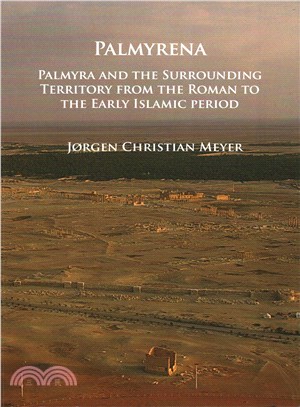
This book is the first investigation of the relationship between Palmyra and its surrounding territory from the Roman to the early Islamic period since D. Schlumberger’s pioneer campaigns in the mount
This book presents a little-known and ingenious artifact of the Roman world: a small puzzle padlock whose font plate bears a face or ‘mask’ of ‘Celtic’ style. The padlocks were designed to secure smal