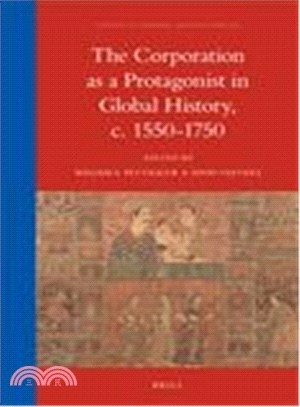
In The Corporation as a Protagonist in Global History, William A. Pettigrew and David Veevers reinterpret the role of Europe’s overseas corporations in early modern global history, uncovering their un
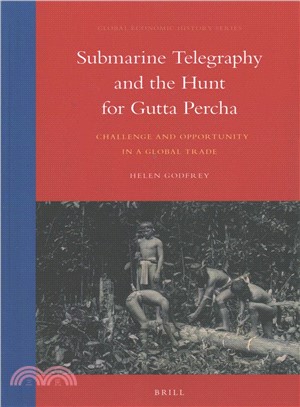
In Submarine Telegraphy and the Hunt for Gutta Percha, Helen Godfrey traces the connections between submarine telegraphy and the peoples of Singapore and Sarawak (Borneo) who supplied 'gutta percha',
In Globalization and the Colonial Origins of the Great Divergence the intercontinental trade of the Dutch East India Company and its effects on living standards in a number of its colonies are analyse
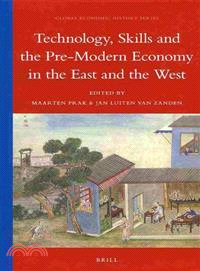
Technology, Skills and the Pre-Modern Economy investigates, through regional studies and paired comparisons, how technological skills and knowledge were reproduced and disseminated in the advanced agr
Settler colonialism was a major aspect of the imperial age that began in the sixteenth century and has encompassed the whole world unto the present. Modern settler societies have together constituted
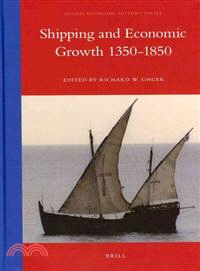
Economic and cultural historians explore productivity trends in various shipping regimes mostly in early modern and modern Europe, and sources of productivity growth. Among the topics are evidence fro
Drawing on statistical techniques and samples this book offers an estimate of medieval production rates of manuscripts in the Latin West. Such information is a helpful production indicator for a perio
In The Peasant Production of Opium in 19th Century India, Rolf Bauer deals with the peasants who produced opium for the colonial state in nineteenth-century India. He shows how the peasants were force
Social and economic historians present studies in resources of knowledge, cultures of learning; institutions for a global economy; chasing whales, crossing oceans; chains of profit, chains of labor
Actors of Globalization offers an account of how global events in the late eighteenth century contributed to U.S. economic and social change by detailing the global entrepreneurship of New York mercha
This study offers an overview of the development and structure of the remarkable public finances of the Dutch Republic. Comparisons with the Venetian Republic, Britain and the Ottoman Empire underline
This book examines the reasons behind the Great Divergence. Kaveh Yazdani analyzes India’s socio-economic, techno-scientific, military, political and institutional developments. The focus is on Gujara
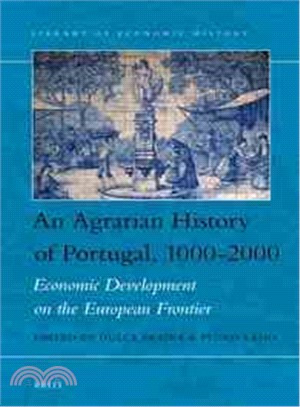
This book follows the renovation of European economic history towards a more unified interpretation of sources of growth and stagnation. It looks at Portuguese agricultural development across the seco
In Carriers of Growth? Ann Coenen exposes the wide-ranging impact of international trade on economic development in the eighteenth-century Southern Low Countries.
Coordination in transition analyzes the evolution of the institutional structure of the Dutch political economy since 1950, focusing on the constant adaptation of deliberative institutions to structur
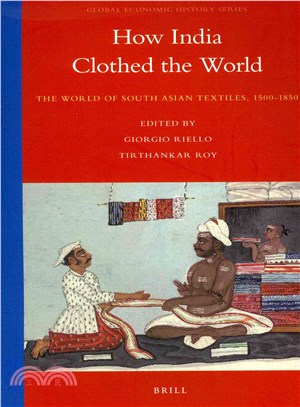
Drawing on new research on textile trade and production in the regions that depended on the Indian Ocean, the book contributes to a new understanding of the role that Indian cloth played in the making
Based on a number of historical documents, "Breaking into the Monopoly" examines how the commercial pressure groups of Glasgow, Liverpool, and Manchester organised nationwide campaigns to break into t
In the late Middle Ages the county of Holland experienced a process of uncommonly rapid commercialisation. Comparing Holland to England and Flanders this book examines how the institutions that shape
Malanima, director of the Institute of Studies on Mediterranean Societies, gives a sweeping study of the economy of Europe from the tenth to the early nineteenth centuries. The book is divided by sub-
Riello (global history and culture, U. of Warwick, UK) and Roy (economic history, London School of Economics, UK) present 15 papers that collectively aim to place the significance of Indian Ocean trad
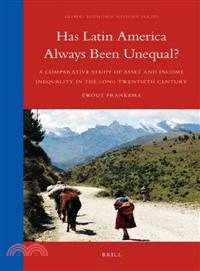
Frankema (economic and social history, Utrecht U., the Netherlands) assesses the long run comparative development of income and asset inequality within Latin American countries from the colonial era t
Zuijderduijn (economic and social history, Utrecht University) challenges the long-held belief that the complex economic system of Holland sprang ex nihilo in the seventeenth century. In this study he
Central Government Silver Treasury is the first English research monograph on revenue, expenditure and inventory statistics of the central government Silver Treasury in the Qing dynasty of China, ca.
In Agricultural Development in Qing China: A Quantitative Study, 16661-1911 SHI Zhihong offers for the first time an overview of agricultural development in Qing China in the English language.