East German studies today is thriving. Scholars have shown East Germany to be a complex society where culture played an important, if contested, role in the making of the socialist person. In English-
Flannery O'Connor is one of the most widely read, discussed, and taught of all American authors. She is immensely popular with students, general readers, and literary critics. Her work, often characte
At a time when the place of Muslims in German society is being disputed, this book explores how four contemporary German writers of Muslim backgrounds - Zafer Senocak, SAID, Feridun Zaimoglu, and Navi
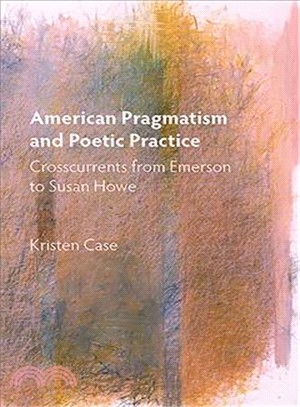
Wittgenstein wrote that "philosophy ought really to be written only as a form of poetry." American poetry has long engaged questions about subject and object, self and environment, reality and imagin
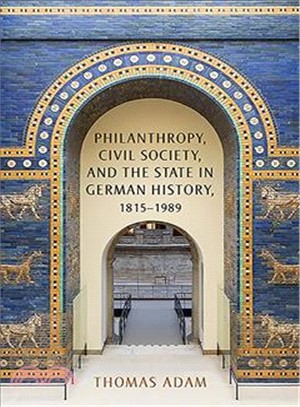
Largely unnoticed among English-speaking scholars of German history, a major shift in interpretation of German history has been underway during the past three decades among German historians of German
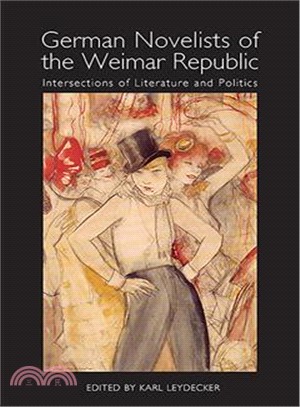
The Weimar Republic was a turbulent and fateful time in German history. Characterized by economic and political instability, polarization, and radicalism, the period witnessed the efforts of many Ger
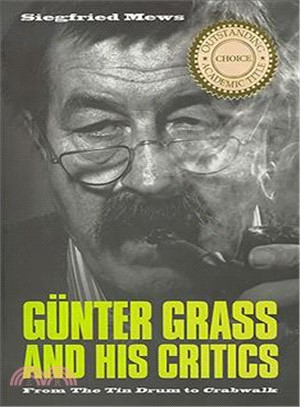
When the Swedish Academy announced that GA?nter Grass had been awarded the 1999 Nobel Prize for Literature, it singled out his first novel The Tin Drum (1959, English translation 1963) as a seminal w
The great poet and polymath Friedrich von Hardenberg, known as Novalis, was long seen as representing a particular brand of German Romanticism, embodying a predilection for the mystical and the irrat
This collection of fifteen essays by scholars from the UK, the US, Germany, and Scandinavia revisits the question of German identity. Unlike previousbooks on this topic, however, the focus is not exc
Georg Kaiser (1878-1945) is considered one of the most enigmatic figures in modern German literature; while agreeing on his importance in the development of German drama, critics have always been puzz
Jakob Michael Reinhold Lenz (1751-1792) is, after Goethe, the most important writer of the German Sturm und Drang. Crucial in the reinvention of German literature through the reception of Shakespeare,
When the Swedish Academy announced that Günter Grass had been awarded the 1999 Nobel Prize for Literature, it singled out his first novel The Tin Drum (1959, English translation 1963) as a semina
The communist secret police services of Central and Eastern Europe kept detailed records not only of their victims but also of the vast networks of informants and collaborators upon whom their totalit
Harriet Beecher Stowe and Frederick Douglass represent a crucial strand in nineteenth-century American literature: the struggle for the abolition of slavery. Yet there has been no thoroughgoing discus
Never has a mountain occupied the German imagination longer and more thoroughly than Nanga Parbat (8,125m), the world's ninth-highest peak, located in the extreme western part of the Himalaya chain in
How to gauge the impact of cultural products is an old question, but bureaucratic agendas such as the one recently implemented in the UK to measure the impact of university research (including in Ger
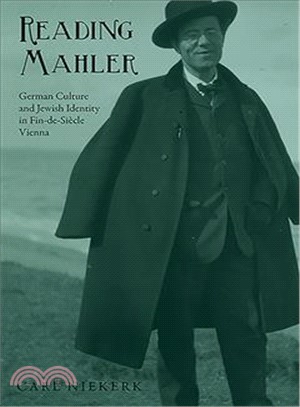
Today Gustav Mahler's music is more popular than ever, yet few are aware of its roots in German literary and cultural history in general, and in fin-de-si?cle Viennese culture in particular. Taking a
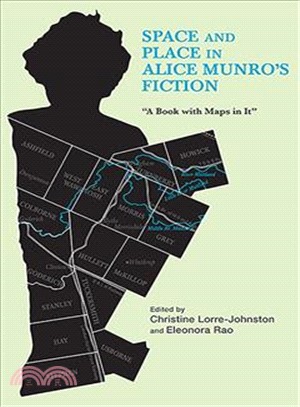
Alice Munro, the 2013 Nobel Prize laureate in Literature, has revolutionized the architecture of the short story. This collection of essays on Munro engages with literary geography, an emergent interd
Nelly Sachs (1891-1970) has long been regarded as one of the most significant Holocaust poets. Her conception of language and words as a landscape has been understood by scholars and critics as an exi
Christa Wolf (1929-), Ingeborg Drewitz (1923-1986), and Grete Weil (1906-1999) occupy very different positions in postwar German literature, yet all three challenge readers to consider how individuals
In Western Culture women are often linked with death, perhaps because they are traditionally constructed as an unknowable "other." The first two Women and Death volumes investigate ideas about death a
This book steers attention toward two key aspects of German culture - film and fashion - that shared similar trajectories and multiple connections, looking at them not only in the immediate postwar ye
In the German Democratic Republic words and ideas mattered, both for legitimizing and criticizing the regime. No wonder, then, that the ruling SED party created a Writers Union to mold what writers pu
The many fictional suicides in the literature of the German Democratic Republic have been greatly misunderstood. The common assumption is that authoritarian oppression in East Germany led to an anomal
Over the long nineteenth century, German book publishing experienced an unprecedented boom, outstripping by 1910 all other Western nations. Responding to the spread of literacy, publishers found new
Since unification in 1990, Germany has seen a boom in the confrontation with memory, evident in a sharp increase in novels, films, autobiographies, and other forms of public discourse that engage wit
While sociologists have long agreed that the problems of modern and contemporary subjectivity crystallize in the issue of romantic relationships and love (e.g., Luhmann, Illouz, Beck, etc.), the theme
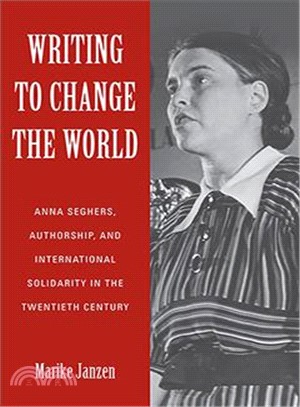
In the twentieth century, leftist authors around the world understood their writing as an act of solidarity, but their common project was obscured by the end of the Cold War and the dismantling of soc
James Baldwin is a widely taught and anthologized author. His short story "Sonny's Blues" remains a perennial favorite in literature anthologies, and all of his essay collections and novels
While Walter Benjamin, in his famous essay "The Storyteller" (1936), lamented the decline of the storytelling tradition in the age of the modernist novel, Anna Seghers and other twentieth-century Germ
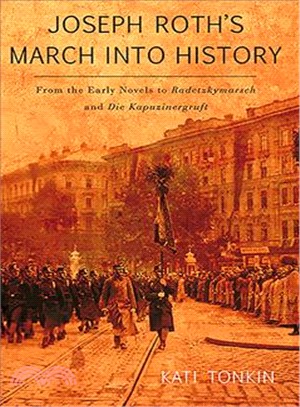
Joseph Roth was one of the most significant German-language writers of the interwar period, yet few major studies of his work have been published in English. Kati Tonkin's monograph spans Roth's nove
The process of coming to terms with its National Socialist past has been a long and difficult one in Austria. It is only over the past thirty years that the country's view of its role during the Third
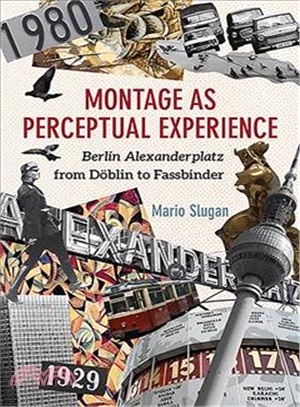
Alfred Döblin's novel Berlin Alexanderplatz and its film adaptations by Jutzi and Fassbinder are canonical works of literature and cinema, and yet there is no monograph that treats all three. Thi
The Bulgarian-born scholar and author Elias Canetti was one of the most astute witnesses and analysts of the mass movements and wars of the first half of the 20th century. Born a Sephardic Jew and ra
Wolfram von Eschenbach's Parzival expands and transforms the Arthurian tradition into a grand depiction of the medieval cosmos around 1200. Standing between clerical and chivalric cultures and articul