Rooted in Enlightenment rationalism, modernity tends to privilege masculine-connoted characteristics -- conscious subjective agency, rational control and self-containment, the subjugation of nature -
Hans Jacob Christoffel von Grimmelshausen (ca. 1621-1676) is the most significant (and still readable) author of seventeenth-century German novels. His Abenteuerlicher Simplicius Simplicissimus remai
Walter Benjamin (1892-1940) has emerged as one of the leading cultural critics of the twentieth century. His work encompasses aesthetics, metaphysical language and narrative theories, German literary
Walter Benjamin (1892-1940) has emerged as one of leading cultural critics of the twentieth century. His work encompasses aesthetics, metaphysical language and narrative theories, German literary his
Renaissance Papers collects the best scholarly essays submitted each year to the Southeastern Renaissance Conference. The 2017 volume opens with a trio of essays probing identity, iconography, and dev
German literature and thought flourished in the eighteenth century, when a culture considered a European backwater came to assert worldwide significance. This was an age in which repeated attempts to
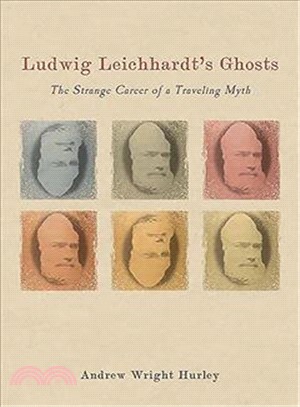
After the renowned Prussian scientist and explorer Ludwig Leichhardt left the Australian frontier in 1848 on an expedition to cross the continent, he disappeared without a trace. Andrew Hurley's book
A growing body of scholarship is making visible the contribution of translators to the creation, preservation, and transmission of knowledge about the Holocaust. The discussion has tended to be theore
The Goethe Yearbook is a publication of the Goethe Society of North America, publishing original English-language contributions to the understanding of Goethe and other authors of the Goethezeit, whi
What was the written culture behind visual artists like Vermeer, Rembrandt, and Rubens? What made the historical novel in nineteenth-century Flanders so different from its counterpart in Holland? Wha
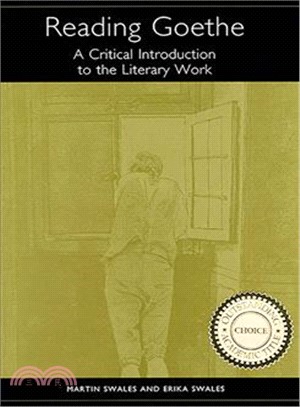
The year 1999 saw the 250th anniversary of the birth of Johann Wolfgang von Goethe, Germany's greatest writer. Appropriately, literary scholars within Germany and beyond paid tribute to this remarkabl
At long last a new, readable history of German literature. Each epochof German literature is treated against its historical and sociologicalbackdrop by experts in the literature of that period. Vivian
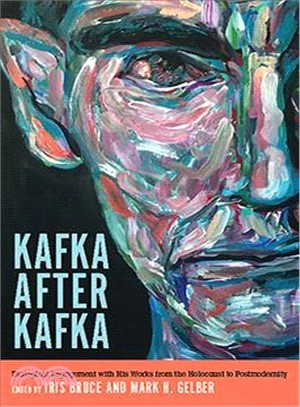
The topic of "Kafka after Kafka" is a fascinating one: the engagement of artists, philosophers, and critics in dialogical exchange with Kafka's works. The present collection of new essays highlights t
Best known for his collaborations with Bertolt Brecht, composer Hanns Eisler also set nineteenth-century German poetry to music that both absorbs and disturbs the Lieder tradition. This book traces Ei
From the publication in 1958 of his first book, The Carpentered Hen and Other Tame Creatures, the American writer John Updike attracted an international readership. His books have been translated into
Mountains have always stirred the human imagination, playing a crucial role in the cultural evolution of peoples around the globe and becoming infused with meaning in the process. Beyond their geograp
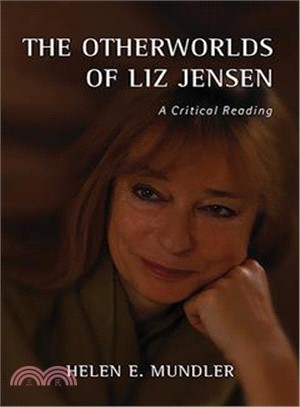
Liz Jensen, a British author of eight novels, is among today's most innovative writers. Her literary thrillers occupy the terrain between realism and science fiction. This first study of Jensen center
Germany has become home to some 2.5 million people of Turkish background since mass recruitments in the 1960s and 1970s to man the "economic miracle." An increasingly settled Turkish German populatio
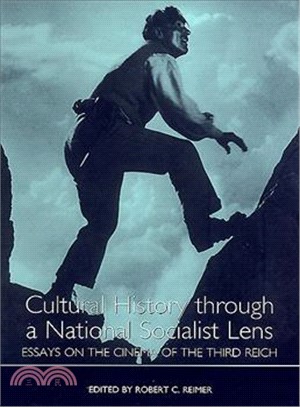
This collection of essays offers a view of Nazi Germany through ananalysis of twenty films, representing a sampling of the period'sdirectors and reflecting the film medium's major genres. In spite of
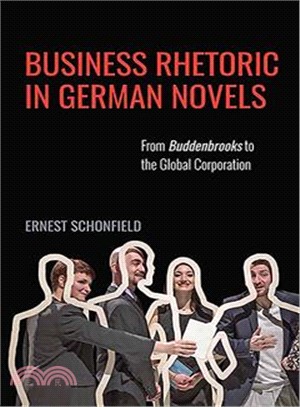
Throughout the twentieth century and well into the twenty-first, Germany has maintained its position as one of the world's largest economies. In the literature of this period, business is often depict
At the end of the First World War, German Jewish journalist, theater critic, and political activist Kurt Eisner (1867-1919), just released from prison, led a nonviolent revolution in Munich that depos
J. M. Coetzee, arguably the most decorated and critically acclaimed writer of fiction today, is a deeply intellectual writer. Yet while just about everyone who comes to Coetzee's writing is aware that
Although George Bernard Shaw quipped that "the Germans lack talent for two things: revolution and crime novels," there is a long tradition of German crime fiction; it simply hasn't aligned itself with
The East German playwright Heiner Müller (1929-1995) is one of the most influential European dramatists and theater directors since Brecht. While critical literature on Müller often discusse
Arno Schmidt (1914-1979) is considered one of the most daring and influential writers of postwar Germany; the Germanist Jeremy Adler has called him a "giant of postwar German literature." Schmidt was
Johann Gottfried Herder (1744-1803) is one of the great names of the classical age of German literature. One of the last universalists, he wrote on aesthetics, literary history and theory, historiogra
This volume of fresh essays by leading scholars develops a new approach to expressionist film. For nearly half a century Siegfried Kracauer's From Caligari to Hitler and Lotte Eisner's The Haunted Scr
This collection of essays by eminent Scandinavists focusses on works and artistic movements prominent towards the ends of the last four centuries. The last decade of each century has seen amazing inno
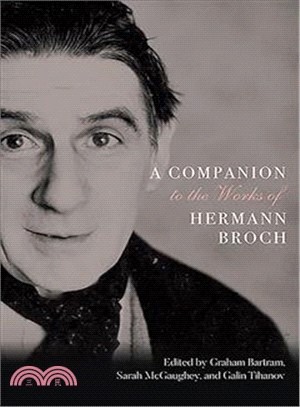
Hermann Broch (1886-1951) is best known for his two major modernist works, The Sleepwalkers (3 vols., 1930-1932) and The Death of Virgil (1945), which frame a lifetime of ethical, cultural, political,
This book deals with three aspects that have been neglected in the burgeoning field of music and literature. The "First Movement" of the book considers writers from German Romanticism to the present w
The novel, according to standard scholarly narratives, depicts an individual's path to maturity. Scholarship on the rise of the novel in Germany and in Europe more broadly, from Watt to Moretti, has e
The fifteenth century defies consensus on fundamental issues; most scholars agree, however, that the period outgrew the Middle Ages, that it was a time of transition and a passage to modern times. Fi
A panel of authors, critics, and academics convened by the Literaturhaus in Munich in 1999 voted Robert Musil's The Man without Qualities the most important German novel of the 20th century. Their co
The fifteenth century defies consensus on fundamental issues; most scholars agree, however, that the period outgrew the Middle Ages, that it was a time of transition and a passage to modern times. Fi
What happens when the world in which people have crafted identities for themselves and lived their lives suddenly disappears? How does a person -- or a nation -- confront such a shock? From 1990 to
The idea of earthly immortality has a tradition in literature dating to the Gilgamesh epic. But what would it mean to attain such immortality? Answers are suggested in novels and plays that explore th
Among the most important English novelists, Jane Austen is unusual because she is esteemed not only by academics but by the reading public. Her novels continue to sell well, and films adapted from her
Nexus is the official publication of the biennial German Jewish Studies Workshop, which was inaugurated at Duke University in 2009, and is now held at The University of Notre Dame. Together, I>Nexus a
By the time of his death, Edgar Julius Jung (1894-1934) was well known in Germany and Europe as one of the foremost ideologues of the political movement that called itself the Conservative Revolution
The decisive contribution of the exile generation of the 1930s and '40s to German Studies in the United States is well known. The present volume carries the story forward to the next generation(s), gi