Transcultural experiences are few and far between in the Middle Ages and early modern times; not enough evidence has been sifted for clues, it has not been discovered, or it has simply been ignored. T
In the recent two decades many unknown texts from Qumran have been published, which rework passages from the Hebrew Bible. Dated from the second and first centuries BCE these documents display the met
The problems for the equations and their generalization are addressed with the competing methods of isomonodromy deformations and power geometry in 36 papers. Among the topics are convergence of a for
This narrative study uses Mark 3:22–30 as an interpretive lens to show that the Gospel of Mark has a thoroughly apocalyptic outlook. Unlike many narrative studies, this book clarifies Mark’s symbols,
The author presents with this intellectual biography of the Lutheran alchemist Count Michael Maier an academic study of western esotericism in general and to the study of alchemy and rosicrucianism in
The Eddic poem Vafþrúðnismál serves as a representation of early pagan beliefs or myths and as a myth itself; the poem performs both of these functions, acting as a poetic framework and functioning as
Shulgi-simti is an important example of a woman involved in sponsoring religious activities though having a family life. An Ox of One’s Own will be of interest to Assyriologists, particularly those in
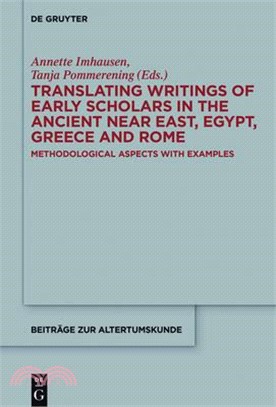
Ancient cultures have left written evidence of a variety of scientific texts. But how can/should they be translated? Is it possible to use modern concepts (and terminology) in their translation and wh
The preanalytical phase is an important component of Laboratory medicine and errors arising in this phase affect the validity of laboratory results. In this book physicians and clinical staff have acc
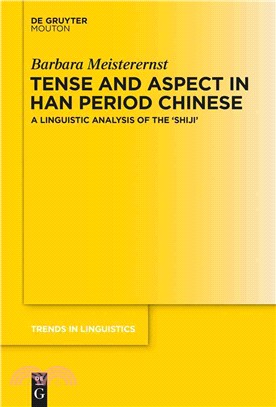
Meisterernst presents students, academics, and researchers with a comprehensive investigation of grammatical issues in Archaic and Medieval Chinese, including analysis of the syntactic and semantic co
This volume addresses questions about the relationship between language and other cognitive ability by examining the linguistic codification of spatial relations, which in most cases is not concentrat
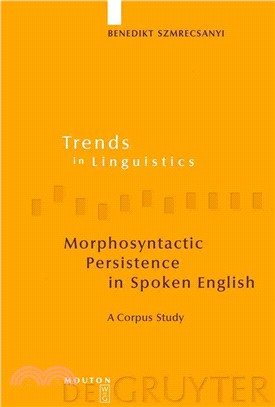
In this qualitative as well as quantitative study, Szmrecsanyi argues that those of us who use language are inertial, to the point that analysts can predict with some certainty exactly what we are goi
A selection of refereed papers presented at Conference A, Mathematics and Theoretical Physics, of the Second Gauss Symposium, held in August 1993. The papers are grouped by topic according to sections