The Judicial Committee of the Privy Council was the final appellate court of the British Empire. In 1935 the Irish Free State was recognized as the first part of the empire to abolish the appeal to th
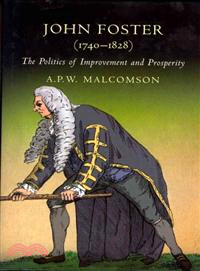
When he retired from public office in 1811, John Foster had been at the center of Irish political affairs for 35 years, starting as a member of parliament at the age of 21. This book details his caree
This volume arises from a conference held in 2008 at the Royal Society in London to mark the 275th anniversary of the establishment of the Edward Worth Library in Dr Steevens' Hospital, Dublin. Many c
McKenna-Lawlor (emeritus space physics, National U. of Ireland-Maynooth) and Muiri, a translator and now a lawyer in Dublin have abstracted the English-Irish section from a 20-language lexicon publish
Donegal: the making of a northern county (Four Courts Press. 2007) This anthology uses extracts from a wide variety of sources to examine social and geographical change in Donegal over the past five
"Trim is one of Ireland's best-known medieval towns, and yet for a very long time many aspects of its early history and development were poorly understood. A series of important archaeological excavat
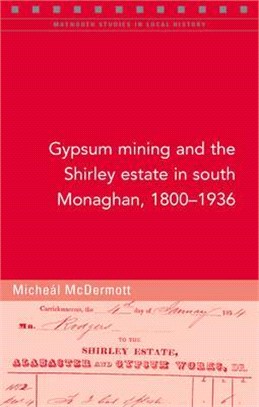
In the early 1800s, a fruitless pursuit of coal on the Shirley estate in south Monaghan led to the discovery and the intermittent exploitation of gypsum on the estate lands. In portraying the inter-re
Hazell, an independent scholar of medieval literature, examines the attitudes toward poverty in late medieval England through the literature of the time. Her sources vary from well-known authors such
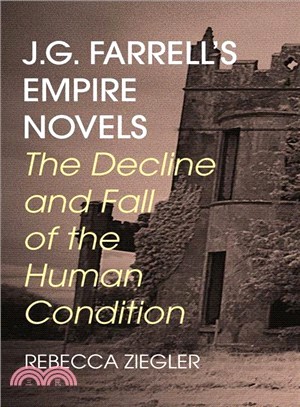
Despite its name, the real subject of J.G. Farrell’s three-and-a-half-book Empire Series is not the British empire, but the human condition, a state characterized by ‘fall’ – l
This account of the Brigidines, formally known as the Sisters of St. Brigid, expands the current knowledge of the congregation and its mission to the rural communities of Ireland, America, Australia,
This collection explores the influence of France on the evolution of Irish political and cultural thought from the eighteenth century, showing how the convergence between the two countries fed into th
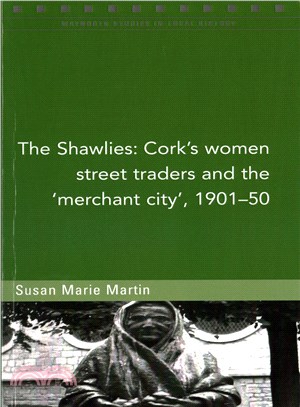
For centuries, Cork's Shawlies survived by trading on public streets. Then, in 1926, the Irish Free State government introduced the Street Trading act, insisting it was fair legislation needed to regu
Focussing on the history of education in Ireland and Europe from the seventeenth century to the present, and written by scholars from a number of disciplines, this collection pursues new areas of inqu
This collection of seventeen essays covers a wide variety of themes relating to the political, economic and social problems facing the divided population of the North of Ireland during the twentieth c
This impressive volume, the first publication of the Discovery Programme's Medieval Rural Settlement Project, presents a scholarly summary of the archaeological and historical research to date on the
A scholar-at-large long involved with theater, Corbett investigates the relationship between the mystery plays of late medieval England and their implied audiences, questioning the conventional wisdom
This study explores the learned Gaelic families (poets, historians and physicians) and the context in which they lived. A wide-ranging survey, it looks at the landholdings and structures of individual
Bodenstown revisited is about a place of memory and pilgrimage often mentioned in history books but never before treated as a subject meriting an entire book. It surveys the grave of Theobald Wolfe To
The Bible is undoubtedly the most influential 'book' that the world has ever known. In thirty essays, this wide-ranging volume examines the cultural impact of biblical texts, from the early Middle Age
This book pays tribute to Professor Christine Meek with nineteen essays that present the latest research in the evolution of Italian society towards the Renaissance Which also provide fascinating and
As the 400th anniversary of the official Plantation of Ulster approaches, the University of Ulster and the Institute of Ulster Scots Studies is planning a series of volumes, of which this is one. Seve
A 1707 act of parliament established the library of Narcissus Marsh (1638-1713) as a public library, and a conference was held to commemorate the tricentennial of the event, at which scholars of the b
Magna Carta is among the most famous documents in the history of the world, credited with being the first effective check in writing on arbitrary, oppressive and unjust rule - in a word, on tyranny. T
In pre-independence Ireland, there was not just one potential home-rule nation, but rather a multitude of idealized Irelands, and journalists sought to promote their versions of the future to their re
Following on from volume 1 on new unionism and old (1889-1906), volume 2 reviews the impact of Larkinism and syndicalism on Derry. After impressive progress in the 19th century, Derry's industrial gro
This is the first book in a three-volume series on architectural history, richly illustrated and written for the general reader. Unpacking the history of Dublin's architecture during the 20th century,
Navigatio Sancti Brendani Abbatis , written in Latin around 800 AD, tells the story of 6th century Irish Saint Brendan's departure for an island paradise across the ocean. Three and a half centuries l
Born in Ulster, John Black left Ireland for the West Indies in 1771 and never returned. Settling first in Grenada, he moved on to Trinidad in 1784 and established himself as a major slave owner and a
Between the summer of 1573 and the autumn of 1575 one of the rising figures of the Elizabethan court, Walter Devereux, first earl of Essex, attempted to colonize the north-east of the province of Ulst
The campaign for women's votes in Ireland coincided with the nationalist movement, the First World War, the rise of the trade union movement, the cultural revival and, of course, the 1916 Rising. It c
In the period 1832 to 1857 some 3,700 men served in the Irish Revenue Police. In this book, Jim Herlihy shows how to find information on these policemen, providing an excellent resource for those inte
Why do a number of children look like the local dean? Did you hear that the bishop did not like the communion wine and spat it out, exclaiming "this is the basest wine I have ever tasted"? Such issues
Kanter (history, Florida Atlantic U.) traces the emergence and solidification amongst the British elite for legislative union with Ireland over the period 1740-1848. He describes how the idea of Anglo
Lying just south of the line that divided Ireland's two halves, Leath Chuinn to the north and Leath Mhogha to the south, the churches of the present county of Offaly could scarcely have been other tha
The relationship of Ireland with the Viking World is one of the enduring themes of the study of the Viking Age. The Fifteenth Viking Congress addressed key issues in the debate, including Viking-Age