Argentine artist Guillermo Kuitca (*1961 in Buenos Aires) is one of the most important contemporary artists in South America. Architecture, theater, music, and cartography play a central role in his w
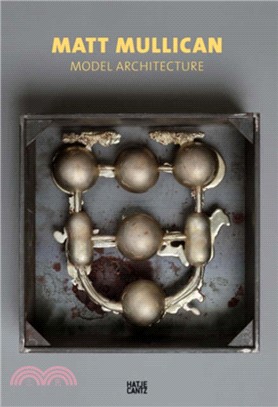
Matt Mullican (* 1951 in Santa Monica, California) is a multimedia artist in the broadest sense of the word. He has an enormous spectrum of expressive forms, ranging from fragile objects to massive sc
American artist Al Taylor, who was born in 1948, considered himself more of a painter and draftsman than a sculptor. His European breakthrough was triggered by a series of exhibitions in the early nin
Since the acclaimed successful modernization of the Olympic Stadium in Berlin at the very latest, the Hamburg architectural team of the architects von Gerkan, Marg und Partner has established itself i
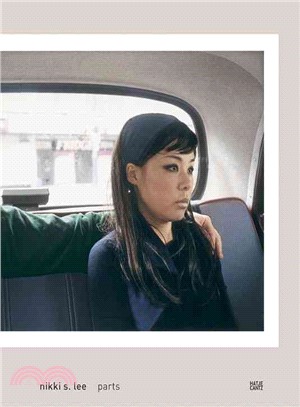
The Korean artist Nikki S. Lee became internationally known for snapshot-style photographs in which she assumes a wide variety of ethnic and cultural identities. In her series entitled Parts, she expl
The desire to fly is as old as humanity itself. Icarus dreamed of it, Leonardo da Vinci became one of the first to invent and build flying machines, and for half a century, people have been flying int
The title theme of this year's festival is Timeshift - The World in 25 Years. It will focus on issues such as times of change, radical political transformation, and possible future development. The br
Alongside Erwin Wurm and Franz West, Hans Kupelwieser (born in 1948 in Lunz) occupies a third independent position in contemporary Austrian sculpture that represents a significant step forward in the
Unpainted Pictures is what Emil Nolde called these fascinating watercolors created from 1938 to 1945 in the seclusion of his house at Seebüll after his works in the museums had been confiscated by the
Richard Paul Lohse, with his modular and serial orders, is one of the founders of systematic-constructive art in the 20th century. This book, a project by the Richard Paul Lohse-Foundation, is the fir
Unpainted Pictures is what Emil Nolde called these fascinating watercolors created from 1938 to 1945 in the seclusion of his house at Seebüll after his works in the museums had been confiscated by the
Berlin's Gemaldegalerie is known for its outstanding collection of European paintings from the thirteenth to eighteenth century. Each chapter in this book is dedicated to one painting from the collect
If data is the greatest collective treasure of a digital society, basic material for business and politics: Why are the places where it is stored still so invisible? Niklas Maak, architectural critic
From Greek antiquity to the present, from the book to the gramophone, from Gutenberg to Google, our culture is defined by changes in recording, storage, and transmission media. In a six-volume selecti
From Greek antiquity to the present, from the book to the gramophone, from Gutenberg to Google, our culture is defined by changes in recording, storage, and transmission media. In a six-volume selecti
The director, painter, and set designer Wieland Wagner (1917–1966) influenced an entire era in the history of the Bayreuth Festival. When, along with his brother, Wagner assumed responsibility for the
It is the longing for silence―inviolate, loudly articulate silence. Jan Scheffler puts himself in the midst of this silence and his gaze brushes the sky, the earth, the water, the light. Then all beco
Dominik Halmer’s paintings and pictorial objects are based on the idea of connecting painting to real space. In his multifaceted works, three-dimensional objects like wooden rings and balls interact w
In Collective Creatures, Silja Yvette draws attention to artificial and natural materials, as well as to the effects of mass and energy in space and time. In her photographs objects and places― from c
Kim Beom initiates the culture year for Denmark and South Korea with the solo exhibition Water from Ganges River in the Cup Made with Newspaper from Congo at Kunsthal Aarhus. The artist shows a series
A wider public discovery of the Georgian painter Niko Pirosmani (1862–1918) is long overdue. Today, the autodidact is known not only as one of the most significant representatives of naïve art, but th
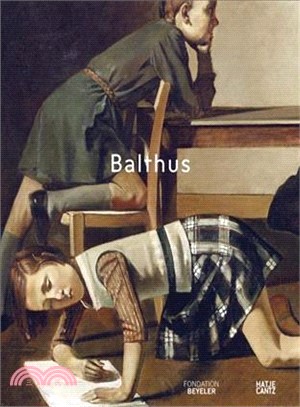
In his multifaceted, multilayered oeuvre Balthus (1908–2001), one of the last great twentieth-century masters, pursued a path that ran exactly contrary to the modern avant-garde movements. As quiet as
When Neo Rauch was a student of Arno Rink’s at the Hochschule für Grafik und Buchkunst in Leipzig, Germany was still a divided country. After the fall of the Berlin Wall, his large, cryptic paintings
Børge Mogensen (1914–1972) was one of the most important and influential representatives of Danish furniture design. In more than thirty years, he created a wealth of quality furniture, many pieces of
With his pioneering visual language, not least inspired by children and the mentally ill, Jean Dubuffet (1901–1985) succeeded in disengaging himself from traditions and reinventing art, so to speak. D
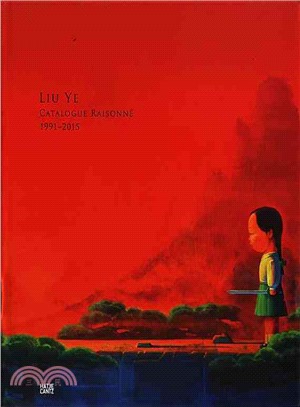
It is no accident that the simplified paintings by Liu Ye (*1964) are reminiscent of cartoons and illustrations in children’s books: the artist’s father wrote books for children and possessed a box fi
At this year’s Venice Biennale, the Romanian Pavilion in the Giardini showcases Darwin’s Room, an exhibition of paintings by Adrian Ghenie. The title refers not only to a recent series of superb portr
Thomas Ruff‘s photographic series are compelling. In larger-than-life-sized portraits we encounter the intent gazes of young adults. Sterile building façades serve as a commentary on the misery of ur
Birgit Lyngbye Pedersen was looking for the right sofa for a house from the fifties and discovered Finn Juhl (1912–1989), whose furniture is experiencing a renaissance in the wake of the retro wave. W
In 1951 the Italian-Brazilian industrialist Ciccillo Matarazzo founded the São Paulo Biennial, the second-oldest art show of its kind. From the start, it was said that the show’s role model was the mo
What would life be like without art? That is not a rhetorical question―there has been much philosophizing and speculating on it. Still, when was the last time that someone seriously tried to answer th
Art Basel presents the 13th edition of Art Unlimited. The concept it represents of a large-scale museum-quality exhibition in the framework of an art fair is unique and popular among collectors and vi
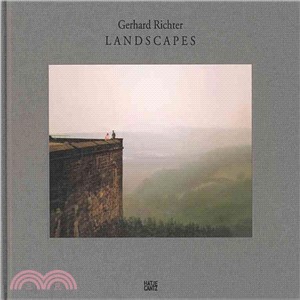
Gerhard Richter (*1932 in Dresden) has always dealt with the landscape. No other motif has fascinated him as much or kept him so occupied over the years: black-and-white landscapes based on images fro
Frank Gaudlitz (*1958 in Vetschau) became known with his photo project Warten auf Europa (Waiting for Europe), in which he traveled along the Danube River from the Black Forest to the Black Sea, photo
Daniel Mauch (1477–1540) is one of the leading sculptors to work during the transition from the late Middle Ages to the early Modern era. Works such as the Bieselbach Altar (1510), the Sebastian Altar
There are not many twentieth-century artists who have managed to maintain an international reputation for decades on end―the Austrian artist Maria Lassnig (*1919) is one of them. She has painted and d
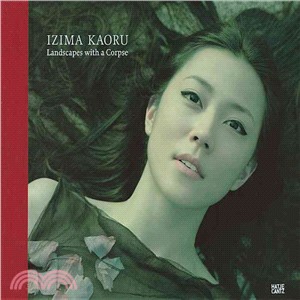
Edgar Allan Poe wrote, "The death of a beautiful woman is unquestionably the most poetical topic in the world." Ophelia, Madame Bovary and Anna Karenina are evidence that other writers and artists hav
This collection of essays was published on the occasion of the seventieth birthday of Danish painter, sculptor, author, filmmaker, and architect Per Kirkeby. For over thirty years, Siegfried Gohr, for