This volume contains papers presented at sessions at the 2005 International Medieval Congress organized by Mostert (medieval studies, U. of Utrecht) and Barnwell (historic environment, U. of Oxford).
As individuals, we have the ability (although not always the opportunity) to create our own paradigmatic image of the Divine; moreover, as a society we can alter, transform, or even replace those para
This book is the first comprehensive study of Schopenhauer's philosophy of religion. It develops a contextual account of Schopenhauer's relation to the religions of India by placing his interpretation
This book is based on a study of the archaeological evidence deriving from the Arjan tomb, an undisturbed elite burial found in 1982 near the town of Behbahan in south-western Iran. The fact that this
This series comprises regional studies in the rural history of the European continent during the Middle Ages (concentrating on the period 1000-1500). Integrating written records, archaeology, and rese
Christianity changed the culture and society of Iceland, as it also did in other parts of Northern Europe during the twelfth and thirteenth centuries. One of the important areas of change involved the
In this abundantly illustrated study, Gottler, investigates the relationship between art of the Early Modern period and the contemplation of the Last Things: death and the afterlife. She is particular
Although they are ubiquitous in Gothic and Late Gothic churches, the often elaborate architectural edifices created to house the host have rarely been studied and never before systematically surveyed.
The cemetery of el-Gerzeh (dated to c. 3600-3350 BC) excavated in 1910-11, seemingly provided the first evidence of Predynastic 'Naqada culture' outside its previously documented social field in Upper
Barratt (humanities, University of Waikato, NZ) has taken one manuscript of the British Museum, MS Harley 494, and created a history of its time, owners and content. Until quite recently, devotional b
Sweden entered the European Christian community around the year 1000. Although mainly a society of oral traditions, Sweden already had a written language. Larsson (Swedish, Stockholm University) trace
The genre has taken the usual route for literary innovation through skepticism, hesitation, denial, rejection, and reservation to become an established part of contemporary Arabic literature, says Tah
The Encyclopaedic Prosopographical Lexicon of Byzantine History and Civilization (EPLBHC) is a multivolume encyclopaedic lexicon aiming to cover the whole of Byzantine prosopography for the period c.
In this substantial volume, Herberle (English, University of Hawai'i at Manoa) presents the first collection of Vietnam War criticism published since the 1990s. The book's essays on literature, film a
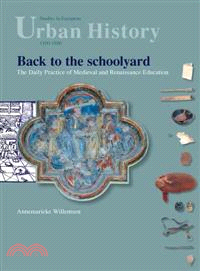
Art historian and archaeologist Willemsen serves as curator of the medieval department at the National Museum of Antiquities at Leiden, the Netherlands. Here she looks at school life from the 14th to
Italian historian of philosophy and theology, d'Onofrio has reworked several of his articles into a flowing history of the blending of the two subjects in Christian thought from the earliest days thro
This title provides an overview of Central Europe from ca. 6000 BCE to the first millennium BCE, with a focus on boom periods of innovation, cross-cultural interaction and technological advances such
Charlemagne and his learned entourage initiated a program to attract divine approval, and this became the Carolingian reform movement within which many bishops wrote letters to the priests under their
This collective work presents the preliminary results of excavations undertaken by the Canadian archaeological mission to Tell 'Acharneh, Syria in 1998, 1999, and 2002, as well as the results of a stu
Toward the end of Trajan's (the Roman emperor) reign, and before the Bar Kochba revolt, Diaspora Jews staged massive uprisings in Libya, Egypt, Cyprus, Judaea, and Mesopotamia. In this academic volume
When Arnal (religious studies, U. of Regina, Saskatchewan) was invited to write a short paper for a 2003 symposium at the University of Toronto, he ended up with 129 pages, enough for a slim book, whi