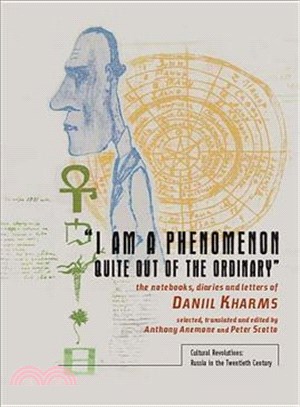
In addition to his numerous works in prose and poetry for both children and adults, Daniil Kharms (1905-42), one of the founders of Russia’s “lost literature of the absurd,” wrote notebooks and a diar
This study deals with the most important king of the Aramaean kingdom of Damascus, Hazael, and the impact he had on biblical literature, which goes beyond the few verses that mention him explicitly in
Thate offers what he characterizes as an oblique attempt to re-situate the histoische Jesu Frage within the wider discussions of secularization both in terms of its history of interpretation and in co
"Space has always played a crucial part in defining the place that monks and nuns occupy in the world. Even during the first centuries of the monastic phenomenon, when the possible varieties of monast
Rennie (history, University of Queensland, Brisbane) has combed archives and corrupt printed records in his research on the eleventh century bishop and papal legate, Hugh of Die. Hugh was appointed by
The Speculum humanae salvationis (Mirror of Human Salvation), a medieval book recounting in forty-five chapters the story of human redemption within the larger context of the Virgin Mary's life, was s
Taliadoros (history, Monash U.) finds the roots of Vacarius to be in his legal works, which both inform and locate his theological topics ranging from Christology to heresy and the sacramental matters
A recently deceased expert (State U. Leiden, The Netherlands) presents a 4,000-year survey of pottery production in Jerusalem from the early Bronze Age to Byzantine period. Unlike most ceramics studie
The 34 articles of this collection honor Peter Fergusson (art history, Wellesley College, Mass.), who wrote, among other works, a seminal study of Cistercian architecture in 1984. The articles present
This book is about historical ecology and environmental studies carried out in 2000-2001 by a team of archaeologists, anthropologists, botanists and geographers in the north-eastern Peru.During the la
The creation of a model to explain the transforms between behaviour and material remains is the underlying, structuring principle of ethnoarchaeology. Despite the value of this interpretive paradigm f