Suburbs deserve a better, more resilient future. June Williamson shows that suburbs aren't destined to remain filled with strip malls and excess parking lots; they can be reinvigorated through inventi
Robert J. Cabin uses the restoration of tropical dry forestland in Hawaii as an in-depth case study to investigate the scientific, practical, and philosophical issues associated with performing ecolog
"Sustainability" is more than the latest "green" buzzword. It represents a new way of viewing the interactions of human society and the natural world. Sustainability in America's Cities highlights how
Restoring Disturbed Landscapes is a hands-on guide for individuals and groups seeking to improve the functional capacity of landscapes. The book presents a five-step, adaptive procedure for restoring
Restoring Ecological Health to Your Land is the first practical guidebook to give restorationists and would-be restorationists with little or no scientific training or background the ?how to” informat
Resilience theory has been developing over the past 30 years, and seminal articles in that process are gathered here by Gunderson (environmental studies, Emory U.), Craig R. Allen (natural resources,
Apollo's Fireis a thoughtful, optimistic book, based on sound facts. No one before has tied together the concepts of economic growth and greenhouse gas reductions with such concrete examples. N
The “green building revolution’’ is happening right now. This book is its chronicle and its manifesto. Written by industry insider Jerry Yudelson, The Green Building Revolution introduces readers to t
While the concept of sustainability has been widely embraced, it has been only vaguely defined and is exceedingly difficult to measure. Sustainability indicators are critical to making the broad conc
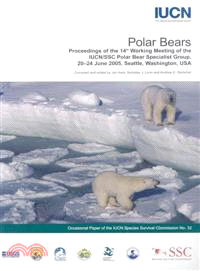
These proceedings provide an overview of the ongoing research and management activities on polar bears in the circumpolar arctic. Together with the previous 13 proceedings, they provide an historic re
In 2004, U.S. consumers spent $5.2 billion purchasing bottled water while the government only invested 5 percent of that amount to purchase critical watersheds, parks, and wildlife refuges-systems vit
"...[a] provocative and original account..." --NEW YORK REVIEW OF BOOKS Originally published in 1993, Forcing the Spring was quickly recognized as a seminal work in the field of environmental history
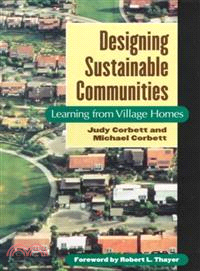
The movement toward creating more sustainable communities has been growing for decades, and in recent years has gained new prominence with the increasing visibility of planning approaches such as the
When an activity raises threats of harm to human health or the environment, precautionary measures should be taken even if some cause and effect relationships are not fully established scientifically
Compiled by the acknowledged leaders in environmental career information, The Complete Guide to Environmental Careers in the 21st Century is a completely revised and updated edition of what has becom
ÿFarming in Nature's Image provides, for the first time, a detailed look into the pioneering work of The Land Institute, the leading educational and research organization for sustainable agricul
Edward O. Wilson—winner of two Pulitzer prizes, champion of biodiversity, and Faculty Emeritus at Harvard University—is arguably one of the most important thinkers of the twentieth century
In Roads Were Not Built for Cars, Carlton Reid reveals the pivotal—and largely unrecognized—role that bicyclists played in the development of modern roadways. Reid introduces readers to cycling person
In the early 1970s, the environmental movement was underway. Overpopulation was recognized as a threat to human well-being, and scientists like Michael Soule believed there was a connection between an
In Search of the Public: Notes on the Contemporary American City presents a collection of essays, interviews, and projects that deal with the role of public space within contemporary American urbanism
Today, there is a growing demand for designed landscapes—from public parks to backyards—to be not only beautiful and functional, but also sustainable. Sustainability means more than just saving energy
American communities are changing fast: ethnic minority populations are growing, home ownership is falling, the number of people per household is going up, and salaries are going down. According to Ma
This text, produced by the Worldwatch Institute, outlines the issues, concerns, and possibilities raised by the UN Conference on Sustainable Development, known as the Rio+20. The core issues for build
Public transit is a powerful tool for addressing a huge range of urban problems, including traffic congestion and economic development as well as climate change. But while many people support transit
Apfelbaum, an international ecology consultant, and Haney (forest ecology, U. of Wisconsin-Stevens Point) offer a handbook, partly for owners of land who want to restore its health after often decades
Fire Ecology in Rocky Mountain Landscapes brings a century of scientific research to bear on improving the relationship between people and fire.?In recent years, some scientists have argued that curre
Wildlife Law is a comprehensive and readable primer that provides an overview of U.S. wildlife law for a broad audience, including professionals who work with wildlife or who manage wildlife habitat,
In Green Urbanism, Timothy Beatley explains what planners and local officials in the United States can learn from the sustainable cities movement in Europe. The book draws from the extensive European
How can we design places that fulfill urgent needs of the community, achieve environmental justice, and inspire long-term stewardship? By bringing community members to the table, we open up the possib
A global energy war is underway. It is man versus nature, fossil fuel versus clean energy, the haves versus the have-nots, and, fundamentally, an extractive economy versus a regenerative economy. The
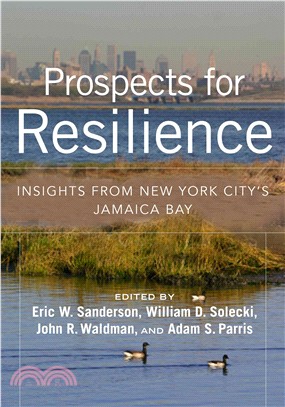
Given the realities of climate change and sea-level rise, coastal cities around the world are struggling with questions of resilience.? Resilience, at its core, is about desirable states of the urban
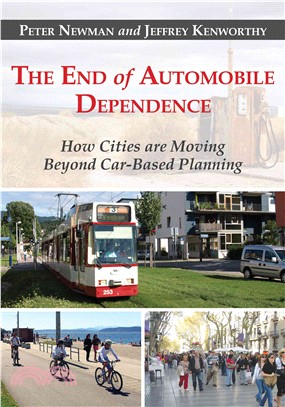
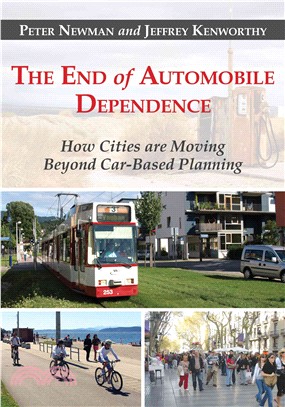
Cities will continue to accommodate the automobile, but when cities are built around them, the quality of human and natural life declines. Current trends show great promise for future urban mobility s
Cities will continue to accommodate the automobile, but when cities are built around them, the quality of human and natural life declines. Current trends show great promise for future urban mobility s
Can nature—in all its unruly wildness—be an integral part of creative landscape design? In her beautifully illustrated book,Wild by Design, award-winning designer Margie Ruddick urges designers and ga
How can we plan and design stronger communities? From New Orleans to Galveston to the Jersey Shore, communities struck by natural disasters struggle to recover long after the first responders have lef
How do we accommodate a growing urban population in a way that is sustainable, equitable, and inviting? This question is becoming increasingly urgent to answer as we face diminishing fossil-fuel re
Every day, we are presented with a range of “sustainable” products and activities—from “green” cleaning supplies to carbon offsets—but with so much labeled as “sustainable,” the term has become essent
Seventy percent of the oil America uses each year goes to transportation. That means that the national oil addiction and all its consequences, from climate change to disastrous spills to dependence on
Nearly all large American cities rely on zoning to regulate land use. According to Donald L. Elliott, however, zoning often discourages the very development that bigger cities need and want. In fact,
Ian L. McHarg's landmark book Design with Nature changed the face of landscape architecture and planning by promoting the idea that the design of human settlements should be based on ecological princi