For at least fifteen years, any keen observer of European society has been aware that antisemitism is no longer a matter of racial theory, nationalism, or exclusion of the "other". While in the past a
Virginia Woolf and the Natural World is a compilation of thirty-one essays presented at the twentieth annual international conference on Virginia Woolf. This volume explores Woolf's complex engagement
This beautifully illustrated volume explores the architectural features and urban character of Harat al-Bilad, the principal settlement of Manah, an important oasis of central Oman. Originally a front
Invisible Men provides a comprehensive study of English police constables walking the beat in the first four decades of the twentieth century. Joanne Klein has mined a rich seam of archival evidence t
Invisible Men is the most comprehensive study to date of the lives and work of English police constables on foot patrol in the early part of the twentieth century. Joanne Klein has plumbed previously
Since the arrival of the "Gypsies," or Romanies, in Europe at the beginning of the eleventh century, Europeans have simultaneously feared and romanticized them. That ambiguity has contributed to centu
This book offers the first detailed regional study of women’s politics in the United Kingdom in the period before the First World War. Its purpose is to investigate how women’s politics functioned at
The texts gathered in this volume embrace women artists-only exhibitions, festivals, collective art projects, groups and associations, organised in the long 1970s in Europe (1968-1984). These all-wome
A crisis in historical representation unfolded in French visual culture in the first half of the nineteenth century, reaching its climax at the Paris Universal Exhibition of 1855, when artists and cri
Jonas of Bobbio was an Italian monk, author, and abbot, active in Lombard Italy and Merovingian Gaul during the seventh century. He is best known as the author of the Life of Columbanus and His Discip
Jonas of Bobbio was an Italian monk, author, and abbot, active in Lombard Italy and Merovingian Gaul during the seventh century. He is best known as the author of the Life of Columbanus and His Discip
The World in One School explores in text and image the global influence of Britain's oldest University School of Architecture, exploring the history of the School and what its teachers and graduates h
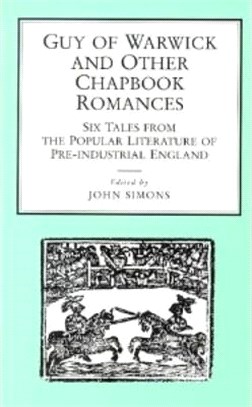
Chapbooks formed the staple reading matter of ordinary people during the eighteenth and much of the nineteenth centuries; they were also read by children of the gentry. They included fiction, almanacs
This book informs debates about worker participation in the workplace or worker voice by analysing comparative historical data relating to these ideas during the inter-war period in Australia, Canada,
Virginia Woolf and Her Female Contemporaries, seeks to contextualize Virginia Woolf's writing alongside the work of other women writers during the first decades of the twentieth-century. This volume
The Haitian Revolution (1791-1804) was an event of monumental world-historical significance, and here, in the first systematic literary history of those events, Haiti's war of independence is examined
The Haitian Revolution (1791-1804) was an event of monumental world-historical significance, and here, in the first systematic literary history of those events, Haiti's war of independence is examined
Virginia Woolf and the Common(wealth) Reader presents twenty-eight essays and four poetic invocations delivered at the 23rd Annual International Conference on Virginia Woolf, hosted by Simon Fraser Un
This is the account of the social and spiritual difficulties of an aspirant nun in Mexico at the end of the seventeenth century. In an extensive introduction, Myers discusses the chronology and proven
In 1916, at an unpropitious time, Thomas Wallis founded a new practice, Wallis, Gilbert & Partners, primarily to collaborate with an American company in the design of factories to be constructed o
Cassiodorus (c.485–585), Roman senator and consul, served in various high offices from c.505 to c.538, under the kings of the Ostrogoths, who had inherited the imperial administration of Italy.
The Roman emperor Constantius II (337-361) has frequently been maligned as a heretic, standing in sharp contrast to his father Constantine I, who set in motion the Christianisation of the Roman world