In this radical study, William Cantwell Smith traces the history of believing through a combination of philosophical perspective and the study of biblical passages.
Long-regarded as the handbook of Individual Psychology, Understanding Human Nature provides an engaging introduction to Adler’s key concepts including: inferiority and superiority complexes; life styl
Containing the essence of wisdom of the world religion's past prophets, this unusual and inspiring collection of spiritual teaching will appeal to people of all religions.
A companion volume to Hinduism: A Short Introduction and Hinduism: A Short History offers a detailed study of major Hindu writings, providing authoritative translations, interpretations, explanations,
Distinguished Professor Emeritus Abraham Ascher offers a skillful blend of engaging narrative and fresh analysis in this concise introduction to Russian history.Newly updated on the 100th anniversary
This latest addition to the Oneworld Library of Global Ethics and Religion contains articles from leading scholars on the role played by religious ethics in today's society.
The 'new materialism' argues that science and religious belief are incompatible. This book considers such arguments from cosmology (Stephen Hawking, Peter Atkins), from biology (Charles Darwin, Richar
It’s all over our televisions, newspapers and the internet. Every day we’re bludgeoned by news of how bad everything is ? Brexit, financial collapse, unemployment, poverty, environmental disasters, di
The Middle East- the uprisings, the fallen leaders, the insurgencies and civil conflict plaguing the regionIn this pioneering introduction, Oxford University’s Philip Robins argues that the region is
"Admirably compact. Packed with richly resonant material." Daniel Snowman - Senior Research Fellow, Institute of Historical Research, University of London, and author of The Gilded Stage: A Social His
"Excellent. Probably the best introductory guide to literary theory I've seen." Ian Buchanan-Professor of Critical and Cultural Theory, Cardiff University"Profoundly reliable as well as inviting, play
Alfred Adler (1870-1937), founder of Individual Psychology, was one of the forefathers of modern psychotherapy alongside Freud and Jung. Understanding Life offers an excellent introduction to Adler's
Renowned as one of the world’s most astute interpreters of Kabbalistic texts, Elliot Wolfson offers an illuminating and original presentation of Kabbalah. Combining its wisdom with Western philosoph
Considering the doctrine of God within Hinduism, Buddhism, Islam, Judaism, and Christianity, this book offers an invaluable introduction to the religious traditions that have shaped human culture thro
In this delightful volume of love poetry, renowned literature professor Suheil Bushrui presents nearly two hundred cherished works from around the world and down through the ages.Here, traditional cla
Before Socrates, philosophers sought explanations for naturally-occurring phenomena from earthquakes and eclipses to the existence of the entire cosmos. But the Socratic era saw a great shift towards
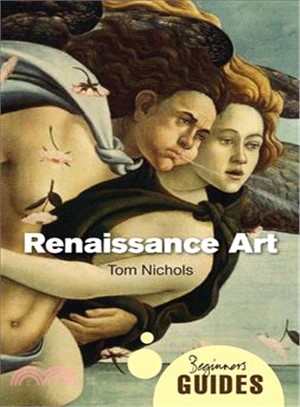
The fifteenth century saw the evolution of a distinct and powerfully influential European artistic culture. But what does the familiar phrase Renaissance Art actually refer to? Through engaging discus
In this charming anthology, Suheil Bushrui, renowned literature professor, presents an unusually varied collection of the world’s favorite love poetry from around the globe and down through the ages.T
Wandering dervishes formed a prominent feature of most Muslim communities well into the modern period, surviving in some regions even today. Shocking in appearance, behavior, and speech, these social
Khalil Maleki (1901–1969) was a rare phenomenon in twentieth-century Iran. A selfless campaigner for democracy and social welfare, he adopted a unique approach to politics, prioritising the criticism
Following his critically acclaimed investigation of the ethnic cleansing of Palestine in the 1940s, renowned Israeli historian Ilan Pappe turns his attention to the annexation and occupation of Gaza a
It’s on the televisions, in the papers and in our minds. Every day we’re bludgeoned by news of how bad everything is financial collapse, unemployment, growing poverty, environmental disasters, disease
The Victorian period is crucial to any understanding of modern Britain, yet it is frequently understood only through the crude stereotypes of emotional repression, factories, child labour and the purs
Whether worshiped, feared, or studied, volcanoes have always been a subject of fascination and awe. This Beginner's Guide explains the importance of volcanoes in shaping worlds, the dangers of volcani
"A Valuable guide to the underlying science, the possible impacts of change, and the political hazards now surrounding the debate", Sir Crispin Tickell - Director of the Policy Foresight Programme at
Often quoted, influential, and highly divisive, Nietzsche remains an enigma long after his death. This clear primer moves deftly through the controversy to examine the philosopher's work in the contex
Blamed for the bloody disasters of the 20th century: Auschwitz, globalisation, Islamic terrorism; heralded as the harbinger of reason, equality, and the end of arbitrary rule, the Enlightenment has be
Original and profound, this beautiful little book is the perfect Valentine’s Day alternative to those tired collections of cliched romantic verse. Regarding it as the raison d’etre of the universe,
Claxton reveals the key responsibility of education today: to create students who enjoy learning. With their emphasis on stressful exams and regurgitation of information, he claims that schools are cu
Without oil, there would be no globalisation, no plastic, little transport, and a global political landscape that few would recognise. In this captivating book Vaclav Smil explains all matters related
Jewish Women Prisoners of Ravensbruck offers insight into the identities of the women within Ravensbruck's walls, presenting original research from major archives in Germany, Israel and the USA. The a
Tadeusz Zawidzki outlines Dennett's reconciliation of three major components—thought, consciousness, and freedom of the will—with what science tells us about human nature. In the course of this exposi