In what ways do the artistic avant-garde's representations of the human body reflect the catastrophe of World War I? The European modernists were inspired by developments in the nineteenth-century, yi
Four decades of encounters with the visionary and esoteric work of Adrian Rifkin across the historical, aesthetic, conceptual and theoretical terrain of his thought and criticism are brought together
The Lebanese civil war, which spanned the years of 1975 to 1990, caused the migration of several thousands of Lebanese citizens, many of whom are still writing of their experiences. Jumana Bayeh here
The English Pantomime is one of the most popular, least analysed of all theatrical forms. It's been the festive mainstay of the English stage since the eighteenth century, and it has survived by its a
The safavid period is in immensely rich chapter in the history of Iranian architecture. Kishwar Rizvi examines the intersection of popular piety and imperial ideology through an in-depth look at the p
Darfur has become synonymous with suffering. A vast, remote and poor region, Darfur has been torn by armed conflict and humanitarian crises, and haunted by the spectres of ethnic cleansing and genocid
World War II marked a pivotal point in the history of Cyprus, yet surprisingly, this period of the island's history has been little studied to date. This book explores the shifting landscape of Cyprio
It is 60 years since the publication of the original French version of Fernand Braudel's `The Mediterranean and the Mediterranean World in the Age of Philip II' revolutionised the study of Mediterrane
The contemporary world is one of contingency and risk. We face a range of social and political problems barely imaginable to previous generations. Here the technique of critical social theory is appli
Examines how Britain was perceived by its elites during the period and how ordinary people acquired their right to belong to the country, looking at opinion makers, such as the BBC and the Women's Ins
In recent years, the effects of economic globalization and technological change in driving dissatisfaction with established political systems has led to the rise of new forms of political populism tha
In recent years, the effects of economic globalization and technological change in driving dissatisfaction with established political systems has led to the rise of new forms of political populism tha
Following Stalin's death in 1953, association football clubs, as well as the informal supporter groups and communities which developed around them, were an important way for the diverse citizens of th
Although Turkey is a secular state, it is often characterised as a Muslim country. In her latest book, Lejla Voloder provides an engaging and revealing study of a Bosniak community in Turkey, one of t
Noël Carroll is one of the most prolific, widely-cited and distinguished philosophers of art, but how, specifically, has cinema impacted his thought?This book, one of the first in the acclaimed Film T
The Sykes-Picot Agreement was one of the defining moments in the history of the modern Middle East. Yet its co-creator, Sir Mark Sykes, had far more involvement in British Middle East strategy during
The study of native `Marxisms' in Britain throws light on what many historians have referred to as `the enemy within'. In this book, David Burke looks at the activities of the Russian political émigré
Since the Soviet invasion of Afghanistan in 1979, Pakistan has faced the threat of terrorism in different forms and shapes. Yet in recent years, the threat has taken on a new dimension. After 9/11 the
Russians in Iran seeks to challenge the traditional narrative regarding Russian involvement Iran and to show that whilst Russia's historical involvement in Iran is longstanding it is nonetheless much
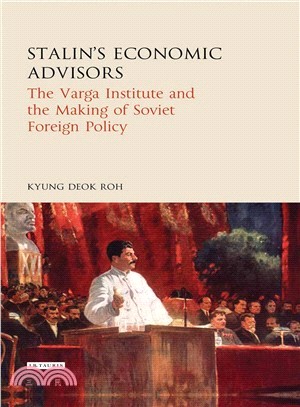
Soviet foreign policy in the Stalin era is commonly assumed to have been a direct product of either Marxist ideology or the leader's whims. Both assumptions, however, oversimplify the complex and subt
The impeachment trial of Warren Hastings dragged on for seven years from 1788 to 1795. Hastings was the first Governor-General of India and his trial had a formative impact on the British Empire. Chia
As the ice around the Arctic landmass recedes, the territory is becoming a flashpoint in world affairs. New trade routes, cutting thousands of miles off journeys, are available, and the Arctic is thou
What happens when we listen to a film? How can we describe the relationship of sound to vision in cinema, and in turn our relationship as spectators with the audio-visual? Jean-Luc Godard understood t
Arab debates about the critical relationship between religion and modernity began in the early nineteenth century. Such debates are now integral to the struggle for power between a variety of politica
In the mountains and jungles of occupied Burma during World War II, British special forces launched a series of secret operations, assisted by parts of the Burmese population. The men of the SOE, trai
The architecture of the Islamic world is predominantly considered in terms of a dual division between 'tradition' and 'modernity' - a division which, Saeid Khaghani here argues, has shaped and limited
Edward Said was an exiled individual - the 'out of place' Palestinian in the USA. He saw the consequences of the 1948 dismantling of Palestine and the establishment of Israel through his parents' expe
The post-1989 period has seen artists in Central and Eastern Europe embrace socially engaged practices. Reclaiming public life from the ideologies of both communist regimes and neoliberalism, their pr
Architecture and urban planning have always been used by political regimes to stamp their ideologies upon cities, and this is especially the case in the modern Turkish Republic. By exploring Istanbul'
In 1801, at the age of just 20 years old, Ranjit Singh became the first Maharaja of the Sikh Empire and subsequently emerged as one of the greatest figures in the history of the Punjab. Despite the di
The horrors and tragedies of the First World War produced some of the finest literature of the century: including Memoirs of an Infantry Officer; Goodbye to All That; the poetry of Wilfred Owen and Ed
In 1840, conflict within the Ottoman Empire gave rise to a serious all-European crisis which led to a diplomatic rupture between France and other Great Powers. The crisis was given the name of the nat
Spurred by a Russian threat to India and the weakness of the Qajar dynasty (1796-1925), Britain established an extensive consular network to further its interests in southern Iran in the late nineteen
On 22 February 2006, the main dome of the al-Askariyya shrine in Samarra was blown up. In the aftermath, sectarian strife between Shi'i and Sunni communities in Iraq and the wider region resonated aro
There's a folk memory of China in which numberless yellow hordes pour out of the 'mysterious East' to overwhelm the vulnerable West, accompanied by a stereotype of the Chinese as cruel, cunning and de
Since the mid-1990s, Morocco has sought to present itself as a model of genuine and gradual reform, with decentralisation as a key tenet of this. Here, Sylvia Bergh investigates the dynamics of popula
Yemen in the twenty-first century is a country which is enormously unstable. With the former president Ali Abdullah Salih signing over power in the aftermath of eleven months of protest in November 20
A tidal wave of panic surrounded homosexuality and AIDS in the 1980s and 1990s, during what was commonly termed 'The AIDS Crisis'. Since the advent of antiretroviral drugs, however, the connotations o
The ‘Cedar Revolution’ in Lebanon, which was sparked by the assassination of former Prime Minister Rafiq Hariri on 14 February 2005, was seen by many as an opportunity for Lebanon’s fragile political
The Gülen, or Hizmet, movement in Turkey is the country's most powerful and affluent religious organisation. Its central tenet, advanced by its founder, the charismatic Sunni preacher Fethullah Gülen