Chicago in the Roaring Twenties was a city of immigrants, mobsters, and flappers with one shared passion: the Chicago Cubs. It all began with the decision of the chewing-gum tycoon William Wrigley to
Letters from the Rocky Mountain Indian Missions reveals the life of an Italian Jesuit as he worked at three missions in the northern Rocky Mountains from 1874 to 1878. Meticulously translated and care
Contemporary discussions on nonfiction are often riddled with questions about the boundaries between truth and memory, honesty and artifice, facts and lies.? Just how much truth is in nonfiction?? How
Early July, and the corn in eastern Nebraska stands ten feet tall; after a near-decade of drought, it seems too good to be true, and everyone is watching the sky for trouble. For the Grebels, whose pl
Not many women can claim to have changed history, but Nafis Sadik set that goal in her youth, and change the world she did. Champion of Choice tells the remarkable story of how Sadik, born into a prom
Most baseball fans want to hear about stellar players and spectacular plays, statistics and storied franchises. Level Playing Fields sheds light on a usually unnoticed facet of the game, introducing f
Terezin survivor George (Jiri) Brady recalls: “In the tragic struggle for survival, the Nazi-imposed Terezin ‘self-administration’ tried to help the imprisoned children. They were placed in buildings
The pronunciamiento, a formal list of grievances designed to spark political change in nineteenth-century Mexico, was a problematic yet necessary practice. Although pronunciamientos rarely achieved th
From a pool of barely nine thousand men of military age, Nebraska—still a territory at the time—sent more than three thousand soldiers to the Civil War. They fought and died for the Union cause, were
From German idealism onward, Western thinkers have sought to revalue tragedy, invariably converging at one cardinal point: tragic art risks aestheticizing real violence. Tragically Speaking critically
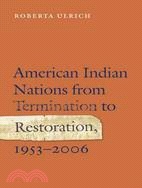
When the U.S. government ended its relationship with dozens of Native American tribes and bands between 1953 and 1966, it was in fact engaging in a massive social experiment. Congress enacted the prog
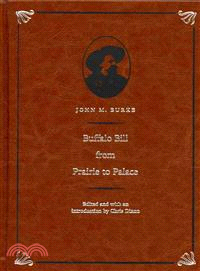
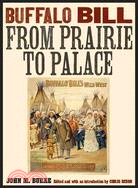
Advance man, press agent, and publicist extraordinaire, John M. Burke (1842-1917) was instrumental in turning William F. Cody into the iconic persona of Buffalo Bill. And with this biography, publishe
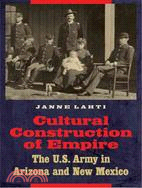
From 1866 through 1886, the U.S. Army occupied southern Arizona and New Mexico in an attempt to claim it for settlement by Americans. Through a postcolonial lens, Janne Lahti examines the army, its of
Cesar E. Chavez came to Oxnard, California, in 1958, twenty years after he lived briefly in the city as a child with his migrant farmworker family during the Great Depression. This time Chavez returne
From the lowest highway in North America to the highest, W. Scott Olsen takes readers on a journey that is more about going than about getting there. These are stories of travel as it is lived, essays
We stare at each other because we don't know which tribe, and then nod at the last possible instant. Standard procedure. You pick it up the first time a white friend leads you across a room just to st
Americans love war. We’ve never run from a fight. Our triumphs from the American Revolution to World War II define who we are as a nation and a people. Americans hate war. Our leaders rush us into con
Twenty-four-year-old Edmund F. Ely, a divinity student from Albany, New York, gave up his preparation for the ministry in 1833 to become a missionary and teacher among the Ojibwe of Lake Superior. Dur
A. B. Guthrie Jr. is best known for his historical fiction; his classic novel The Way West earned him a Pulitzer Prize. Guthrie had the ability to create memorable yet believable characters, was skill
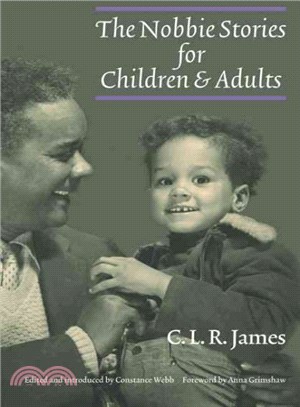
After more than a decade in the United States, the Caribbean writer C. L. R. James ran afoul of McCarthyism in 1953 and was deported. In exile in London, he began to write stories in the form of lette
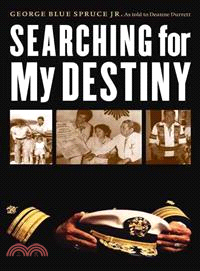
George Blue Spruce Jr. is recognized as the first American Indian dentist in the United States. His life story reaches back to the ancient Pueblo culture cherished by his grandparents and parents and
Gluckel of Hameln was a marvel of her time: an accomplished businesswoman as well as the mother of twelve. Devastated by the death of her beloved husband in 1689, she proceeded to write the riveting m
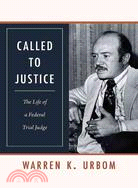
Early in his judicial career, U.S. District Judge Warren K. Urbom was assigned a yearlong string of criminal trials arising from a seventy-one-day armed standoff between the American Indian Movement a
Have the terrorist attacks of September 11 shifted the moral coordinates of contemporary fiction? And how might such a shift, reflected in narrative strategies and forms, relate to other themes and tr
The first fifty years of America’s most popular spectator sport have been strangely neglected by historians claiming to tell the “complete story” of pro football. Well, here are the early stories that
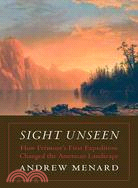
John C. Fremont was the most celebrated explorer of his era. In 1842, on the first of five expeditions he would lead to the Far West, Fremont and a small party of men journeyed up the Kansas and Platt
Dystopian fantasy, political parable, morality tale—however one reads it, this novel is first and foremost pure Ana Maria Shua, a work of fiction like no other and a dark pleasure to read. Shua, an Ar
Born in 1930 in “Diddlin’ Dora’s” establishment on the banks of Rapid Creek and carried by the Madam herself to a social worker at the Alex Johnson Hotel in Rapid City, Ron Hull was destined from the
Advance man, press agent, and publicist extraordinaire, John M. Burke (1842–1917) was instrumental in turning William F. Cody into the iconic persona of Buffalo Bill. And with this biography, publishe
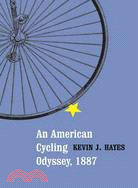
In 1887 a twenty-one-year-old newspaperman named George Nellis (1865–1948) rode a bicycle from Herkimer, New York, to San Francisco in seventy-two days, surpassing the transcontinental bicycle record
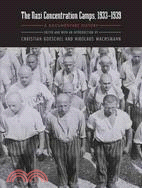
Weeks after Adolf Hitler came to power in 1933, the Nazi regime established the first concentration camps in Germany. Initially used for real and suspected political enemies, the camps increasingly ca
Before the Nazis came to power in Germany, Soviet officials labeled the United States the most racist country in the world. Photographs, children’s stories, films, newspaper articles, political educat
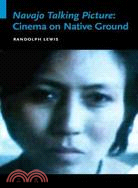
Navajo Talking Picture, released in 1985, is one of the earliest and most controversial works of Native cinema. It is a documentary by Los Angeles filmmaker Arlene Bowman, who travels to the Navajo re
Behind every pronunciamiento, a formal list of grievances designed to spark political change in nineteenth-century Mexico, was a disgruntled individual, rebel, or pronunciado. Initially a role underta
The valuable interviews conducted by Nebraska judge Eli S. Ricker with Indian eyewitnesses to the Wounded Knee massacre, the Little Big Horn battle, the Grattan incident, and other events and personag
This landmark volume provides the most comprehensive overview to date of the prehistory and archaeology of the Caddo peoples. The Caddos lived in the Southeastern Woodlands for more than 900 years beg
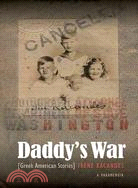
When she was very young, Irene Kacandes knew things about her father that had no plot, no narrator, and no audience. To her childhood self these things resembled beings who resided with her family, li
The Blaine family were among the Pawnees forcibly removed to Indian Territory in 1874–75. By the early twentieth century, disease and starvation had wiped out nearly three-quarters of the reservation’
The Athletic Crusade is the first book to systematically analyze the role of sports in the expansion of U.S. empire from the 1890s through World War II. Gerald R. Gems details how white, Anglo-Saxon P
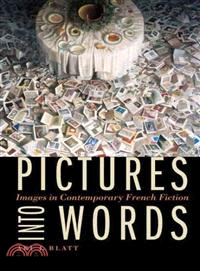
The explosive proliferation of pictures in advertising and pop culture, mass media, and cyberspace following World War II, along with the profusion of critical thinking that tries to make sense of it,