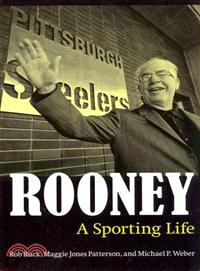
Born to an Irish Catholic working-class family on the Northside of Pittsburgh, Art Rooney (1901–88) dabbled in semipro baseball and boxing before discovering that his real talent lay not in playing sp
Distributed by the University of Nebraska Press for Caxton PressDuring the decades from 1820 to 1870, the American frontier expanded two thousand miles across the trans-Mississippi West. In Texas the
From the winner of the 2004 PEN Center USA Literary Award for Creative Nonfiction In his award-winning memoir In the Shadow of Memory, Floyd Skloot told the hard story of coming to terms with a brain-
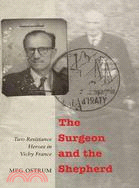
Of the thousands of people who escaped through the Pyrenees during World War II, at least one hundred owe their lives to a daring scheme that Belgian Charles Schepens masterminded in Mendive, a remote
On October 20, 2001, a crowd gathered just east of Salmon, Idaho, to dedicate the site of the Sacajawea Interpretive, Cultural, and Education Center, in preparation for the Lewis and Clark Bicentennia
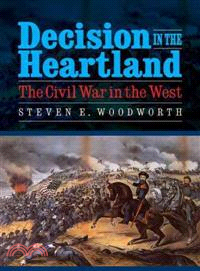
The verdict is in: the Civil War was won in the West, that is, in the nation’s heartland, between the Appalachian Mountains and the Mississippi River. Contrary to much popular literature, serious scho
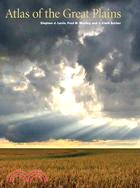
The Great Plains, stretching northward from Texas into Canada, is a region that has been understudied and overlooked. The Atlas of the Great Plains, however, brings a new focus to North America’
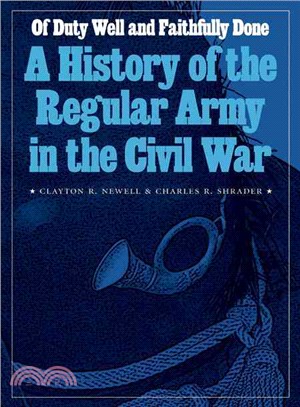
On the eve of the Civil War, the Regular Army of the United States was small, dispersed, untrained for large-scale operations, and woefully unprepared to suppress the rebellion of the secessionist sta
John James Audubon, an early American naturalist and painter, produced one of the greatest works of natural history and art of the nineteenth century, The Birds of America. As the record of the inter
What does it mean to be a traditional Koryak in the modern world? How do indigenous Siberians express a culture that entails distinctive customs and traditions? For decades these people, who live on t
Wendy Call visited the Isthmus of Tehuantepecthe lush sliver of land connecting the Yucatan Peninsula to the rest of Mexicofor the first time in 1997. She found herself in the midst of a
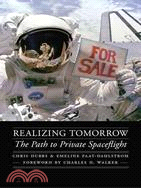
Nearly forty years passed between the Apollo moon landings, the grandest accomplishment of a government-run space program, and the Ansari X PRIZE-winning flights of SpaceShipOne, the greatest achieve
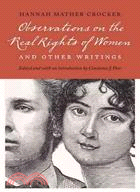
Following in the path of her distinguished Puritan forebears, Hannah Mather Crocker used her skills as a writer primarily to persuade. Unlike those forebears, however, she did not begin her career as
Whether they were actually Hungarian or Bohemian, Hunkies” or Bohunks,” or even from Eastern Europe at all, to the old ranchers of the Great Plains, the farmers and settlers w
In 1937, when local beer baron Emil Sick stepped in, the Seattle Indians were a struggling minor-league baseball team teetering on collapse. Moved to mix baseball and beer by his good friend and fello
Babe Ruth, in his first season with the Yankees in 1920, was on pace to break the single-season home run record. In August Indians shortstop Ray Chapman was beaned by a pitch thrown by the Yankees’ Ca
We were wealthy from the water,” Mitch Smallsalmon says, and like all the tribal elders, he speaks to our understanding of the natural world and the consequences of change. In this book t
One morning in 1943, close to eighty men descended into the Smith coal mine in Bearcreek, Montana. Only three came out alive. “Goodbye wifes and daughters,” wrote two of the miners as they died. The s
In the late nineteenth and early twentieth centuries, American Indians in the United States and Aboriginal people in Australia suffered a common experience at the hands of state authorities: the remov
The most accessible approach yet to children’s literature and narrative theory, Telling Children’s Stories is a comprehensive collection of never-before-published essays by an internation
Modernity has long been equated with motion, travel, and change, from Marx’s critical diagnoses of economic instability to the Futurists’ glorification of speed. Likewise, metaphors of tr
“We tell ourselves stories in order to live,” Joan Didion observed in The White Album. Why is this? Michael Austin asks, in Useful Fictions. Why, in particular, are human beings, whose very survival d
Education beyond the Mesas is the fascinating story of how generations of Hopi schoolchildren from northeastern Arizona "turned the power" by using compulsory federal education to affirm their way of
In 1801 the Moravians, a Pietist German-speaking group from Central Europe, founded the Springplace Mission at a site in present-day northwestern Georgia. The Moravians remained among the Cherokees fo
When the U.S. government ended its relationship with dozens of Native American tribes and bands between 1953 and 1966, it was engaging in a massive social experiment. Congress enacted the program, kn
Mick Gidley provides an intimate and informative glimpse of photographer Edward S. Curtis (1868–1952) and his associates as they embarked on their epic quest to document through word and pictur
In the latter half of the twentieth century, tens of thousands of Native American families moved to cities across the United States, some via the government relocation program and some on their own. I
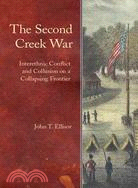
Historians have traditionally viewed the "Creek War of 1836" as a minor police action centered on rounding up the Creek Indians for removal to Indian Territory. Using extensive archival research, Joh
Agroup of educated Christian Natives from a variety of New England tribes came together in central New York in 1785 to form a community of their own, Brothertown, a proprietary “Body Poli
Coyote Anthropology shatters anthropology’s vaunted theories of practice and offers a radical and comprehensive alternative for the new century. Building on his seminal contributions to symbolic analy
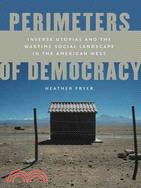
During times of conflict, Americans have worried that enemies within would twist freedom of speech into a weapon of propaganda and use freedom of assembly to unleash violent internal chaos. As a resul
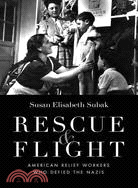
When Susan Elisabeth Subak discovered that members of the Unitarian Church had helped her Jewish father immigrate to the United States, she was unaware of the impact the organization had made during W
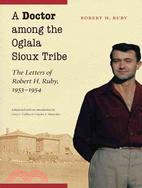
In 1953 young surgeon Robert H. Ruby began work as the chief medical officer at the hospital on the Pine Ridge Indian Reservation in South Dakota. He began writing almost daily to his sister, describi
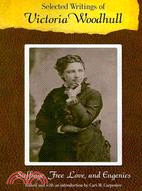
Suffragist, lecturer, eugenicist, businesswoman, free lover, and the first woman to run for president of the United States, Victoria C. Woodhull (1838–1927 ) has been all but forgotten as a lea
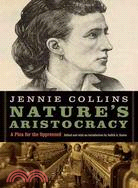
In 1871 Jennie Collins became one of the first working-class American women to publish a volume of her own writings: Nature’s Aristocracy. Merging autobiography, social criticism, fictionalized vignet
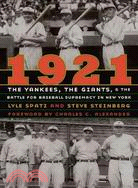
At the dawn of the roaring twenties, baseball was struggling to overcome two of its darkest moments: the death of a player during a Major League game and the revelations of the 1919 Black Sox scandal
Born to an Irish Catholic working-class family on the Northside of Pittsburgh, Art Rooney (1901–88) dabbled in semipro baseball and boxing before discovering that his real talent lay not in playing sp
From the sandlots of San Francisco to the power centers of the game, this book tells the story of Joe Cronin, one of twentieth-century baseball’s major players, both on the field and off.For mo
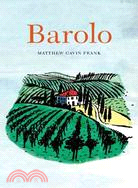
After a childhood of microwaved meat and saturated fat, Matthew Gavin Frank got serious about food. His “research” ultimately led him to Barolo, Italy (pop. 646), where, living out of a tent in the ga
Like so many soldiers of his generation, William V. Spanos was not much more than a boy when he went off to fight in World War II. In the chaos of his first battle, what would later become legendary