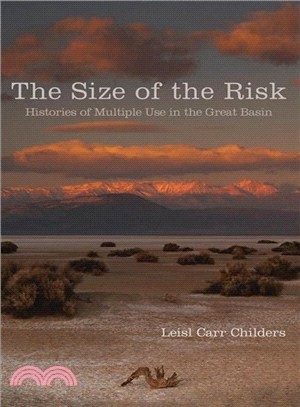
The Great Basin, a stark and beautiful desert filled with sagebrush seas and mountain ranges, is ground zero for public lands conflicts. Arising out of the multiple, often incompatible uses created th
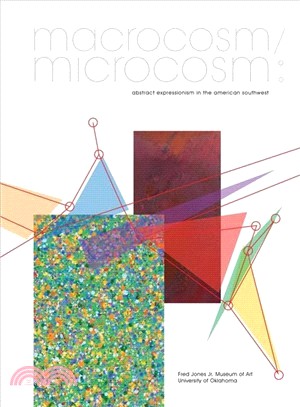
In the 1950s, the American Southwest became a crossroads for Abstract Expressionists from the New York School and the San Francisco Bay Area. Elaine de Kooning, Richard Diebenkorn, and others found in
In Women in the Peninsular Women, Esdaile looks beyond the iconography. While a handful of Spanish and Portuguese women became Agustina-like heroines, a multitude became victims, and here both of thes
Life couldn’t be worse for archaeology grad student Jim Hunt. Having lost his funding at a major midwestern university, and his partner, he desperately needs a breakthrough to revitalize his work and
Less than thirty years after Lewis and Clark completed their epic journey, Prince Maximilian of Wied—a German naturalist—and his entourage set off on their own daring expedition across North America.
It has become tradition for Chickasaw governor Bill Anoatubby to open his public addresses with a tribute to the unconquered and unconquerable warriors and to the dynamic women of the Chickasaw Nation
Two-time governor of Alta, California and prominent businessman after the U.S. annexation, Pio de Jesus Pico was a politically savvy Californio who thrived in both the Mexican and the American periods
Political and religious turmoil in the late 1800s plagued the Church of Jesus Christ of Latter-day Saints and its leaders. As Utah statehood loomed, Congress aggressively moved against Mormons who eng
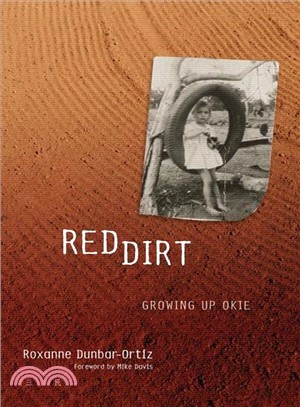
A classic in contemporary Oklahoma literature, Roxanne Dunbar-Ortiz’s Red Dirt unearths the joys and ordeals of growing up poor during the 1940s and 1950s. In this exquisite rendering of her childhood
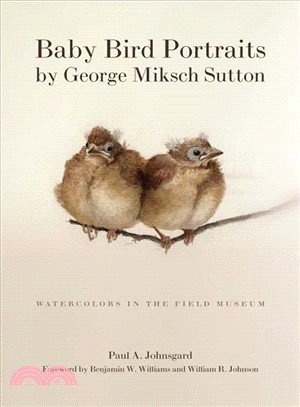
George Miksch Sutton is one of the best known and most beloved bird artists of the twentieth century. This marvelous book presents thirty-five paintigs of downy chicks, nestlings, and fledglings pain
For many years, J. Richard Andrews’s Introduction to Classical Nahuatl has been the standard reference work for scholars and students of Nahuatl, the language used by the ancient Aztecs and the Nahua
For many years, J. Richard Andrews’s Introduction to Classical Nahuatl has been the standard reference work for scholars and students of Nahuatl, the language used by the ancient Aztecs and the Nahua
In Indian Fights, J. W. Vaughn gives detailed accounts of the battles, careful descriptions of the battlefields, and interesting asides on the U.S. Army officers and soldiers serving in the West durin
Enriched by over 200 vintage photographs, Frontier Children is a visual and verbal montage of childhood in the nineteenth-century West. From a wide range of primary and secondary sources, Linda Peavy
Born on the Seneca Indian Reservation in New York State, Arthur Caswell Parker (1881-1955) was a prominent intellectual leader both within and outside tribal circles. Of mixed Iroquois, Seneca, and An
Few writers portray Native American life and history as richly, authentically, and insightfully as Robert J. Conley. Conley represents an important voice of the Cherokee past. The novels in his Real P
Few writers portray Native American life and history as richly, authentically, and insightfully as Robert J. Conley. Conley represents an important voice of the Cherokee past. The novels in his Real P
In They Call Me Agnes, the narrator, Agnes Deernose, provides a warm, personal view of Crow Indian family life and culture.Fred Voget, anthropologist and adopted Crow, sets the stage for Agnes’s story
Ovid is a poet to enjoy, declares William S. Anderson in his introduction to this textbook. And Anderson’s skillful introduction and enlightening textual commentary will indeed make it a joy to use.In
When the Eagle Screamed argues that America’s expansionism between 1800 and 1860 positioned it against some of the world’s most powerful and aggressive nations. As the United States moved onto the wor
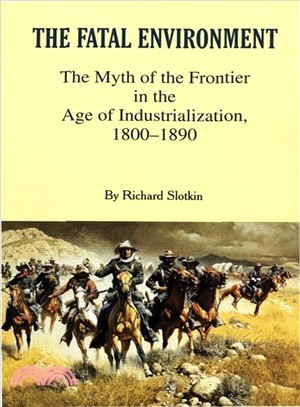
In The Fatal Environment, Richard Slotkin demonstrates how the myth of frontier expansion and subjugation of the Indians helped to justify the course of America’s rise to wealth and power. Using Custe
When farm worker and labor organizer Cesar Chavez burst upon America's national scene in 1965, U.S. readers and viewers were witnessing the emergence of a new Mexican American, or Chicano, movement. T
A collection of animal tales, Cherokee mythology and legends, variants of European tales, and stories of the little people in the hills of eastern Oklahoma, originally collected in 1961 by a Cherokee
Three times the Democratic Party’s nominee for president (1896, 1900, and 1908), and Secretary of State under Woodrow Wilson, William Jennings Bryan voiced the concerns of many Americans left out of t
Provides a look at the fascinating activities of all types of animals from birth to maturity, as they attract a mate, care for their young, find food and shelter, and defend themselves
A colorful narrative history of four-and-a-half centuries of South American exploration, relying insofar as possible on the accounts of the explorers themselves, and supplemented by the writings of di
In the late nineteenth century Hispanic religious, or santos, made in New Mexico and Colorado were dominated by depictions of the passion and crucifixion of Christ. The predominance of these images ca
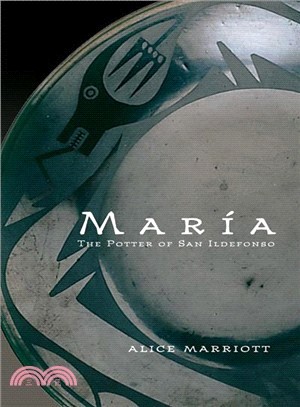
Maria: The Potter of San Ildefonso is the story of Maria Martinez and her husband, Julian, who revived the ancient Pueblo craft of pottery-making and stimulated interest in Southwestern Pueblo pottery
Bill Sublette (1799-1845) led two lives. Renowned as a hardy mountain man, he ranged the Missouri, Big Horn, Yellowstone, and Sweetwater River country between 1823 and 1833 hunting beaver, fighting In
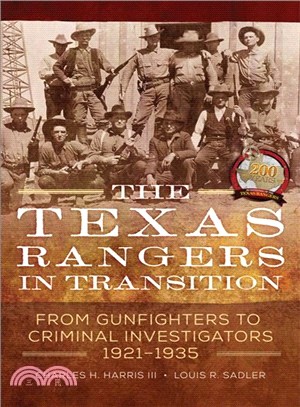
Official Texas Ranger Bicentennial™ Publication Newly rich in oil money, and all the trouble it could buy, Texas in the years following World War I underwent momentous changes—and th
The years between Oklahoma statehood in 1907 and the 1971 reemergence of the Cherokee Nation are often seen as an intellectual, political, and literary “dark age” in Cherokee history. In S
The years between Oklahoma statehood in 1907 and the 1971 reemergence of the Cherokee Nation are often seen as an intellectual, political, and literary “dark age” in Cherokee history. In S
The ability of human beings to feel compassion or empathy for one another—and express that emotion by offering comfort or assistance—is an important antidote to violence and aggression. In ancient Gre
Few writers have written as thoughtfully and extensively on Oklahoma politics and culture as Richard Lowitt. His work of the past six decades moves with ease among historical topics as various as agri
Since we live in the shadow of nuclear warfare, we must face its probable consequences and be prepared to cope with potentially gruesome and large-scale destruction, says author Fred Charles Iklé. Muc
Dale L. Morgan (1914–1971) remains one of the most respected historians of the American West—and his broad and influential career one of the least understood. Among today’s scholars his reputation res
As the Klondike gold rush peaked in spring 1898, adventurers and gamblers rubbed shoulders with town-builders and gold-panners in Skagway, Alaska. The flow of riches lured confidence men, too—among th
For nearly a century, Richard John Cunliffe’s Lexicon of the Homeric Dialect has served as an invaluable resource for students and scholars of Homer’s Iliad and Odyssey. As both an English-Homeric dic
Hedren, a retired National Park Service superintendent and historian, traces the 28 deployments of the US Army during the Great Sioux War as the army fought the Lakota Sioux and Northern Cheyennes fro
“Always a better way” was WD Farr’s motto. As a Colorado rancher, banker, cattle feeder, and expert in irrigation, Farr (1910–2007) had a unique talent for building consensus and instigating change in