Despite the spread of automation and new supply chain management paradigms, logistics remains dependent on a rather specific set of skills and competences, whether for managerial, administrative or bl
The health workforce must be able to cope with shifts in the pattern of causes of death and disease that are being seen worldwide—particularly with the rise in noncommunicable diseases (NCDs). This re
The rural economy in Bangladesh has powerfully advanced economic growth and substantially reduced poverty, especially since 2000, but the remarkable transformation and unprecedented dynamism in rural
The popular grievances that have fueled the Arab Spring since 2010 demonstrate that past development paradigms have failed to achieve the inclusive and sustainable growth expected by Arab populations.
Services negotiations are an integral element in designing and implementing programs to liberalize and deregulate trade unilaterally, bilaterally, and multilaterally in both developing and advanced e
The World Bank, Japan International Cooperation Agency (JICA) Research Institute, and the Foundation for Advanced Studies on International Development (FASID), in collaboration with researchers affili
'Global Economic Prospects 2008: Technology Diffusion in the Developing World' examines the state of technology in developing countries and the pace with which it has advanced since the early 1990s. I
Hospitals remain an important source of critical health care services in most countries, providing both basic and advanced care to their populations. They are often the provider 'of last resort' for t
The Great Recession of 2009-11 was not simply a severe business cycle slowdown or even a combined credit, housing, and asset market collapse. It left permanent scars, especially on the advanced econom
The positive contribution of tertiary education is increasingly recognized as not limited to middle-income and advanced countries, since it applies equally to low-income economies. Tertiary education
Innovation and technology absorption are now firmly recognized as one of the main sources of economic growth for emerging and advanced economies alike. That is why innovation is seen as a possible cat
The stagnation of productivity in the developing world, and indeed, across the globe, over the last two decades dictates a rethinking of productivity measurement, analysis, and policy. This volume pre
From the World Bank Institute's Knowledge for Development (K4D) program (launched in 1999), this volume presents analytical work and research on the knowledge economy in client countries. Using case s
These two volumes analyze Japan from the Knowledge Economy perspective, covering a wide range of sectoral issues in development including the macro economic framework, education and skills training, t
These two volumes analyze Japan from the Knowledge Economy perspective, covering a wide range of sectoral issues in development including the macro economic framework, education and skills training, t
The agriculture sector can play an important role in poverty reduction and sustained growth in Afghanistan, primarily through job creation, improved productivity, and inclusiveness. Using an 'agricult
With a population of 16 million, Karachi is the largest megacity in Pakistan. Despite being a large city that is home to many, it has seen a substantial decline in quality of life and economic competi
The Information and Communications for Development report takes an in-depth look at how information and communication technologies (ICT) are impacting economic growth in developing countries. This ne
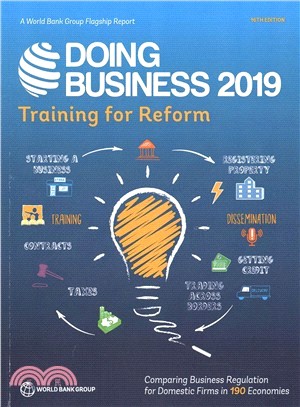
Sixteenth in a series of annual reports comparing business regulation in 190 economies, Doing Business 2019 measures aspects of regulation affecting 10 areas of everyday business activity:• Starting a
Trade has played a critical role in global poverty reduction. In harnessing the potential of trade, some of the most successful countries have developed strong trade relationships with their neighbors
Reforming public-sector organizations--their structures, policies, processes and practices--is notoriously difficult, in rich and poor countries alike. Even in the most favorable of circumstances, the
Skills and Jobs in Brazil: An Agenda for Youth is a new report focusing on the challenge of economic engagement among the Brazilian youth. In the context of a fast aging population, Brazil’s greatest
Public spending plays a key role in the economic growth and development of most developing economies. This book analyzes revenues, policy, and administration of Domestic Resource Mobilization (DRM) in
Melting glaciers, loss of seasonal snow, and precipitation changes pose significant risks to the stability of water resources in the South Asia region. Glaciers help to moderate river flows in the reg
More children are going to school, staying in school for longer, and learning than ever before in East Asia and Pacific (EAP). During the past 50 years, a group of countries in EAP have successfully t
With more than 70 percent of its population living in cities, Latin America and the Caribbean (LAC) is among the most urbanized regions in the world. Yet, although its cities are, on average, more pro
The WEB of Transport Corridors in South Asia develops a holistic appraisal methodology to ensure that economic benefits of investments in transport corridors are amplified and more widely spread, and
Nowhere in the world is skills building more vital than in Sub-Saharan Africa. While the region faces challenges similar to those faced by other regions at similar stages of development, its challenge
The Democratic Republic of Congo has the third largest urban population in sub-Saharan Africa (estimated at 43% in 2016) after South Africa and Nigeria. It is expected to grow at a rate of 4.1% per ye
The electricity sector in the Middle East and North Africa (MENA) is in the grip of an apparent paradox. The region holds the world’s largest oil and gas reserves and has been able to universalize acc
The Arab Spring protests caught most of the world by surprise and precipitated a chain of events that changed the course of history in the Middle East and North Africa (MENA), ushering in a period of
Fifteenth in a series of annual reports comparing business regulation in 190 economies, Doing Business 2018 measures aspects of regulation affecting 10 areas of everyday business activity: • Starting
In 2009, Sri Lanka emerged from nearly 30 years of armed conflict with more than 450,000 Internally-Displaced Persons (IDPs), a North and East in need of reconstruction and rehabilitation, and a dislo
South Asia is highly vulnerable to climate change. Given that many of the poor live in areas prone to climactic shifts and in occupations that are highly climate-sensitive, such as agriculture and fis
High levels of trade costs persist in the world trading system, despite recent progress in tariff reduction, trade facilitation, and logistics. At least some of these costs can be attributed to non-t
Despite a period of strong economic growth and improvements in many dimensions of welfare, extreme poverty remains a pervasive and complex phenomenon in Sub-Saharan Africa (referred to as Africa in th
Most of the people in low and middle-income countries covered by social protection receive assistance in the form of in-kind food. The origin of such support is rooted in countries’ historical pursuit
This book brings together a set of experiences from Central American countries. In each case, behavioral insights are applied to different areas of public policy, in some cases trough randomized contr
China is aging at an unprecedented rate. Improvements in life expectancy and the consequences of the decades-old family planning policy have led to a rapid increase in the elderly population. Accordin
The Skills Toward Employment and Productivity (STEP) Survey is an initiative of the World Bank in cooperation with other development partners and nongovernmental agencies and carried out in more than