This paper explores the role of social protection in promoting the well-being and prosperity of people living in dryland regions of sub-Saharan Africa, with a specific focus on the Sahel and the Horn
Dryland regions in Sub-Saharan Africa are home to one-half of the region’s population and three-quarters of its poor. Poor both in natural resources and in assets and income, the inhabitants of drylan
Dryland regions in Sub-Saharan Africa are home to one-half of the region’s population and three-quarters of its poor. Poor both in natural resources and in assets and income, the inhabitants of drylan
In countries such as the United Kingdom the need to manage finances in a professional manner has been thrown into sharp relief by the severe fiscal constraints caused by the 2008 financial crisis. The
The health workforce must be able to cope with shifts in the pattern of causes of death and disease that are being seen worldwide—particularly with the rise in noncommunicable diseases (NCDs). This re
Middle East and North Africa (MNA) is a region in turmoil. The pervasive sense of discontent and disenchantment among the people in the region appears at odds with the conventional measures of economi
Investing in skills has risen to the top of the policy agenda today in rich and poor countries alike. The World Bank supports its partner countries on this agenda in multiple ways: development financ
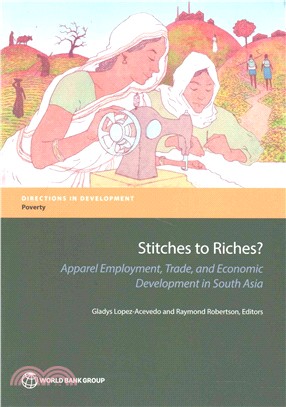
South Asia’s trade almost doubled in the past decade, but the share of trade in GDP is still smaller (47 percent) than in East Asia (55 percent), and South Asia’s economic competitiveness continues to
The Little Data Book on Private Sector Development 2016 is a reliable cross-country data on aspects of private sector development, crucial in planning for economic recovery and growth. In targeting in
The rural economy in Bangladesh has powerfully advanced economic growth and substantially reduced poverty, especially since 2000, but the remarkable transformation and unprecedented dynamism in rural
The second edition of the Impact Evaluation in Practice handbook is a comprehensive and accessible introduction to impact evaluation for policy makers and development practitioners. First published in
South Asia is in the midst of a demographic transition. For the next three decades, the growth of the region’s working age population will far outpace the growth of dependents. Close to one million in
The United Nations Relief and Works Agency for Palestine Refugees in the Near East (UNRWA) operates one of the largest nongovernmental school systems in the Middle East. Palestine refugees in UNRWA sc
The global movement toward universal health coverage (UHC) is accompanied by requests for large increases in government health spending in some countries. This combined with the global economic situat
Teachers and Teacher Performance in Bihar: Implications for Teacher Education is a study undertaken in the low income state of Bihar in India to create effective teacher perfomance measuring standards
The Syrian refugee crisis, which began in 2011, is one of the most pressing disasters in the world today, with its effects reverberating around the globe. By the end of 2015, more than 7.6 million of
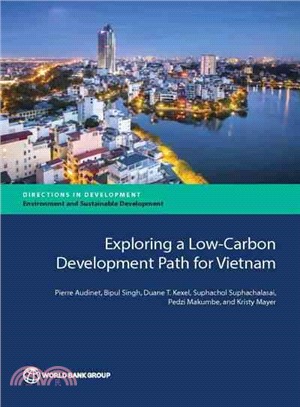
Bringing together a large set of data and building on two years of consultations in Vietnam with Government counterparts, research organizations, state-owned enterprises, private sector and Vietnam in
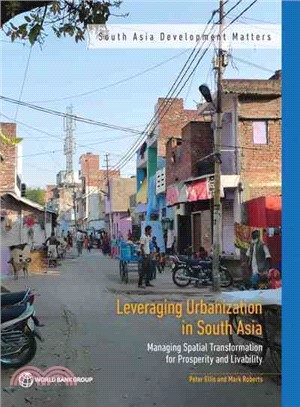
The number of people in South Asia's cities rose by 130 million between 2000 and 2011-more than the entire population of Japan. This was linked to an improvement in productivity and a reduction in the
Doing Business 2016 is the 13th publication in a series of annual reports comparing business regulation in 189 economies. This year the publication addresses regulations affecting 11 areas of everyday
The Global Monitoring Report 2015/2016, produced by the World Bank Group in partnership with the International Monetary Fund, comes at an inflection point in both the setting of global development goa
Intense rainfall floods Dhaka, Bangladesh, one of the world’s fastest-growing megacities, year in and year out, and those in the city’s slums and shanties are usually the most affected. Low-lying floo
As Brazil is massively investing in a scale-up of in vocational education and training (VET) through the national flagship program, PRONATEC, this report assesses institutions and policies in VET taki
In the past 15 years, employment, labor market participation, and wages have grown significantly in Brazil. Improved labor market outcomes have been the main drivers of reductions in poverty and inequ
This handy pocket guide is a quick reference for users interested in gender statistics. The book presents gender-disaggregated data for more than 200 economies in an easy country-by-country reference
Investments on the order of US$6 billion are estimated to be needed in the water sector in Nigeria in the next 10 years if the country is to achieve universal water supply coverage. This is the main f
In Central and Eastern European countries, inequalities for Roma families living in marginalized communities start early and are striking. Some of these inequalities reflect hard-wired family circumst
This World Bank report is a rich compilation of information on teaching learning materials (TLM) in Africa based on the extensive and multi-faceted experience of the author's work in the education sec
Confronting Climate Uncertainty in Water Resources Planning and Project Design describes an approach to facing two fundamental and unavoidable issues brought about by climate change uncertainty in wat
What is the state of school infrastructure for primary and secondary education in Paraguay? How much is invested by the government in order to improve school infrastructure and how have these investme
In 2009, more than 40,000 people died prematurely in Sindh, Pakistan because of an illness associated with an environmental health risk. This means that almost one of every five deaths that occurred t
Africa is poised on the edge of a potential takeoff to sustained economic growth. This takeoff can be abetted by a demographic dividend from the changes in population age structure. Declines in child
The World Bank Group was a principal founding partner of the Global Environment Facility (GEF) in its pilot phase in 1991, and of the restructured GEF in 1994. The Bank plays three different roles in
The extractive industries (EI) sector occupies an outsize space in the economies of many developing countries. Policy makers, economists and public finance professionals working in such countries are
The extractive industries (EI) sector occupies an outsize space in the economies of many developing countries. Policy makers, economists and public finance professionals working in such countries are
The report examines recent trends in Croatia's in trade, productivity, innovation performance and policy governance framework, to help identify priorities for the development of the country's Smart Sp
Since the 2011 uprising that toppled the former regime, Libya has been mired in deep political strife. An economy in which agriculture once flourished was converted wholesale to an oil-based rentier s
Textbooks play a key role in enhancing the quality of learning, especially in the context of low-income Sub-Saharan African (SSA) countries characterized by large class-size, poorly motivated and inad
Private Sector Development and Political Economy Drivers in Somaliland is the World Bank Group’s first effort to undertake an in-depth, consultative in-depth analysis of the private and financial sect
The Kurdistan region of Iraq is facing an economic and humanitarian crisis as a result of the influx of Syrian refugees which began in 2012 and internally displaced persons (IDPs) in 2014. The region'
The Little Data Book on Financial Inclusion 2015 is a pocket edition of the Global Financial Inclusion Database published in 2015 in “The Global Findex Database 2014: Measuring Financial Inclusion aro