In recent years, the world has seen both massive destruction caused by natural disasters and immense financial and physical support for the victims of these calamities. So that these natural hazards d
Ecuadorian society has overcome adversity with great determination over the past few years. Periodic economic crises, external shocks, and even natural disasters tested the country's ability to cope w
Earthquakes, floods, drought, and other natural hazards cause tens of thousands of deaths, hundreds of thousands of injuries, and billions of dollars in economic losses each year around the world. Man
'Economic losses from natural disasters totaled $92 billion in 2015.'Such statements, all too commonplace, assess the severity of disasters by noother measure than the damage inflicted on buildings, i
MENA is one of the richest regions in the world in terms of natural resources: it holds more than 60 percent of the world’s proven oil reserves, mostly located in the Gulf region, and nearly half of g
Policy makers in many countries in the Latin American and Caribbean region have found it challenging to determine how to treat natural resource commodity production and how to manage the recurrent cyc
This study was to analyze the future role of natural gas in the energy mix of countries of South East Europe. The study further identifies regional, cross-border and country-specific gas infrastructur
'Language, Literacy, and Learning in Primary Schools' is a synthesis of the findings arising from four years of policy research and development in Nigeria's primary schools that focused on the gap bet
This book explore the future of East Asia's middle-income countries. Without the advantages of low wages or high skills, and with limited natural resources, East Asian economies are following a new pa
Natural resources have the transformational potential to support economic and political stability as well as contribute to national prosperity and economic development. However, in countries dependent
National income is underpinned by a country's wealth--measured comprehensively to include all assets, produced capital, human capital, natural capital and net financial assets--and sustained economic
Over 60 million people are currently displaced due to conflict or violence, and about 140 million are exposed to natural disasters. As part of humanitarian responses to those affected populations, gro
Dryland regions in Sub-Saharan Africa are home to one-half of the region’s population and three-quarters of its poor. Poor both in natural resources and in assets and income, the inhabitants of drylan
Dryland regions in Sub-Saharan Africa are home to one-half of the region’s population and three-quarters of its poor. Poor both in natural resources and in assets and income, the inhabitants of drylan
The natural endowment of the Democrat Republic of Congo, in the form of land, minerals, and forests, is unparalleled. The right mix of policies has the potential to unleash incentives that could trans
In recent decades, resource-rich developing countries have been using their natural resources as collateral to access sources of finance for investment, countervailing the barriers they face when acce
Pollution from fossil fuels and degraded natural lands are raising the earth’s temperature. The evidence of the causes of global warming is clear, as are its consequences. The economic impacts of clim
This applied study addresses the large flood exposures of Central Europe and proposes efficient financial and risk transfer mechanisms to mitigate fiscal losses from such natural catastrophes. In 201
Poor people living in slums are at particularly high risk from the impacts of climate change and natural hazards. They live on the most vulnerable lands within cities, typically areas that are deemed
Liberia is making great strides to recover from its recent era of conflict and reestablish itself as a global competitor. Central to Liberia’s economic growth is its rich endowment of natural resource
This Workbook offers a step-by-step guide for city officials in proactively planning for natural disasters and climate change impacts. It is based on learning from three cities in Vietnam - Ha Noi, Ca
Many governments rely on oil companies to efficiently exploit natural resources. Governments have the challenging task of deciding which companies should be awarded exclusive rights to explore, develo
Economic growth rates in Sub-Saharan Africa have more than doubled in the past decade. This growth mainly stems from the rising prices of commodities and other natural resources. In order to sustain t
In this study, Dahlman (World Bank) et al. bring together seven chapters that describe how Finland has transformed from a natural resources-based economy to a knowledge economy since the 1990s, how it
The world's demand for food is expected to double within the next 50 years, while the natural resources that sustain agriculture will become increasingly scarce, degraded, and vulnerable to the effect
The world's demand for food is expected to double within the next 50 years, while the natural resources that sustain agriculture will become increasingly scarce, degraded, and vulnerable to the effect
The persistent potential for large scale natural disasters has become a real concern for the Turkish government since the late 1990s, which ultimately led to the establishment of the Turkish Catastrop
Access for All: Building Inclusive Financial Systems outlines the "new" vision of microfinance, laying out in plain language what CGAP and others in the development field have learned over the past 10
'Building Competitive Firms: Incentives and Capabilities' explains how firms become competitive in language suitable for both technical and non-technical readers. A simple analytical framework integra
Tanzania's annual real economic growth rate has in recent years been between 6 and 7 percent with Gross National Income equivalent to about US$340 per person. A “hidden” economy could potentially have
With a population of 16 million, Karachi is the largest megacity in Pakistan. Despite being a large city that is home to many, it has seen a substantial decline in quality of life and economic competi
The purpose of the Working with Smallholders handbook is to enable the development of more sustainable, resilient and productive supply chains for agribusinesses and to illustrate the substantial deve
Two decades after its original publication, The Analysis of Household Surveys is reissued with a new preface by its author, Sir Angus Deaton, recipient of the 2015 Nobel Prize in Economic Sciences. Th
Trade has played a critical role in global poverty reduction. In harnessing the potential of trade, some of the most successful countries have developed strong trade relationships with their neighbors
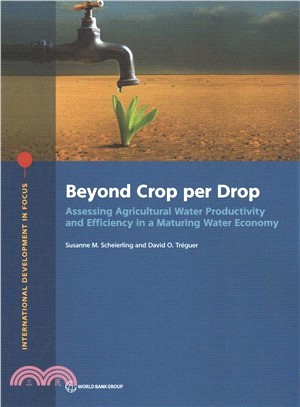
With growing water scarcity in many parts of the world and projections that indicate the need to increase agricultural production and, concurrently, agricultural water use, it is increasingly advocate
With more than 70 percent of its population living in cities, Latin America and the Caribbean (LAC) is among the most urbanized regions in the world. Yet, although its cities are, on average, more pro
Since 2010, the number and intensity of violent conflicts have increased rapidly. The human and economic costs associated with violent conflict are massive, affecting long-term stability and prospects
In 2009, Sri Lanka emerged from nearly 30 years of armed conflict with more than 450,000 Internally-Displaced Persons (IDPs), a North and East in need of reconstruction and rehabilitation, and a dislo
The 21st century will witness the collision of two powerful forces - burgeoning population growth, together with a changing climate. With population growth, water scarcity will proliferate to new area
The World Bank has partnered with the Commitment to Equity Institute at Tulane University to implement their diagnostic tool—the Commitment to Equity (CEQ) Assessment—designed to assess how taxation a